
Battery & Electrical
Winter Emergency Kit for Western Suburb Drivers
Pack a winter emergency kit for Hillside and western-suburb driving, with warmth, visibility, phone power, and safe supplies for an unexpected roadside wait.
By the team at Rios Auto Service, Hillside, IL · · 9 min read
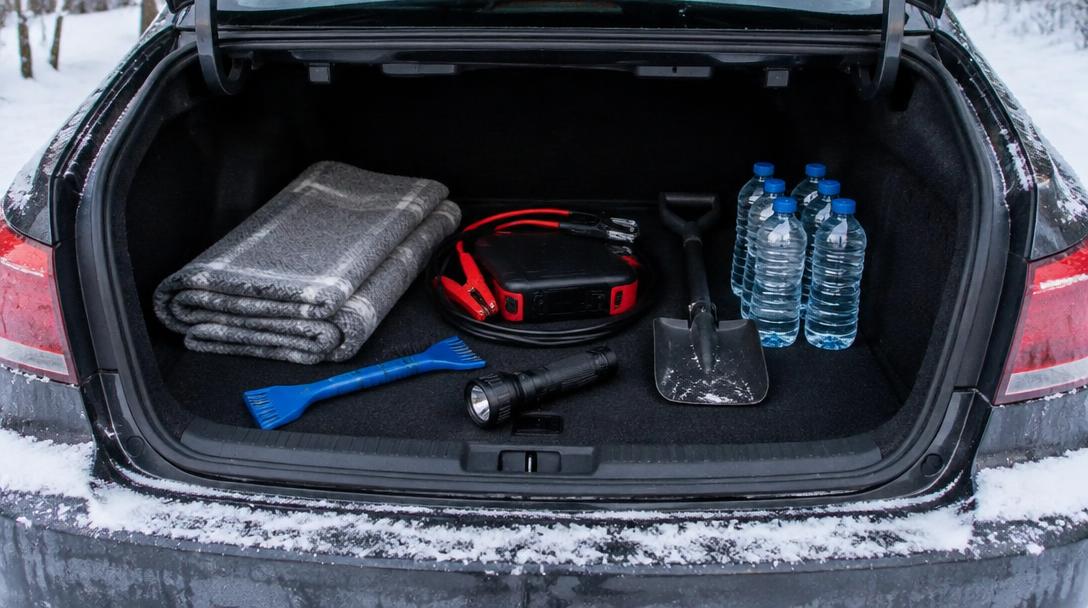
Quick answer: A useful winter emergency kit keeps you warm, visible, connected, and supplied while you arrange help. For Hillside and the western suburbs, prioritize insulated layers, a charged phone backup, lights, water, food, and snow-clearing tools rather than equipment that tempts you into an unsafe roadside repair.
Build the kit around waiting safely, not fixing everything
A stalled car on a bitter afternoon creates several problems at once. You lose mobility, the cabin starts cooling, and your phone becomes the link to assistance. Darkness and passing traffic can make a simple mechanical problem dangerous. Your kit should address those consequences first.
The engine normally supplies heat, but that warmth is not a dependable emergency resource. A disabled engine may not run at all. Even a running vehicle can become unsafe if snow blocks the exhaust or fumes enter the cabin. Blankets and clothing provide protection without depending on the vehicle's electrical system or fuel supply.
NHTSA's winter driving guidance recommends supplies including blankets, a flashlight, warning devices, food, water, a phone charger, and snow tools. Think of that as a practical starting point, not a shopping challenge. A compact, familiar kit is more useful than an oversized collection nobody can locate or operate.
Make two groups: immediate supplies inside the passenger compartment and heavier equipment secured in the cargo area. If you cannot safely open the trunk beside traffic, you should still have access to your phone, a light, gloves, and an insulating layer.
Why a short western-suburb trip still deserves preparation
A drive along Roosevelt Road may feel too ordinary to require emergency supplies. Yet a breakdown can happen between familiar destinations, and a nearby building is not automatically reachable safely. Crossing traffic or walking along an expressway shoulder can be far more hazardous than waiting for help.
I-290 and I-294 add another concern: vehicles passing at speed, even when your own lane has stopped. A shoulder is not a workshop. The right tool in the trunk does not make it safe to kneel beside a tire, place equipment behind the car, or stand between vehicles.
Short winter trips also place repeated demands on starting and cabin-heating systems. The Department of Energy explains that cold temperatures, warm-up time, and short trips affect cold-weather vehicle efficiency. That does not diagnose a battery problem, but it supports planning for less favorable conditions than your summer routine.
Someone returning to a parked car near a Bellwood or Elmhurst Metra station may face a different problem: the car will not start after sitting all day. Supplies should work for that situation too. Warmth and communication matter whether you are beside a busy road or in a nearly empty lot.
Pack warmth for the people who actually ride with you
Choose warm hats, dry gloves, socks, and insulating blankets for the usual occupants. Include an extra layer for someone who left home wearing office shoes and a light coat. An emergency blanket is compact, but a substantial blanket or sleeping bag can be easier to use comfortably during a long wait.
Store textiles in a water-resistant bag so snow-covered boots or a leaking container do not soak them. Wet gloves are poor emergency equipment. Check sizing as children grow, and consider whether an older passenger can handle small zippers or unfold tightly packed items with stiff hands.
Keep a seat belt on while waiting in a place where another vehicle could strike yours. Add blankets over the restraint rather than compromising its fit. For children in car seats, follow the seat manufacturer's winter-clothing guidance; bulky coats under a harness can prevent a snug fit.
Do not pack candles, a camping stove, or a fuel-burning heater for cabin use. An enclosed vehicle is not a safe place for an open flame or combustion appliance. Warmth should come from insulation and an appropriate rescue plan, not a device that creates fire or carbon monoxide risks.
Keep communication independent of the starting battery
Carry the charging cable that fits your phone and a compatible vehicle adapter. Add a portable power bank, charged according to its instructions. A vehicle socket may not work with the ignition off, and using the ignition to charge a phone can consume energy you need for other functions.
Treat the power bank as maintained equipment. Check it periodically, protect its connectors, and follow its storage-temperature limits. Do not leave a swollen, damaged, or unusually hot rechargeable device in service. Cold can affect battery performance, so do not assume a forgotten charger has its advertised capacity available.
Write essential phone numbers on paper. Include a household contact and any roadside-assistance number you already have through insurance, a manufacturer, or another plan. Keep medication information and emergency contacts accessible without requiring someone to unlock your phone. Avoid putting sensitive personal records in an easily visible location.
When calling for help, identify the road, direction of travel, nearby exit or intersection, and whether you are blocking traffic. A location pin helps, but a clear spoken description remains valuable. Tell the dispatcher about children, medical needs, smoke, fuel odor, or immediate exposure to moving vehicles.
Choose visibility tools without creating another roadside task
A small LED flashlight or headlamp is useful inside the vehicle and during a safe inspection in a parking area. Carry compatible spare batteries where appropriate, or maintain the rechargeable light. Test the switch before winter and occasionally afterward; a light buried in a bag may be accidentally switched on.
A reflective vest can improve visibility if leaving the vehicle is necessary and safe. Keep it within reach rather than underneath cargo. Battery-powered warning lights avoid the flame of a traditional flare, although no warning device justifies walking into traffic to position it.
Know how to operate the hazard lights before an emergency. If there is a collision risk, activating them is generally more important than conserving every bit of battery power. Decisions about exiting, placing markers, or staying inside depend on the surroundings; follow emergency responders' instructions rather than a rigid checklist.
For weather-related travel planning, use IDOT's winter weather resources before departure. Conditions and travel advisories help you decide whether to delay a trip. A stocked kit reduces consequences after trouble starts; it does not make unsafe road conditions acceptable.
Add food, water, and personal necessities thoughtfully
Choose shelf-stable snacks that your household can eat without preparation. Account for allergies and foods that become difficult to chew when cold. Small portions are easier to share and replace than one large container. Rotate them on a schedule instead of waiting until the packaging looks old.
Carry drinking water in containers suitable for the conditions, leaving room for expansion if freezing is possible. Inspect containers for leaks and remember that solid ice is not immediately drinkable. Bringing water from the house for each trip can supplement supplies stored in the car during extended freezing weather.
Include a modest first-aid kit, tissues, and sanitation supplies. For passengers with medical needs, plan with their clinician or pharmacist rather than storing temperature-sensitive medication indefinitely in the vehicle. Equipment that needs electricity requires its own realistic backup plan; a phone power bank may not be suitable.
A family traveling with a baby may need diapers, feeding supplies, and extra clothing. A pet needs restraint, water, and warmth too. Review the kit when the passenger mix changes. The best inventory reflects the people in the seats, not a generic picture of a stranded driver.
Snow tools and electrical equipment have limits
A sturdy scraper and snow brush belong in the vehicle throughout winter. Clear glass, lights, and relevant sensors before moving. A compact shovel can help with loose snow in a safe parking location, but vigorous digging can be risky for someone with health limitations. Stop before exhaustion.
Traction material may help in a shallow slippery spot when used appropriately, but it is not a substitute for adequate tires or safe recovery equipment. Do not spin the tires aggressively or ask someone to stand in the path of a vehicle that might suddenly move. Avoid improvised towing arrangements.
A portable jump pack is optional, not the center of the kit. Buy one suitable for the vehicle and follow both manufacturers' instructions. Inspect and charge it as directed. Do not attempt to energize a damaged, leaking, or possibly frozen battery; detailed jump-start procedures deserve their own vehicle-specific preparation.
Hybrids and electric vehicles still require model-specific instructions for their low-voltage systems. Never handle orange high-voltage cables or treat traction-battery components as jump points. If the manual is unclear, communication and warmth are the useful tools. Having electrical equipment does not obligate you to use it.
Practice the first five minutes of a breakdown
If the vehicle can be controlled, move out of active traffic to the safest available location without making a dangerous maneuver. Set the parking brake once stopped and assess the surroundings. An active travel lane, smoke, or a fire changes the response immediately; call 911 for immediate danger.
In snow, staying with the vehicle is generally safer than walking off in search of help, unless the vehicle's location or another hazard makes remaining unsafe. If safely accessible, keep the exhaust outlet clear before running the engine. Run it only intermittently for warmth, and never in an enclosed space.
Do not rely on an open window to make an exhaust leak harmless. If occupants develop headache, nausea, dizziness, or confusion, suspect a medical emergency and possible carbon monoxide exposure. Seek fresh air without stepping into traffic and call emergency services. Do not continue idling while trying to investigate.
Before winter, let regular passengers find the supplies and practice describing your location. The person who normally packs the trunk may not be present during the emergency. Keep doors, cargo access, and visibility clear, and secure the kit so it cannot become a projectile during a sudden stop.
When a kit is not enough, and where Rios fits
Repeated starting trouble, burning smells, damaged wiring, or unexplained electrical shutdowns need evaluation before the next cold night. Do not turn a stocked emergency bag into permission to postpone a known problem. Avoid driving a vehicle that loses essential lighting or cannot operate reliably in traffic.
Rios Auto Service is an independent, family-run shop owned by Juan Rios at 4218 Roosevelt Rd, Hillside. Its battery and electrical service is the relevant starting point for electrical concerns. Ask for an honest inspection, an explanation of the findings, and recommendations tied to evidence rather than an unnecessary bundle of replacements.
Bring the circumstances: temperature, how long the vehicle sat, what happened when you tried to start, and whether it needed outside assistance. Those details are more helpful than saying the battery must be bad. Ask what testing supports any recommendation and what can safely wait.
Walk-ins are welcome. Hours are Monday through Friday, 8 AM–6 PM, and Saturday, 8 AM–4 PM; Sunday is closed. Use the contact page or call (708) 632-4808 to discuss the concern. For an unsafe roadside location, arrange appropriate emergency assistance first rather than trying to reach a repair shop under your own power.
Winter kit questions from local drivers
Should I leave the kit in the trunk all winter?
Most durable supplies can stay secured there, but keep immediate essentials within reach. Follow temperature limits for electronics, medications, and liquids. Recheck the kit after using anything, and whenever changing weather or passenger needs make the original packing plan less suitable.
How often should I inspect everything?
Check at the start of winter, before a significant trip, and regularly during the season. Test lights and charging equipment, replace food and water as needed, and dry damp supplies promptly. Also use NHTSA's recall lookup to check for unresolved vehicle safety recalls.
Is a blanket enough for a short drive?
A blanket helps, but it cannot call for help or make you visible. Carry communication power, lighting, and basic personal supplies too. Short distance does not guarantee a short wait, especially when weather affects many drivers at once or traffic prevents help from arriving directly.
Related question
For the battery issue that often accompanies freezing weather, read Why Car Batteries Die on the First Cold Snap.