
Battery & Electrical
Flickering Dash Lights and Electrical Gremlins
Flickering dash lights can signal a dimmer issue, loose connection, or unstable power. Learn safe checks and warning signs for Hillside-area drivers.
By the team at Rios Auto Service, Hillside, IL · · 9 min read
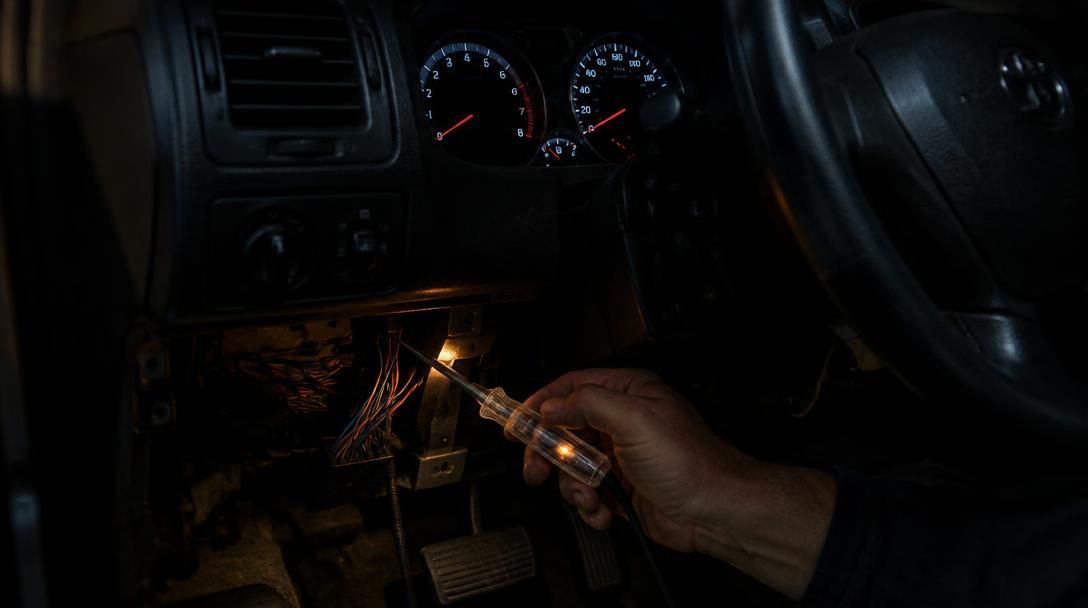
Quick answer: Flickering dash lights can come from the illumination controls, a loose electrical connection, unstable system voltage, or a fault within the instrument cluster. Notice whether only the backlighting changes or whether headlights, gauges, and other electronics also cut out. Repeated blackouts, stalling, smoke, or a burning smell call for stopping safely rather than continuing to drive.
First separate flickering illumination from warning lights
“Everything on the dash was flashing” can describe several different problems. The panel’s background lighting may pulse while the gauges keep working normally. Individual warning symbols may appear and disappear. Or the entire cluster may go dark, restart, and perform its startup display again. Those observations lead an inspection in different directions.
A brief warning-lamp check when you switch the vehicle on is generally normal; consult the owner’s manual for its exact behavior. A flashing malfunction indicator while the engine is running is different from a flickering backlight and may require immediate action under that manual. Do not dismiss a specific warning as an electrical gremlin simply because another light also looks odd.
Automatic brightness changes can be normal too. Driving from bright daylight into shade can change the display mode, and some vehicles vary screen brightness separately from the gauge illumination. The useful distinction is whether the change follows an intended setting or whether it pulses, cuts out, or resets unpredictably under steady conditions.
Start by describing the symptom without naming a failed part. “The gauges dropped to zero and the radio restarted after a bump” is much more useful than “the alternator is bad.” An accurate description preserves clues instead of narrowing the repair discussion before anyone has tested the vehicle.
Why a small electrical interruption can look dramatic
The cluster needs a stable power supply, a reliable ground return, and, in many vehicles, messages from other control modules. Losing any one of those can affect what you see. A poor connection may interrupt power directly, while a communication problem may leave the cluster powered but unable to display certain information correctly.
Electrical resistance matters most when current flows. A connection can pass a small amount of current yet lose excessive voltage when a load increases. That can make a problem appear only with the blower, rear defroster, or other equipment operating. Several devices may react together because they share part of the same supply or ground path.
A ground is the intended electrical return path, not simply any nearby piece of metal. Deterioration at an engine, body, or dashboard ground can create confusing combinations of symptoms. The affected devices may seem unrelated from the driver’s seat even though their circuits share a connection elsewhere in the vehicle.
An instrument cluster can also have its own internal fault. However, replacing it before checking power, grounds, and relevant communication can be an expensive guess. The same goes for replacing a battery solely because a screen blinked. The symptom is a starting point for measurements, not a parts verdict.
What Hillside driving conditions can reveal
A pothole on a local trip can expose an intermittent connector or damaged wiring, but the bump does not establish where the defect is. Note whether the problem follows rough pavement and whether other equipment reacts at the same instant. Do not deliberately hit another pothole to reproduce it; that adds risk without providing a controlled test.
Chicago winters bring heavier use of blowers, heated glass, lights, and other electrical loads. In I-290 stop-and-go traffic, an existing supply problem may become more noticeable under those conditions. The useful clue is the relationship between the symptom and the load, not an assumption that winter accessories are inherently too demanding for the vehicle.
Road salt and moisture can contribute to deterioration at exposed wiring and connections. Water intrusion into the cabin is another possible concern if symptoms follow rain or snowmelt. A damp carpet, water stain, or musty smell is worth reporting, particularly after windshield or body work. It does not automatically prove that a dashboard module got wet.
NHTSA’s winter preparation advice includes checking the battery and charging system. For drivers between Bellwood, Hillside, and Westchester, that is useful preventive maintenance, but a seasonal check does not replace investigating a new intermittent blackout. A fault that appears only occasionally still deserves attention when it affects essential information.
Safe checks you can make while parked
Park securely with enough room to work and start with the owner’s manual. Identify the dashboard dimmer, automatic lighting settings, and any separate screen-brightness controls. Move the intended dimmer through its normal range gently. If a certain position reliably produces flicker, record that observation rather than repeatedly working the switch in hopes of curing it.
Check whether a phone mount, paper, or dashboard accessory is covering a light sensor identified in the manual. An obstructed sensor can affect automatic display behavior. Remove the obstruction safely and observe normal operation while parked. Do not dismantle the dashboard to locate a sensor or shine distracting lights around while driving.
Next, compare systems without taking anything apart. Is the radio steady when the gauges flicker? Do the clock and trip information reset? Are cabin lamps affected as well? If you test normal accessories while parked, keep the test brief and stop for warning messages or abnormal behavior. Never leave an engine running in an enclosed space.
You can unplug a readily accessible aftermarket accessory from its ordinary power outlet, provided doing so is safe. Note whether the symptom changes. Do not pull apart hardwired alarm, remote-start, audio, or dashcam wiring. A recent accessory installation is relevant history, but the timing alone does not prove the installer or the product caused the fault.
An accessible battery area can be inspected visually with the vehicle shut down as directed. Look without loosening clamps or touching suspicious residue. Interstate’s battery-maintenance guidance emphasizes inspection of terminals and cables. Damaged insulation, unsecured hardware, or obvious deterioration warrants professional evaluation rather than a dashboard-focused guess.
Build a useful record without creating a distraction
Intermittent faults are often absent when a vehicle reaches a service bay. A short record can bridge that gap. Write down the outside conditions, whether the engine was starting or already running, which lights changed, and whether the vehicle stumbled. Include whether the problem happened once or repeated throughout the trip.
If possible, capture a short video while safely parked, or let a passenger record without interfering with the driver. Never hold a phone to film the cluster while driving. A clip that shows the entire panel is often more useful than a close-up of one lamp because it preserves what the gauges and other indicators did together.
Mention recent work even when it seems unrelated: battery service, interior disassembly, windshield replacement, collision repair, or accessory installation. Also report whether a clock reset or saved settings disappeared. That may suggest a power interruption, although different vehicles store settings differently, so the observation is a clue rather than conclusive proof.
Do not clear diagnostic codes or disconnect the battery just to see whether the problem disappears. Either action can remove useful context, and disconnecting power may require model-specific procedures afterward. A temporary improvement after a reset does not establish that the underlying connection, software, or hardware fault has been repaired.
What a careful electrical diagnosis needs to establish
A useful investigation begins by confirming the complaint and identifying the affected circuits. A technician may check battery condition, system operation under load, and power and ground integrity before considering cluster replacement. Bosch describes battery evaluation as including visual inspection, performance testing, and charging checks, rather than relying on appearance alone.
For an intermittent connection, voltage-drop measurements under suitable load can reveal a restriction that a simple continuity check misses. A wire may show continuity on a meter yet perform poorly when asked to carry current. The location and operating conditions of the measurement matter as much as the displayed number.
Charging-system assessment can include looking for abnormal voltage fluctuation or unwanted AC ripple where appropriate. Modern charging strategies vary with operating conditions, so a single reading outside an old rule of thumb is not automatically a failure. Testing needs the correct vehicle information and a connection between the measurement and the observed flicker.
A scan of relevant modules may reveal power-supply or communication fault records. Those records still require interpretation: several modules can complain after one shared voltage interruption. Multiple codes do not necessarily mean multiple failed computers. Likewise, no stored code does not prove that an intermittent illumination or wiring problem is imaginary.
If a known issue might apply, check the vehicle identification number through NHTSA’s recall lookup. Recall status is specific to the vehicle and campaign. A technical service bulletin is different from a recall and does not automatically mean free repair; ask what information applies before drawing conclusions from a similar complaint online.
When flickering becomes a reason to stop driving
An occasional backlight change with otherwise normal operation is different from losing speed information, headlights, steering assistance, or engine power. If the cluster repeatedly blacks out, you cannot read essential instruments, or multiple systems shut down, pull over safely and arrange help. Do not wait for the next failure to prove the pattern.
Smoke, a burning-plastic odor, melting, or active sparking requires stopping, switching off when safe, and moving people away from the hazard. Do not touch hot wiring or remove trim to investigate. If there is fire or an immediate threat, call emergency services. An apparently minor flicker can no longer be treated as a convenience issue in that situation.
A charging warning that remains on, a stalling engine, or unusual steering or braking behavior also changes the urgency. Follow the owner’s manual and avoid taking the vehicle onto I-294 or I-290 to see whether the symptom clears. A short remaining distance does not make loss of essential electrical systems predictable or safe.
If the issue is limited to illumination and the vehicle otherwise behaves normally, arrange an inspection soon and avoid conditions where poor visibility would compromise driving. Daylight does not make missing warning information harmless, but it can help you recognize that nighttime operation with unreadable instruments is not a sensible experiment.
Discussing the problem at Rios Auto Service
Rios Auto Service provides battery and electrical service at 4218 Roosevelt Rd, Hillside, IL 60162. It is an independent, family-run shop owned by Juan Rios. Bring your symptom notes and any safely recorded video so the discussion starts with what actually happened rather than a general request to replace a battery.
Ask for an honest inspection and to see the findings. Useful questions include which circuits were affected, whether power and grounds were checked, and whether any stored faults fit the event. Ask what evidence supports the proposed repair and what uncertainty remains if the symptom cannot be reproduced. That keeps the conversation focused without a speculative parts list or upsell.
Walk-ins are welcome Monday through Friday, 8 AM–6 PM, and Saturday, 8 AM–4 PM; the shop is closed Sunday. Call (708) 632-4808 or use the contact page. Explain any safety-related symptoms before deciding to drive over, and arrange appropriate assistance if essential systems are unreliable.
Frequently asked questions about flickering dashboards
Is a brief dimming when I start the engine normal?
Some momentary lighting change during cranking can be normal because starting imposes a substantial load. A cluster that repeatedly resets, stays dark, or behaves differently from its usual pattern deserves evaluation. Compare the event with your owner’s manual rather than another vehicle’s behavior.
Can one bad bulb make the whole dashboard flicker?
A single lamp or its connection can cause a localized problem, but widespread simultaneous flickering suggests looking beyond that one light. Many clusters use integrated electronics rather than simple replaceable bulbs. Do not assume a bulb replacement is possible or appropriate without checking the vehicle’s design.
Why does the problem disappear at the repair shop?
Temperature, vibration, moisture, and electrical load can change an intermittent fault. A vehicle sitting still in a service bay may not reproduce the conditions of the original event. Detailed notes help guide testing. An absent symptom does not justify random replacement, but it also does not mean nothing happened.
Will pulling a fuse reset the gremlin?
It might interrupt power, but that is not a diagnosis or dependable repair. Pulling the wrong fuse can disable important equipment and may erase useful evidence. Do not install a larger fuse or bypass one. Use the correct diagnostic process instead of repeatedly resetting an unexplained fault.
Related question
To prepare for a breakdown before it happens, read Winter Emergency Kit for Western Suburb Drivers.