
Battery & Electrical
How Long Car Batteries Last in Illinois
Most Illinois car batteries last about three to five years. Learn how age, short trips, seasonal testing, and driving habits affect replacement timing.
By the team at Rios Auto Service, Hillside, IL · · 8 min read
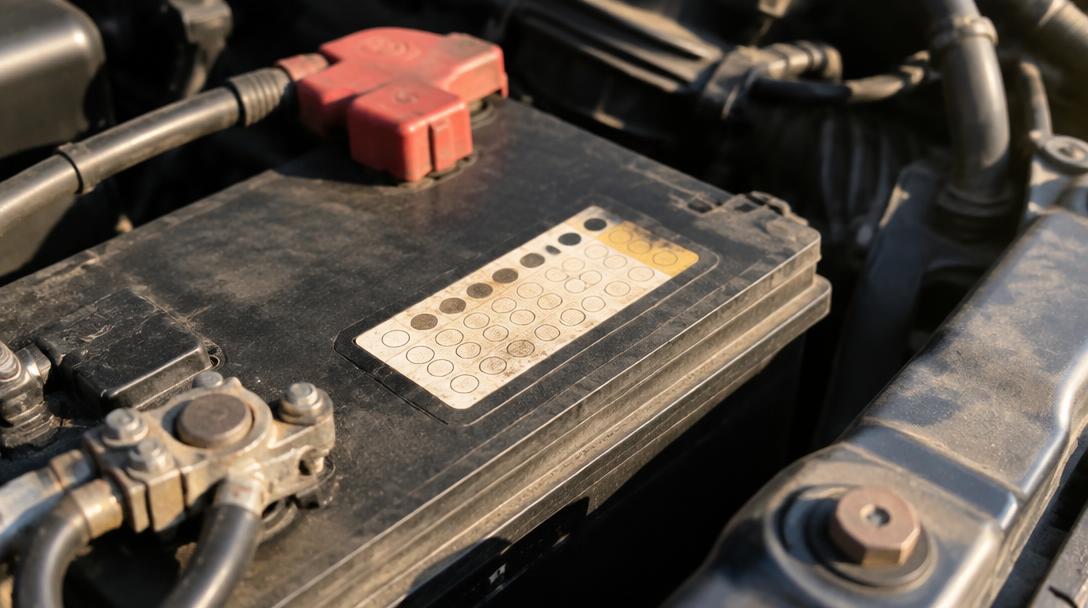
Quick answer: A conventional car starting battery commonly lasts about three to five years, but Illinois weather and your driving pattern can shorten or extend that window. Use age as a reason to test, not as an automatic expiration date; a properly charged battery’s measured condition matters more than its birthday alone.
What the three-to-five-year estimate really means
A battery is not a maintenance item with one universal replacement interval. Two identical batteries installed on the same day can age differently because one vehicle makes regular longer trips while the other sits between short errands. Temperature, installation, electrical demand, and time spent partly discharged all affect the result.
Interstate describes a typical three-to-five-year battery life, while noting that individual batteries vary. That is a useful planning range for a starting battery, not a guarantee for every vehicle in Hillside. It also does not describe the large traction battery that propels a hybrid or electric vehicle. Those batteries have different designs, service procedures, and expected lives.
Think of the range as a prompt to gather evidence. At three years, knowing the installation date and arranging a condition test becomes more valuable. At five years, a battery that still starts the car deserves attention rather than either blind confidence or automatic condemnation. Your tolerance for a surprise no-start also matters.
How a battery ages even when the car starts normally
A lead-acid starting battery stores chemical energy and supplies a short, strong burst of current. Starting the engine takes a different kind of performance than powering a small cabin light. A battery may operate that light easily while no longer delivering enough current for dependable starting under difficult conditions.
Inside, plate material changes as the battery cycles and ages. Extended time at a low state of charge can promote sulfation that reduces usable capacity. Heat speeds damaging chemical changes. Vibration and an insecure mounting arrangement can add physical stress. These processes accumulate; they do not reset simply because the engine starts successfully today.
There are also two different questions hidden inside the phrase “good battery.” Is it charged right now? And how much useful capability remains when it is charged? A discharged but otherwise serviceable battery may recover with proper charging. An aged battery with diminished capacity may show a reasonable resting voltage yet perform poorly under load.
That distinction prevents unnecessary replacement. A low reading immediately after repeated unsuccessful starts is not, by itself, proof that the battery has reached the end of its life. Charging it safely and testing it under appropriate conditions can produce a more meaningful answer.
Why Illinois driving can change the timeline
Illinois gives batteries both hot summer days and cold winter starts. Summer heat can accelerate aging that becomes noticeable only when colder weather demands more starting effort. The calendar season in which a battery finally struggles is not necessarily the season responsible for most of its wear.
The Department of Energy notes that cold weather reduces battery performance and increases electrical demand. Heated seats, defrosters, and blower fans all contribute to winter energy use. This does not mean drivers should switch off necessary visibility equipment. It means a battery’s workload should be considered alongside its age.
A Berkeley driver making several brief trips may repeatedly spend energy on starts without giving the charging system much operating time between them. A longer commute can provide more opportunity for replenishment, although no fixed driving time guarantees a full charge. Battery condition, temperature, accessory use, and vehicle charging strategy all affect that calculation.
Stop-and-go traffic on I-290 is not a battery-life measurement by itself. The relevant question is the whole pattern: how long the engine operates, how often it starts, how the vehicle manages charging, and how much the battery supplies when the engine is stopped. Mileage alone misses much of that story.
The installation date is more useful than a guess
Look for a dated receipt or service record before trying to decode a battery label. A label may indicate manufacture rather than installation, and coding systems differ. If you cannot establish the date confidently, write “unknown” in your records instead of assigning an age based on how dusty the case looks.
A used car creates a common blind spot. The vehicle may be eight years old, but its current battery could be one year old or five. Ask for prior replacement paperwork when available. A photograph of the battery label can help a mechanic identify specifications without requiring you to remove covers or handle the battery.
Also record the battery type. Conventional flooded, enhanced flooded, and absorbed glass mat batteries are not interchangeable merely because their cases appear similar. The replacement must meet the vehicle manufacturer’s requirements. A battery installed with the wrong specification can complicate any attempt to estimate useful life.
Keep future records simple: installation date, mileage, battery specification, and subsequent test results. A short note on your phone is enough. Having that history turns a vague question about age into a practical conversation about whether performance is stable, declining, or not yet adequately tested.
What a meaningful condition test should establish
A useful evaluation starts with the right battery information and a safe visual inspection. The technician needs to know the specified battery type and rating so the test does not compare it against an inappropriate standard. Damaged cases, leakage, or insecure mounting require attention before ordinary performance questions.
Next comes state of charge. Testing equipment can estimate starting capability, but a substantially discharged battery may need charging and retesting before its long-term condition is judged. Ask whether the result describes present charge, remaining performance, or both. Those terms are related, but they are not interchangeable.
Interstate explains that a multimeter reading does not reveal the battery’s full health. That is why a single voltage number from an inexpensive meter should not become a replacement verdict. Test method, temperature, recent charging, and the vehicle’s operating history can all change how a reading should be interpreted.
A useful report explains the result in ordinary language: acceptable performance, recharge and retest, or evidence supporting replacement. If the test is inconclusive, asking what happens next is reasonable. Repeating an appropriate test after charging is often more informative than choosing a new battery simply because the first screen displayed an unfamiliar number.
Safe checks you can make in a Hillside driveway
With the vehicle parked securely and switched off, review the owner’s manual and locate the battery only if it is readily accessible. Some vehicles place it under trim, a seat, or another protected location. There is no need to dismantle the car just to establish its approximate age.
From a safe distance, look for an obviously distorted case, wetness around the battery, a missing hold-down, or damaged accessible cables. Do not touch suspected leakage or lean over a damaged battery. If there is swelling, significant heat, smoke, or a strong unusual odor, stop and obtain professional guidance rather than attempting another start.
Notice changes over time. Has starting become consistently slower? Is the vehicle asking for a battery check? Did a recent service report recommend retesting? These observations help prioritize an appointment, though they do not identify the cause on their own. Other starting or electrical faults can resemble battery wear.
Avoid the old practice of disconnecting a cable while the engine runs. It is not a safe battery or charging-system test and can damage electronics. Likewise, do not open a sealed battery or add fluids unless the manufacturer explicitly identifies a serviceable design and provides an applicable procedure.
Build a replacement plan around consequences, not fear
A driver with flexible daytime errands may make a different decision from someone who leaves before dawn for a hospital shift. If a no-start would strand a vulnerable passenger or disrupt essential travel, preventive replacement can be reasonable when age and test evidence indicate limited reserve. That is a risk decision, not proof that every older battery is defective.
For an apparently healthy battery, establish a repeatable inspection habit. Review its condition during regular maintenance and before demanding seasonal travel. NHTSA recommends checking the battery and charging system before winter. That advice is especially useful when the installation date is unknown or previous results were borderline.
If the car sits for extended periods, ask about a compatible maintenance charger and follow both vehicle and charger instructions. An appropriate charger needs a safe electrical supply and correct connections. It is not a substitute for diagnosing unexplained discharge, nor should it be connected to a damaged battery.
Do not assume that frequent replacement is cheaper than finding the actual problem. If a relatively new battery repeatedly loses charge, the next step is investigation. Replacing it again may temporarily mask the symptom while leaving the reason for its poor performance untouched.
Discussing battery age at Rios Auto Service
Rios Auto Service is an independent, family-run shop owned by Juan Rios at 4218 Roosevelt Rd, Hillside, IL 60162. Its listed services include battery and electrical service. Bring the installation date, any previous test printout, and a description of your normal driving rather than just requesting a replacement based on age.
Ask for an honest inspection, an explanation of the findings, and a chance to see the evidence supporting a recommendation. A helpful discussion separates what needs attention now from what can be monitored. That keeps the decision focused on your vehicle rather than on an automatic replacement interval or an unnecessary upsell.
Walk-ins are welcome. Hours are Monday through Friday, 8 AM–6 PM, and Saturday, 8 AM–4 PM; the shop is closed Sunday. Call (708) 632-4808 or use the contact page to discuss a visit. Calling ahead is sensible if you need to coordinate transportation, because walk-in availability does not establish a particular completion time.
Frequently asked questions about battery lifespan
Should I replace a battery as soon as it turns three?
Not automatically. Three years is a sensible point to become more deliberate about testing and recordkeeping. A healthy, correctly specified battery may have useful life remaining. Conversely, a younger battery with damage or poor performance may need attention well before that birthday. Condition and your reliance on the vehicle belong in the decision.
Can a battery last longer than five Illinois winters?
Yes, individual batteries can exceed the common planning range. That does not mean yours will, or that another driver’s long-lived battery is a useful warranty on your own. Continue evaluating performance, charging history, and physical condition. Treat a long service life as welcome information, not permission to ignore a new symptom.
Does a long drive make an old battery young again?
No. Suitable driving or proper charging can restore charge, but it cannot reverse all age-related deterioration. A battery can become fully charged while still having limited remaining capacity. If the test recommendation is replacement because of reduced performance, a trip on I-294 should not be assumed to erase that finding.
Is a warranty period the same as expected lifespan?
No. Warranty terms describe a seller’s coverage under stated conditions; they are not a precise prediction of when the battery will fail. Keep the receipt and read the actual terms for your purchase. Use testing and operating history to make maintenance decisions rather than treating the end of coverage as a mechanical expiration date.
Related question
For a closer look at an external connection problem that can affect otherwise usable batteries, read Corroded Battery Terminals.