
Tune-Ups & Maintenance
What a Modern Tune-Up Actually Includes
A modern tune-up follows your vehicle’s maintenance schedule, not a universal parts package. Learn what Hillside drivers should ask before approving work.
By the team at Rios Auto Service, Hillside, IL · · 9 min read
Quick answer: A modern tune-up is a vehicle-specific maintenance visit, not a standard box of replacement parts. It should identify what is due, inspect relevant components, and separate routine maintenance from any testing needed to explain a symptom.
The old tune-up name outlived the old hardware
Years ago, a tune-up often meant adjusting ignition timing and replacing parts that wore at relatively short intervals. Many current vehicles have electronic ignition, computer-controlled fuel delivery, and long-life ignition components. There usually is not a set of points to adjust or a carburetor to tune. The familiar name remains, but it no longer tells you exactly what work a car needs.
That is why two estimates labeled “tune-up” can describe very different jobs. One might include scheduled spark plugs and an inspection. Another might bundle cleaning treatments without explaining whether the manufacturer calls for them. Before comparing prices, compare the actual operations, parts, and reasons. A cheaper label is not necessarily a smaller bill, and a longer list is not necessarily better care.
The goal is straightforward: preserve normal operation by servicing the components that are due and investigating anything abnormal. A healthy vehicle does not need every ignition or fuel-system part replaced just because it has reached a round mileage number. Conversely, an active problem deserves more than a maintenance package and a hope that it goes away.
Start with the schedule, not the menu board
The useful starting information is the vehicle’s year, model, engine, mileage, age, and service history. Some models offer several engines with different requirements. A maintenance reminder may track one service without tracking every time-based requirement. The owner’s manual and vehicle-specific schedule are the baseline; Ford’s maintenance schedule lookup illustrates why identifying the exact vehicle matters.
Look for the difference between “inspect” and “replace.” An inspection asks whether a component remains serviceable. Replacement means the schedule or documented condition calls for a new one. If the schedule says to inspect a belt, that does not automatically authorize replacing it. If it specifies a fluid change by time, a low odometer reading does not automatically cancel that requirement.
Records make this much easier. A receipt showing the correct plugs were installed recently can prevent duplicate work. An invoice that says only “full service” leaves questions. Bring whatever records you have, even if they come from several shops. Missing history is a reason to establish a sensible baseline, not a reason to assume every component is overdue.
Ignition work belongs on the list when it is due
Spark plugs may be part of a modern tune-up, but their interval and specification are vehicle dependent. The correct design, installation procedure, and tightening specification matter. Ford’s spark-plug guidance directs owners to their vehicle information rather than a universal replacement mileage. That is the right principle across makes: verify first, then service.
Ignition coils are different. They are not automatically a scheduled replacement set simply because plugs are being changed. A cracked boot, oil contamination, damaged connector, or confirmed coil failure can justify additional work. The explanation should connect the recommendation to a finding. “We are already there” may explain a labor opportunity, but it does not establish that a good part has failed.
Access also changes the job. On one engine, plugs are easy to reach. On another, intake components may need removal and specified seals may require renewal. This is one reason a neighbor’s invoice is not a reliable estimate for your vehicle. Ask what access work is necessary and whether the estimate includes everything required to complete the installation correctly.
Filters, fluids, and cleaning are separate decisions
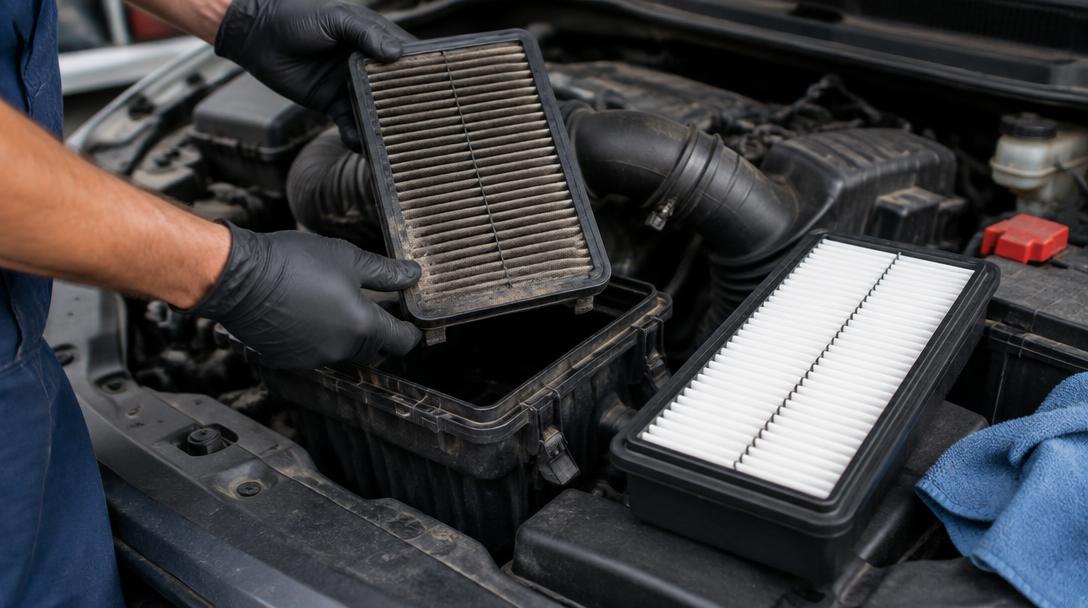
An engine air filter protects the engine from airborne debris. Its condition and scheduled interval determine whether it belongs in the visit. It should fit correctly, and its housing should close securely. That is not the same component as the passenger-compartment filter. Keeping the names straight prevents a vague “air filter service” from becoming an unclear authorization.
Fluids should be checked and serviced according to the vehicle’s requirements, not replaced wholesale under the tune-up label. Correct specifications matter more than matching the color of an old fluid. Ask which fluid is proposed, what interval applies, and whether the work is an inspection, top-up, drain-and-fill, or another specified procedure. Those are different operations with different purposes.
Cleaning services deserve the same scrutiny. A dirty throttle area, a verified deposit problem, and a routine mileage milestone are not interchangeable reasons. Ask what symptom or inspection supports a cleaning recommendation and whether the manufacturer specifies the method. A chemical service is not a substitute for repairing an air leak, failed electrical connection, or mechanical defect.
Maintenance does not replace diagnosis
If the car shakes, stalls, or displays a warning light, describe that problem before agreeing to routine work. A scheduled plug replacement might still be due, but it should not be presented as a guaranteed cure without evidence. Diagnosis identifies the reason for the symptom; maintenance addresses expected service needs. The two can happen during one visit while remaining separate decisions.
The Department of Energy explains that a vehicle may seem to drive normally while an engine fault still affects efficiency or emissions in its vehicle-maintenance guidance. That is a reason to investigate a warning, not a reason to buy every available treatment. A scan result is information to interpret alongside checks, not an automatic shopping list.
A useful estimate makes the distinction visible. It might say that plugs are due by schedule while a separate diagnostic step is needed for an intermittent concern. Ask what the first testing stage covers and when further authorization would be requested. You should be able to understand what is known, what remains uncertain, and what the next decision will cost before proceeding.
What western-suburb driving changes
A car used for short trips between Hillside and Bellwood has a different operating pattern from one traveling long stretches after warming up. Winter starts and repeated brief errands can keep the powertrain below its most efficient temperature for much of the day. The Department of Energy’s explanation of cold-weather fuel economy describes these real operating effects; they are not automatically evidence of neglected maintenance.
Similarly, I-290 stop-and-go traffic can add substantial engine operating time without quickly adding miles. Tell the shop about extended idling, delivery use, towing, or repeated short trips. Those details help determine whether the manufacturer’s special operating conditions apply. Living in Cook County alone does not prove that every severe-service requirement applies to every system.
Road salt and potholes deserve attention during appropriate inspections, but neither creates a universal ignition replacement interval. Keep recommendations connected to the component being discussed. A winter-driven vehicle may need an underbody concern evaluated while its ignition parts remain within schedule. Good maintenance planning avoids turning every local weather condition into a reason to replace unrelated parts.
Safe preparation before a Hillside maintenance visit
You can do useful homework without opening a toolbox. Photograph the odometer and maintenance messages, gather receipts, and note the date of the last relevant service. Find the manual section describing scheduled maintenance. If the car has a symptom, record when it happens: cold or warm, parked or moving, occasional or constant. Specific observations are more useful than diagnosing it yourself.
With the engine off and cool, look for obvious damage or a disconnected intake duct if it is readily visible. Do not reach around moving belts, remove hot caps, or unplug components to see whether the engine reacts. Never work on high-voltage hybrid components. If access requires dismantling parts you do not recognize, leave that inspection to someone with the correct procedure.
Before authorization, ask for the itemized plan. Which items are due by schedule? Which are condition-based? Which address the complaint? Ask whether parts meet the vehicle’s specification and whether any additional labor overlaps with another approved operation. These questions help make an honest estimate understandable; they are not an accusation that every recommendation is unnecessary.
When routine service should become an urgent visit
Routine maintenance can usually be planned, but certain symptoms change the priority. A flashing engine warning light, pronounced shaking, stalling in traffic, overheating, or a strong fuel odor should not wait for a convenient package appointment. Move to a safe location when possible. If the vehicle is running severely poorly or appears unsafe, stop driving and arrange appropriate assistance.
Do not try to prove that the car will make it home by revving it or taking a faster route. Nor should you clear warning information merely to make the dashboard look normal before inspection. Preserve the observations that help explain what happened. When you call, describe the symptoms and ask whether driving the vehicle in is appropriate for its current condition.
For a car that runs normally but has incomplete records, the best next step is less dramatic: establish what has already been done and make a prioritized plan. Some work may be due now; some may belong at a later interval. Leaving with a clear next-service record is often more valuable than leaving with a long list of new parts.
Discussing a tune-up at Rios Auto Service
Rios Auto Service is an independent, family-run shop owned by Juan Rios at 4218 Roosevelt Rd, Hillside, IL 60162. Its services include tune-ups and maintenance and check-engine diagnostics. Bring the vehicle information, maintenance records, and a concise description of any concern so the conversation begins with your car rather than a generic package name.
Ask for an honest inspection-based explanation: what was found, what supports each recommendation, and what can reasonably wait. Request to see the relevant finding when practical. Keeping the discussion tied to the schedule and evidence is the best protection against unnecessary extras; this is not a claim that any particular unlisted inspection or cleaning service is included automatically.
Walk-ins are welcome. Hours are Monday through Friday, 8 AM–6 PM, and Saturday, 8 AM–4 PM; the shop is closed Sunday. For questions before visiting, call (708) 632-4808 or use the contact page. Confirm the proposed scope and timing for your vehicle rather than assuming that “tune-up” guarantees a particular completion time.
Questions drivers ask about modern tune-ups
Does every car still need a tune-up?
Every vehicle needs its specified maintenance, but the work may not be called a tune-up in the manual. Ask for the actual scheduled operations. An electric vehicle does not have gasoline-engine spark plugs, while a hybrid may still have an engine with its own maintenance requirements. The name alone is not a service specification.
Should all the ignition coils be replaced with the plugs?
Not automatically. Scheduled plug replacement and replacing a failed coil are separate decisions. Condition, test results, access, and manufacturer guidance can affect the recommendation. Ask why additional parts are proposed and whether they are necessary now rather than treating an entire set as mandatory simply because one component has been removed.
Will a tune-up make a healthy engine feel stronger?
Proper maintenance preserves intended operation; it is not a promise of extra power. Replacing overdue or defective components may restore performance that was lost. If everything is already functioning correctly, a dramatic change is unlikely. Be cautious about guaranteed improvements that are not tied to a documented fault or overdue service.
What should the final invoice tell me?
It should identify the work performed and provide enough detail to support future maintenance decisions. Keep the date, mileage, part information, and relevant fluid specifications with your records. Also save any deferred recommendations and the reason for them. That record helps the next visit start with evidence rather than guesses about what “tune-up” meant last time.
Related question
If your concern is shaking while stopped rather than scheduled upkeep, read Rough Idle at Stoplights: Common Causes.