
Tune-Ups & Maintenance
Rough Idle at Stoplights: Common Causes
Rough idle at Hillside stoplights can come from air leaks, ignition faults, or worn mounts. Learn safe checks, warning signs, and what testing can reveal.
By the team at Rios Auto Service, Hillside, IL · · 9 min read
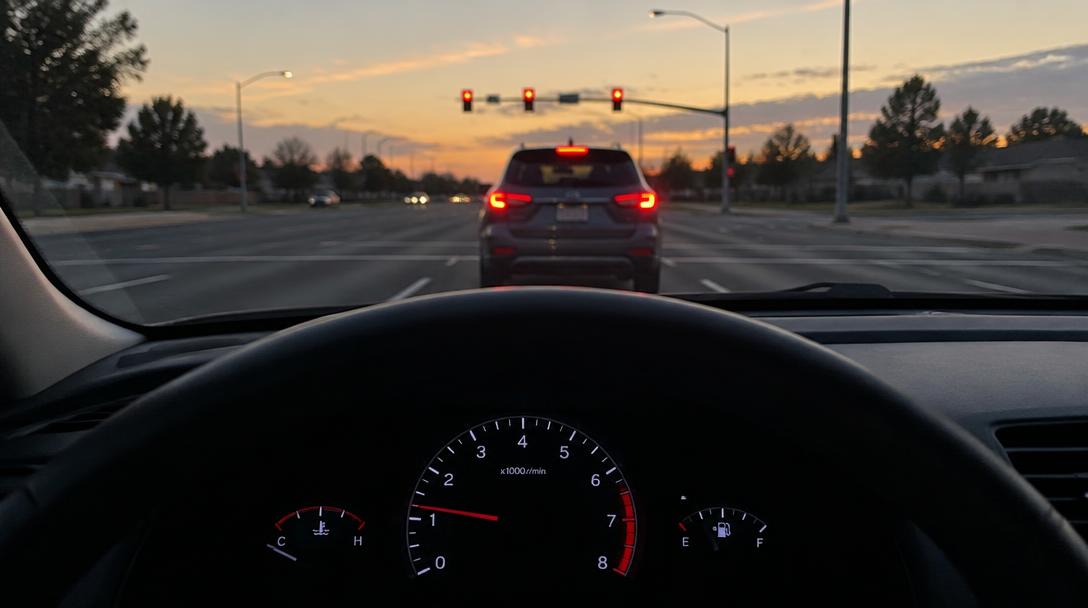
Quick answer: Rough idle at a stoplight can result from unwanted air entering the engine, uneven combustion, an idle-control problem, or vibration transmitted through worn mounts. The pattern matters more than the symptom’s name: note whether it happens cold or warm, whether engine speed changes, and whether warning lights appear.
Why an engine can feel worse while standing still
At idle, the engine is making just enough power to keep itself running and support current loads. There is less momentum to hide an uneven firing event than there is at higher engine speed. A small air leak or a cylinder that is not contributing evenly can therefore become most noticeable while your foot is on the brake.
The engine computer continuously manages airflow and fueling, and on many vehicles it adjusts an electronic throttle to maintain idle. Older designs may use a separate idle air control valve. These are different arrangements, so advice that assumes every vehicle has a cleanable idle valve can send an owner in the wrong direction before any testing begins.
A normal brief response to an accessory switching on is different from repeated stumbling. The air-conditioning compressor, cooling fans, and electrical loads can change the demand placed on the engine. A momentary adjustment may be expected; persistent shaking, repeated near-stalls, or a new change from the vehicle’s familiar behavior deserves attention rather than dismissal as normal aging.
First separate uneven running from transmitted vibration
An engine that sounds uneven and changes speed may genuinely be running poorly. An engine that maintains a steady rhythm while the seat or steering wheel vibrates may instead be transmitting normal engine movement through a worn mount. Both can feel like “rough idle” to the driver, but they lead to different inspections and repairs.
Mounts support and isolate the engine and transmission. Their condition can affect how much vibration reaches the body, especially while an automatic transmission is in gear. A mount problem does not automatically create a fuel-mixture fault. Equally, a stable-looking tachometer does not prove combustion is perfect; the display may not show every small speed change.
Describe what you feel instead of choosing a part name. “The seat shakes after the engine warms up, but the engine speed seems steady” is useful. “It needs mounts” may be only a guess. A technician should consider the engine’s operation and the way movement is being transmitted before recommending either engine-control work or support-component replacement.
Air entering where it should not
The engine needs a controlled mixture of air and fuel. A split intake duct, loose connection, or leaking vacuum circuit can let air enter in a way the control system does not expect. Some leaks are especially noticeable at idle, when the unwanted airflow can represent a larger share of the air reaching the engine.
Possible paths depend on the vehicle. Crankcase ventilation components, intake seals, and other vacuum-connected systems may be involved. A hiss can be a clue, but the absence of one proves little. Looking for leaks may require controlled testing rather than replacing hoses based on appearance or spraying chemicals around a running engine.
Changes associated with pressing the brake deserve a clear description because some brake-assist systems use engine vacuum. If the brake pedal also becomes unusually hard or braking assistance changes, treat that as a safety concern, not merely an idle annoyance. Tell the shop about both symptoms and avoid driving a vehicle whose braking behavior is no longer normal.
Uneven combustion has more than one possible cause
Worn or damaged ignition components can leave one cylinder contributing less than the others. Fuel delivery and mechanical condition can also affect combustion. The same shake can therefore have several explanations. A maintenance history helps, but it cannot prove that an overdue part is the sole cause of the current complaint.
Ford’s spark-plug guidance includes rough running among reasons to investigate and directs owners to vehicle-specific specifications. That does not mean every rough idle requires plugs. It means ignition condition belongs among the possibilities, with confirmation before treating a replacement as the answer.
A cylinder-specific concern may prompt checks of ignition, injector operation, or compression depending on the evidence. A problem affecting the whole engine may point elsewhere. This distinction is why a diagnosis should narrow the possibilities step by step. Replacing a collection of common parts can cost more than testing and still leave the original vibration unchanged.
Idle-control deposits and other look-alikes
Deposits around an airflow-control component can interfere with smooth idle on some vehicles. Car and Driver’s discussion of idle air control valves describes symptoms associated with older valve-based systems. It should not be read as proof that every modern engine uses that design or that every rough idle needs a cleaning treatment.
Electronic throttle bodies can require specific handling and sometimes an adaptation procedure after service. Forcing a throttle plate or applying an unsuitable cleaner can create damage. Cleaning should follow the appropriate procedure and an actual finding. It should not become a routine experiment simply because a video shows a similar-looking engine.
Other possibilities include a purge system that behaves incorrectly, inaccurate sensor information, or an accessory creating abnormal load. These problems can resemble each other from the driver’s seat. A pattern after refueling, after warm-up, or only with an accessory operating helps guide testing, but no single pattern is enough to confidently identify the failed component remotely.
Observations that help on Roosevelt Road
A stop on Roosevelt Rd may reveal a problem that is easy to miss at cruising speed. If you notice it repeatedly, remember the circumstances rather than watching the tachometer instead of traffic. Once safely parked, make a short note: engine warm, transmission in drive, air conditioning on, shake lasting several seconds, warning light present or absent.
For a Hillside driver, the difference between the first cold intersection and a later stop near Mannheim Rd can be significant. The engine’s operating temperature changes the way it manages fueling and idle. The Department of Energy explains how cold starts and short trips affect operation in its cold-weather guidance. Cold conditions are useful context, not a diagnosis by themselves.
Congestion on I-290 may also make the symptom easier to notice because you spend more time stopped with the transmission in gear. That does not establish that congestion caused the fault. Avoid confusing where a symptom appears with why it exists. A precise description of the operating conditions is more valuable than a theory about the road that caused it.
Safe owner checks that do not become experiments
Start with the dashboard and your records. Note any warning message and whether the engine light is steady or flashing. Check whether a recent service, battery disconnection, or repair preceded the change, without assuming the two events are necessarily connected. Do not erase stored information before the vehicle is evaluated.
With the engine off and cool, a visible loose intake connection or damaged duct can be worth mentioning. Do not remove components just to inspect underneath them unless you know the procedure. Keep hands, clothing, and tools away from belts and fans; electric fans can operate unexpectedly. Never run the car inside a garage to listen more closely.
You can also notice whether the symptom coincides with normal accessory use, but do not deliberately provoke a near-stall in traffic. Do not conduct a driveway brake-load test, disconnect coils, or spray flammable products around the intake. Those shortcuts can cause injury, damage, or misleading results. A phone note made after an ordinary trip is safer and often more informative.
When a rough idle should interrupt your plans
A mild, stable vibration without other symptoms should still be scheduled for evaluation, especially if it is new. A flashing engine light, strong shaking, repeated stalling, raw-fuel smell, smoke, or overheating raises the urgency. Move to a safe place when possible and stop driving if the vehicle is running severely poorly or cannot be operated safely.
A stall at an intersection is a traffic risk even if the engine restarts. Repeatedly restarting and continuing through busy crossings is not a repair strategy. Explain that the vehicle has stalled when arranging help. If braking or steering assistance changes after the engine stops, focus on controlling and stopping the vehicle rather than testing whether the symptom will repeat.
The Department of Energy’s maintenance advice emphasizes investigating engine warnings even when a vehicle seems to drive normally. A car does not have to feel terrible to deserve attention. Conversely, the absence of a warning light is not proof that mounts, air leaks, or other drivability concerns are absent.
Turning a complaint into a testable question
A useful diagnostic process first tries to confirm the operating condition: cold or hot, in gear or neutral, with or without accessory loads. The next steps depend on what is observed. Scan information, visual inspection, airflow checks, and cylinder-contribution evidence may each answer a different question. There is no universal single test that explains all idle complaints.
Ask what has been confirmed and what still needs checking. If a part is recommended, ask how its condition accounts for the symptom. If the car behaves normally during the visit, your notes can help narrow the next step without pretending the problem has been reproduced. An intermittent complaint may require a different plan from a constant one.
After repair, verification should address the original conditions as closely as practical. A smooth cold start alone does not establish that a warm, in-gear shake is gone. Keep the description consistent when reporting improvement or recurrence. This makes follow-up more useful than simply saying the car is “better” or “still bad.”
Bringing the concern to Rios Auto Service
Rios Auto Service offers check-engine diagnostics and tune-ups and maintenance. The independent, family-run shop is owned by Juan Rios and is at 4218 Roosevelt Rd, Hillside, IL 60162. Describe the idle complaint directly rather than requesting a particular replacement before anyone has evaluated the vehicle.
Ask for an honest explanation of the findings and request to see relevant evidence when practical. Separate any overdue maintenance from the repair proposed for the shake. That approach keeps the conversation focused and avoids approving unrelated extras. It also leaves room for an accurate answer when the cause turns out to be something other than the part you expected.
Walk-ins are welcome during business hours: Monday through Friday, 8 AM–6 PM, and Saturday, 8 AM–4 PM; Sunday is closed. Call (708) 632-4808 or visit the contact page to describe the symptoms before traveling, particularly if there has been stalling or a warning that makes driving questionable.
Short answers about stoplight shaking
Is a slightly higher idle after a cold start normal?
It can be part of normal warm-up operation. Repeated surging, pronounced shaking, stalling, or a new warning light is different. Compare the behavior with the vehicle’s usual pattern and report a clear change rather than assuming all cold-engine behavior is harmless.
Why does it feel smoother in neutral?
Changing transmission load can alter the vibration you feel. That observation may help distinguish possible causes, but it does not identify a mount or engine fault by itself. Do not keep shifting at intersections as a substitute for having a persistent new vibration checked.
Can it be an engine problem without a warning light?
Yes. Not every fault immediately meets the criteria that turn on a dashboard warning. Mechanical vibration can also occur without an engine-control fault. A new, repeatable symptom remains worth evaluating even when the dashboard looks normal and the car still accelerates acceptably.
Should I try a fuel additive first?
An additive cannot repair every possible cause, including a damaged mount or leaking hose. Starting with one can delay useful testing and make changes harder to interpret. Follow the vehicle manufacturer’s fuel recommendations and seek a cause-based assessment for persistent rough running.
Related question
For a separate concern about efficiency rather than idle quality, read Getting Lost MPG Back.
Sources
- Car and Driver — Cleaning an Idle Air Control Valve (opens in new tab)
- Ford — How often should I replace the spark plugs in my Ford engine? (opens in new tab)
- US Department of Energy — Keeping Your Vehicle in Shape (opens in new tab)
- US Department of Energy — Fuel Economy in Cold Weather (opens in new tab)