
Engine Repair & Replacement
Used vs. Remanufactured Engines Explained
Used engines retain their previous wear; remanufactured engines undergo extensive reconditioning. Compare fit, records, and coverage for Hillside drivers.
By the team at Rios Auto Service, Hillside, IL · · 9 min read
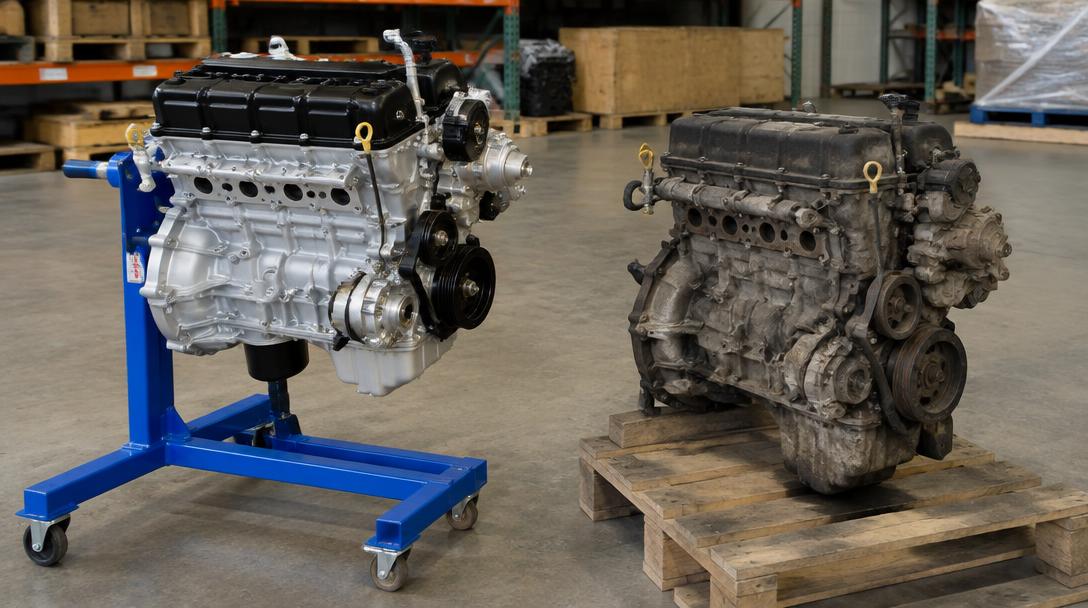
Quick answer: A used engine comes from another vehicle and generally retains its existing internal wear, while a remanufactured engine has been disassembled and reconditioned to the supplier’s specified standards. Neither label guarantees a trouble-free result: Hillside drivers should compare documented condition, exact compatibility, included components, and written coverage before approving either option.
What you are actually buying
An engine replacement estimate can contain two very different products under the same simple description. One supplier may offer an engine removed from a wrecked vehicle. Another may offer a reconditioned assembly built around a previously used block. Both can make sense, but they do not carry the same uncertainties.
A used engine is usually purchased as a functioning assembly rather than restored internally. It may have been cleaned, inspected, or tested, but that does not mean its bearings, piston rings, or timing components were renewed. Its previous mileage and service history still matter, even if it looks freshly washed.
A remanufactured engine starts with reusable major castings and undergoes a more extensive process. That can include disassembly, cleaning, measurement, machining where required, replacement of specified parts, and assembly checks. Ask which standards and tests apply to the particular product; “remanufactured” is not a complete description of everything inside.
A rebuilt engine is another category, not a synonym to accept casually. Rebuilding may address selected worn or failed parts rather than follow a remanufacturer’s broader production process. 1 explains that distinction and why workmanship, components, and future care affect the outcome. Get the actual scope in writing rather than buying a reassuring adjective.
A used engine brings a history, even when records are thin
The strongest used-engine listing connects the assembly to an identifiable donor vehicle and a documented mileage record. Useful details include the donor’s vehicle identification number, engine code, model year, and the seller’s testing description. Those records help establish what is being offered and whether it matches your vehicle.
Mileage is valuable, but it is not a condition report. An engine with fewer miles may have experienced low oil, severe overheating, or long neglect. A higher-mileage unit with credible maintenance records may present a different risk. Neither comparison justifies a guaranteed remaining lifespan.
Ask what “tested” means. Did the engine run before removal? Were compression readings recorded? Was oil pressure measured under specified conditions? A statement that it “turns over” only establishes that it can rotate; it does not establish that it runs properly or maintains oil pressure when warm.
Storage matters, too. Open intake ports, uncapped coolant openings, or exposure to water can create problems after an otherwise healthy engine leaves its donor. You do not need to become a salvage inspector, but you should know who stands behind the condition on delivery and what happens if installation reveals a defect.
Remanufacturing replaces uncertainty with a process, not a promise
A remanufactured assembly can offer a more defined internal starting point. Its value comes from the work performed and verified, not from paint or new packaging. Ask for the supplier’s specification sheet and an explanation of which wear items are always replaced and which components are inspected for reuse.
Measurement is especially important. Cylinder condition, crankshaft dimensions, bearing clearances, and sealing surfaces affect how an engine performs. A proper process evaluates those areas against defined limits. Simply installing fresh gaskets around worn internal parts would not provide the same benefit.
Also ask whether known design revisions are included where applicable. An updated component can be useful, but vague claims that an engine has “all the fixes” deserve clarification. Identify the actual change and whether it applies to your engine family instead of assuming every recurring problem has disappeared.
Remanufacturing does not make the rest of the car new. Existing wiring, fuel delivery, cooling components, and exhaust equipment may remain in service. A carefully prepared engine can still suffer if a separate fault is left unresolved. The original failure needs an explanation before the replacement becomes the next victim.
Matching the engine takes more than matching its size
Two engines described as the same displacement may differ in sensors, cylinder-head design, emissions equipment, control-system compatibility, or mounting details. Production changes can occur within a model year. A familiar appearance or matching badge on the trunk is not enough to approve a swap.
The estimate should identify the required engine code and how compatibility was verified. Some installations require transferring particular external components from the original assembly. Others involve programming or setup procedures. Those details belong in the installation plan rather than emerging as surprises after the old engine is out.
Emissions compliance matters as well. Replacing an engine is not permission to remove required controls or create a configuration that defeats them. The 2 guidance addresses engine switching and the federal prohibition on tampering. An appropriate replacement should preserve the vehicle’s required emissions configuration, not merely fit between the frame rails.
Before spending heavily, check the vehicle identification number for open safety recalls and ask about any applicable manufacturer campaign. The 3 lookup is a useful starting point. A recall search is not a diagnosis or a guarantee of engine coverage, but it can identify a separate action worth discussing with the manufacturer.
Compare complete assemblies and complete written terms
“Engine included” leaves plenty unanswered. A short block generally contains the lower engine assembly; a long block generally adds the cylinder head or heads and related internal components. The exact contents vary. Intake parts, exhaust parts, injectors, turbochargers, sensors, and accessories may or may not be supplied.
Compare estimates on the same basis. If one option includes components that another requires transferring or purchasing separately, the engine prices alone are misleading. Ask for the installed scope, required fluids and seals, diagnostic work, and any conditional items that cannot be assessed until disassembly.
Written coverage deserves equally careful reading. Who supplies it, and who authorizes a claim? Does it cover only the engine assembly, or any removal and reinstallation labor? Are labor payments limited? Who pays for diagnosis, shipping, fluids, or a replacement rental vehicle? Never assume those items are included.
Time and mileage limits are only part of the story. Maintenance documentation, installation requirements, overheating exclusions, and authorization procedures can determine whether a claim is accepted. Ask for the terms before approving the job. A longer headline term is not automatically stronger protection if important costs remain your responsibility.
Some remanufactured engines require return of the original assembly as a core. Clarify the deposit, return deadline, shipping responsibility, and conditions that could reduce the credit. A cracked block or missing major components may affect eligibility depending on the supplier. Those details should not be left until pickup day.
What western-suburb use changes about the decision
For a driver commuting from Bellwood toward I-290, dependable daily starts may matter more than keeping the initial parts purchase as low as possible. For a lightly used second vehicle, a well-documented used engine may be a reasonable compromise. Match the choice to your plans, not a blanket rule that one category always wins.
Chicago winters add useful context. Short trips can leave an engine operating below its preferred temperature for much of the journey. The 4 guidance describes cold-weather efficiency losses and why several short trips from a cold start are demanding. That does not prove an engine is damaged; it explains why mileage alone cannot summarize its previous use.
Road salt also affects the surrounding vehicle. Before buying either engine, consider the condition of the structure, mounting areas, and other systems exposed to winter corrosion. A replacement engine cannot restore rusted metal elsewhere. This is a whole-vehicle condition check, not a reason to reject every older Illinois car.
Be realistic about your own use after installation. Frequent short winter errands around Hillside, long highway trips, and heavy-load operation create different maintenance demands. Use the vehicle manufacturer’s schedule and any replacement-engine requirements. Avoid choosing an engine on the assumption that careful driving can substitute for correct maintenance or sound installation.
Safe homework before approving a replacement
The most valuable owner checks are often paperwork checks. Gather maintenance receipts, oil-change records, past overheating repairs, and the written diagnosis. Photograph the odometer and record the vehicle identification number. These details make it easier to evaluate an appropriate replacement without guessing about the vehicle’s configuration.
If the vehicle is safely parked and fully cooled, follow the owner’s manual for basic fluid-level observations. Note low coolant, an unusual oil level, or visible leakage without reaching near belts or opening a hot cooling system. Observations support the diagnosis; they do not tell you which replacement engine to order.
Do not repeatedly start an engine with a low-oil-pressure warning, severe mechanical noise, or suspected liquid inside a cylinder. More testing is not automatically better when performed without the right equipment. Likewise, avoid additives intended to hide noise or smoke before inspection; they can complicate an already uncertain condition assessment.
You can also review a proposed used engine’s donor information and a remanufacturer’s product description from home. Ask for missing documents before authorizing payment. If the seller cannot explain the engine’s identity, test results, or return terms, pause. A rushed decision is difficult to reverse once installation labor has begun.
When the replacement conversation needs a mechanic
Replacement should follow evidence of damage, not simply a warning light or a single poor-running episode. Ask what testing established the problem and whether the findings point to an internal engine failure. The distinction matters because replacing the assembly will not necessarily cure a fault in an external system.
When significant damage is confirmed, ask what caused it. A replacement plan should address the source of oil starvation, coolant loss, contamination, or another identified failure. Request a clear separation between items necessary to protect the replacement and optional work suggested because access is temporarily easier.
If the engine is overheating, losing oil pressure, or running with severe shaking, stop driving and arrange safe assistance. Do not attempt one more trip along Roosevelt Road simply because the car still moves. Whether a used or remanufactured engine might eventually be appropriate can wait until the immediate hazard is controlled.
Discussing the options at Rios Auto Service
Rios Auto Service is an independent, family-run shop owned by Juan Rios at 4218 Roosevelt Rd, Hillside, IL 60162. Its engine repair and replacement service gives local drivers a place to discuss the diagnosis and the practical differences between replacement options.
Ask for an honest inspection, an explanation of the findings, and a chance to see the evidence behind a recommendation. Bring the questions about donor history, supplied components, compatibility, and written terms. The aim is a justified repair plan without an upsell, not a decision based on which label sounds newest.
Walk-ins are welcome Monday through Friday, 8 AM–6 PM, and Saturday, 8 AM–4 PM; Sunday is closed. Call (708) 632-4808 or use the contact page to discuss the vehicle. Confirm the proposed engine source and coverage directly; no particular replacement product or warranty should be assumed.
Frequently asked questions about replacement engine choices
Is a remanufactured engine brand-new?
No. It normally incorporates inspected, reusable major components alongside renewed or replacement parts. Its appeal is the defined reconditioning process. Ask what was inspected, machined, replaced, and tested rather than treating “remanufactured” as another word for an entirely new factory engine.
Will a used engine last as long as my original engine did?
There is no reliable universal mileage promise. Prior wear, maintenance, storage, installation quality, and future use all matter. Documented donor mileage and meaningful test results improve the information available, but neither can predict exactly how many years or miles remain.
Does a replacement engine reset my car’s odometer?
No. The odometer continues to represent the vehicle’s accumulated mileage. Keep the replacement invoice, installation mileage, and donor or remanufacturer identification with your records. Those documents explain the engine’s history without suggesting the transmission, body, and other systems have fewer miles.
Should I pick whichever engine has the longest warranty?
Not automatically. Compare the actual covered parts, labor limits, exclusions, claim process, and maintenance obligations. Then consider compatibility and documented condition. Coverage can help manage financial risk, but it cannot make an incorrect or poorly documented engine a sensible fit.