
Engine Repair & Replacement
Oil Leaks: Which Ones Can Wait?
A slight oil seep may be monitored after inspection, but pressure warnings, smoke, and fast loss need urgent action. Here is how Hillside drivers can judge.
By the team at Rios Auto Service, Hillside, IL · · 9 min read
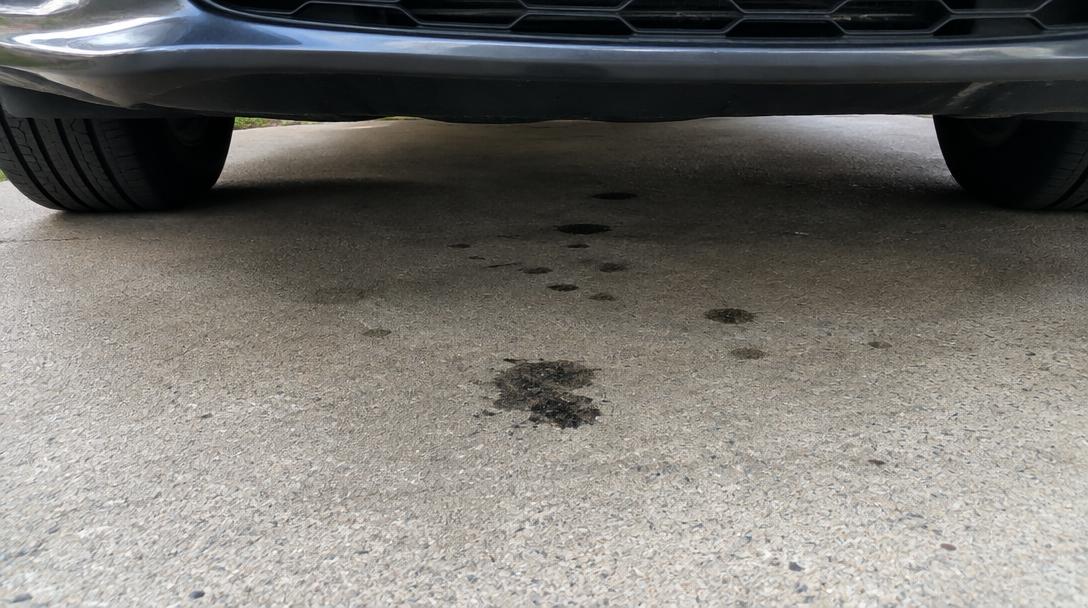
Quick answer: A slight, confirmed engine-oil seep may be monitored until a planned repair when the oil level stays correct and no oil reaches hot or safety-critical parts. An oil-pressure warning, rapid loss, smoke, or oil on the exhaust means stop safely and shut off the engine; the size of the driveway spot alone cannot establish whether driving is safe.
Waiting is a decision about risk, not stain size
Finding oil beneath your car does not automatically mean a major repair is due that afternoon. It also does not give you permission to ignore the leak until the next service. The useful question is whether the leak can be monitored safely, with a known source and a clear plan.
Three things drive that decision: how much oil is escaping, where it is going, and whether the engine still has proper lubrication. A damp gasket edge that never forms a drop is different from oil spraying under pressure. A tiny leak above a hot exhaust surface may deserve more urgency than a larger stain in a less hazardous location.
Distance matters less than people expect. The trip from Hillside to Berkeley can still damage an engine if oil pressure disappears. Conversely, an inspected, slow seep may not require abandoning a reliable vehicle while waiting for a scheduled repair. Diagnosis separates those situations.
Be cautious with anyone promising a universal allowance such as another week or another few hundred miles. Leakage can change with temperature, engine speed, and the condition of a seal. A responsible monitoring plan explains what to check and exactly what changes mean you should stop.
Why engine oil finds a way outside
Engine oil circulates through internal passages and returns to the oil pan. Gaskets and seals contain it where parts join or rotate. Over time, heat cycles and material aging can reduce sealing ability. A damaged surface, loose connection, or installation problem can also allow oil out.
Common inspection areas include the upper engine covers, oil pan, filter area, drain plug, and seals around rotating shafts. Naming those areas does not identify your leak. Oil can run down the engine, spread across an underbody panel, and drip well away from its origin.
Some leaks become obvious shortly after maintenance because spilled oil was not fully cleaned away. Others involve an actual sealing problem that needs correction. If the spotting began after service, report that timing promptly, but avoid deciding in advance that the filter or drain plug must be at fault.
Crankcase ventilation also influences sealing. If pressure inside the engine is abnormal, simply replacing the visibly wet gasket may not address the reason oil escaped. A useful inspection considers the surrounding system instead of treating every stain as an isolated bad seal.
This article concerns external engine-oil loss. Oil consumption inside the engine and other vehicle fluids require different investigations. If you cannot confidently identify the liquid, describe its location and appearance without handling it; do not approve an engine repair based on color alone.
What an oil seep looks like
A seep usually means a thin film of oil or damp dirt at a joint rather than a fresh stream. The area may look darker than surrounding metal. After cleaning, it may take considerable time for dampness to return, and the measured oil level may remain stable.
That can make monitoring reasonable after inspection, provided the seep is not reaching a hazardous location. The key phrase is after inspection. Looking down from above may hide a wet exhaust shield or oil collecting inside a lower cover.
An active leak forms fresh drops or visibly replenishes a wet area. A growing spot, repeated need to add oil, or a drip after every drive suggests more than an old stain. It deserves prompt attention even if the engine sounds normal.
There is no reliable conversion from puddle diameter to oil loss. A few drops can spread widely on smooth concrete, while an absorbent surface can hide a larger quantity. Rain, driveway slope, and shields beneath the engine further distort what you see.
If a mechanic recommends monitoring, ask which seal is involved, whether the area was cleaned, and when it should be checked again. A plan based on an identified seep is very different from being told that older cars just leak.
The leaks that should not wait
An oil-pressure warning while the engine is running is a stop-driving event. Reach a safe location and switch the engine off. Do not leave it idling while you decide what to do. A correct dipstick level does not prove that the engine is receiving adequate oil pressure.
Dashboard symbols differ, so identify yours before a problem occurs. 1 Ford’s warning-light guidance distinguishes the engine-oil warning from other alerts and directs owners to model-specific instructions. A maintenance reminder and a lubrication warning are not interchangeable.
Smoke or a burning-oil smell also changes the urgency, especially when oil may be contacting hot components. If there is visible fire, move away from the vehicle and call emergency services. Do not open the hood to investigate a fire or try to preserve the engine at the expense of personal safety.
Oil leaks can create a genuine fire risk in particular circumstances. 2 Car and Driver reported a Jaguar Land Rover recall involving cracked oil-filter housings and oil reaching hot engine components. That model-specific example is not evidence that your car has the same defect; it illustrates why leak location matters.
Rapid loss, oil reaching a tire or braking component, or a substantial fresh puddle also warrants stopping use until assessed. Adding oil does not make those hazards safe. If the dipstick shows no oil, do not restart merely to see whether the warning clears.
How western-suburb driving complicates monitoring
A car used for short trips between Westchester and Hillside may sit in several different parking spaces each day. That makes the leak look intermittent when you simply have fewer chances to observe it. Choose one regular parking spot for comparison when possible.
Winter grime can disguise fresh oil on the underside, and snow or wet pavement can make spotting harder. Once the driveway dries, a stain may suddenly appear noticeable even though the problem began earlier. Avoid assigning an exact start date unless you actually observed the change.
I-290 driving adds another variable: oil can escape while the vehicle is moving and never create an impressive puddle at home. A clean driveway is therefore not a substitute for checking the oil level. This is especially important before a longer drive beyond the western suburbs.
Pothole impacts are worth mentioning if the leak appeared immediately afterward, particularly if the vehicle struck the road underneath. Do not crawl below it to assess a damaged pan. A fresh leak after an impact deserves prompt professional inspection rather than routine monitoring.
None of these conditions establishes a diagnosis by itself. They explain why a useful account includes driving pattern, recent service, any impact, and measured level changes, rather than only the sentence, “It leaks sometimes.”
Safe owner checks that provide useful evidence
Follow your vehicle’s instructions for checking engine oil. Park level, shut the engine off, and wait the specified time before reading the dipstick or electronic display. Different vehicles use different procedures, so a habit learned on your previous car may not produce an accurate reading now.
For example, 3 Ford’s oil-checking instructions specify level ground, an engine-off waiting period, and avoiding overfilling. Use your own model’s instructions for the correct timing and approved oil rather than copying a generic interval.
Write down the mileage, reading, and any oil added. Check under similar conditions each time so the comparison means something. A log showing the level moved from one mark to another is more useful than several uncertain memories of whether it looked full.
If safe and permitted where you park, place clean cardboard beneath the stationary vehicle with the engine off. Remove it before driving. Photograph any marks, noting which edge faced the front of the car. This helps describe a pattern without pretending it locates the source precisely.
Look from above with a flashlight, but keep hands away from fans, belts, and hot surfaces. Never use a jack alone to support a vehicle while looking underneath. Do not loosen a filter, tighten a drain plug, or wash the engine with household chemicals as an improvised diagnostic step.
What a reasonable waiting plan includes
Monitoring should have boundaries. Ask whether the vehicle can be used normally, whether longer journeys should wait, and how often the level should be checked. The answer should reflect the observed leak, not simply the age of the car.
Agree on a review point. That might involve a reinspection after cleaning, a scheduled repair, or contacting the shop if fresh drops return. The plan should also identify immediate stop conditions: pressure warning, smoke, rapid loss, or a new hazardous leak location.
Keep the correct oil available only if the vehicle’s instructions and the assessment make topping up appropriate. Add small amounts according to the manual and never exceed the maximum mark. Carrying oil is not a workaround for a leak that makes the vehicle unsafe.
Do not add thicker oil or a seal-swelling product merely to quiet the problem. A change in viscosity can conflict with engine requirements, and an additive cannot repair damaged hardware. Ask what the manufacturer permits before putting anything outside the required oil specification into the engine.
Finally, check for relevant safety recalls by VIN. 4 NHTSA’s recall lookup helps identify whether a known safety campaign applies to your specific vehicle. A recall search supplements inspection; an absence of open recalls does not prove an individual leak is harmless.
Bringing the right questions to Rios Auto Service
Rios Auto Service offers engine repair and replacement at 4218 Roosevelt Rd, Hillside. It is an independent, family-run shop owned by Juan Rios. Walk-ins are welcome, but an actively unsafe leak is a reason to discuss transport before setting off.
Call (708) 632-4808 or use the contact page with your symptoms, level readings, and recent service history. Mention any warning light first. Saying that the oil-pressure warning appeared is more important than describing whether the stain looked brown or black.
Ask for an honest explanation of the source and consequences: can the wet area be shown, what confirms it is engine oil, and is monitoring actually appropriate? Request that necessary work be distinguished from optional maintenance. That keeps the discussion focused on evidence rather than an automatic list of replacement gaskets.
If access requires cleaning or further testing, ask what that step is intended to establish. Multiple leaks can exist together, and fixing the most visible one may not eliminate every drop. A clear description of uncertainty is more useful than a premature promise that one part will solve everything.
The shop’s hours are Monday–Friday, 8 AM–6 PM, and Saturday, 8 AM–4 PM; Sunday is closed. A planned appointment should not become a reason to drive with an oil-pressure warning. Safety instructions take priority over the calendar.
Frequently asked questions
Can I wait until my next oil change?
Possibly, but only after the source, rate, and location have been assessed. A stable seep may fit a planned repair. Fresh dripping, falling level, smoke, or a warning changes that decision. An oil change does not itself fix a leaking gasket or seal.
Is one drop overnight harmless?
Not necessarily. One observed drop does not reveal what escapes while driving or where the oil travels before reaching the ground. The oil level and leak location matter more than a single drop count. Photograph the evidence and arrange an assessment if the spotting is new.
Will topping up protect the engine?
Maintaining the proper level is important, but it does not guarantee proper pressure or prevent oil from reaching hot parts. Never use repeated top-ups to justify driving with warning lights or smoke. If topping up is appropriate, follow the manual and record the amount.
Does an older car always need every leak repaired immediately?
No. Age alone is not the deciding factor. Some minor, confirmed seeps can be monitored, while others deserve prompt repair because of their location or progression. The practical goal is a safe, specific plan rather than either dismissing all leaks or treating every damp joint as an emergency.
Related question
For a different urgent engine symptom, read Overheating in Summer Traffic.