
Engine Repair & Replacement
Engine Knocking: What It Means
Engine knocking can mean abnormal combustion or worn internal parts. Learn what Hillside drivers can check safely and when to shut the engine off.
By the team at Rios Auto Service, Hillside, IL · · 9 min read
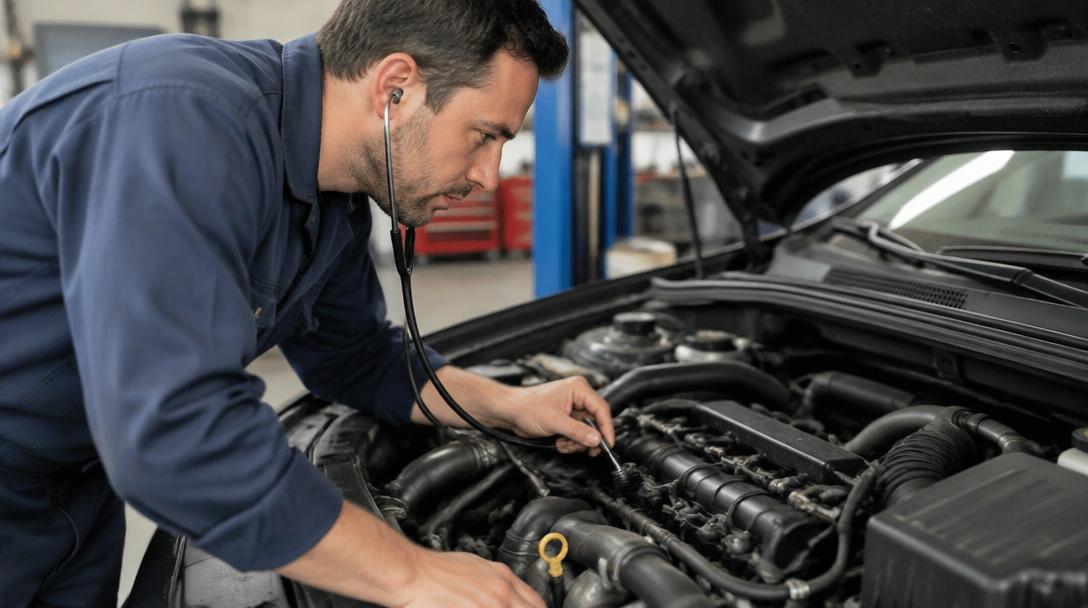
Quick answer: Engine knocking can describe abnormal combustion, worn internal engine parts, or another component making a similar sound. A new, deep, persistent knock—especially with an oil-pressure warning, overheating, or loss of power—means you should stop safely, switch the engine off, and arrange professional evaluation rather than keep driving to test it.
What drivers mean when they say the engine knocks
“Knocking” describes a sound, not a diagnosis. One driver means a light metallic rattle when accelerating. Another means a heavy, rhythmic hammering that continues at idle. Those descriptions can point toward very different problems, so the first useful step is explaining when the sound happens rather than naming a failed part.
A mechanic needs to separate combustion noise from mechanical impact and from sounds outside the engine itself. Exhaust hardware, accessory pulleys, and other nearby parts can imitate an internal problem. Even a noise that changes with engine speed does not automatically prove that something inside the engine has failed.
Think of your description as a short timeline. Did the noise start suddenly or develop gradually? Was the engine cold or fully warm? Did it happen after refueling, while climbing an on-ramp, or while sitting still? These details can narrow the investigation without requiring you to recreate a potentially damaging condition.
Do not judge severity only by volume. A quiet new knock can matter, while some normal injector sounds are surprisingly noticeable with the hood open. Comparing the vehicle with its own established behavior is more useful than comparing it with a neighbor’s different engine.
Combustion knock is different from parts striking each other
In a gasoline engine, the spark starts a controlled burn of the air-fuel mixture. Under unfavorable conditions, part of the remaining mixture can ignite abruptly, creating pressure waves that produce a metallic ping or rattle. This abnormal combustion is often called detonation or spark knock.
Octane measures gasoline’s resistance to knock, not its cleaning strength or overall quality. The Department of Energy’s octane guidance explains why using less octane than the manufacturer requires can cause poor operation and damage. Follow the requirement for your exact engine; “premium recommended” and “premium required” are not interchangeable instructions.
A knock sensor helps the engine computer recognize certain vibration patterns and adjust operation, commonly by changing spark timing. That protection has limits. Persistent audible knocking is not something to dismiss because the vehicle has electronic controls, and a knock-sensor trouble code does not by itself establish that the sensor needs replacement.
Mechanical knocking has a different origin. Excessive clearance at a worn connecting-rod bearing, for example, can let loaded parts move against each other abnormally. Other internal wear can create tapping, rattling, or knocking. Fuel changes cannot restore missing bearing material or correct excessive mechanical clearance.
Pre-ignition is another abnormal combustion condition, in which the mixture ignites before the intended spark. It is not simply another name for every pinging sound. Distinguishing these processes matters to diagnosis, but an owner does not need to identify the exact process before treating a new, persistent noise seriously.
Why oil history matters without proving the cause
Engine bearings depend on an adequate supply of the specified oil under suitable pressure. Low oil level, restricted oil delivery, or existing wear can compromise that protection. Once metal surfaces have been damaged, correcting the oil level may not remove the resulting clearance or noise.
Oil level and oil pressure are related but separate measurements. A dipstick reading within range does not establish that pressure is adequate. Likewise, an oil-pressure warning is not merely a reminder to schedule an oil change. Follow the vehicle’s warning instructions and stop the engine when an active pressure warning requires it.
Car and Driver’s maintenance guide includes checking engine oil as a basic ownership task. For a knocking complaint, the useful information includes the current level, the specified oil grade, the last service date, and whether the vehicle has needed additions between services.
Avoid thicker oil, flushes, or “quiet engine” additives as a diagnostic shortcut. Temporarily changing a sound does not establish that the underlying problem is fixed. An inappropriate product can also complicate the assessment. Save the container or receipt if anything was added before the noise began.
What I-290 acceleration and winter starts can reveal
Merging onto I-290 increases engine load compared with idling in a parking space. A combustion-related rattle may become apparent during acceleration even when the engine sounds normal at a stoplight. That pattern is useful evidence, not permission to make repeated hard pulls until someone else hears it.
If you notice a new noise while merging, prioritize traffic safety. Ease off the accelerator when conditions allow, avoid demanding more power, and reach a safe stopping place. Do not stop in an active travel lane solely to listen. A shoulder beside fast traffic is not a safe location for an extended underhood investigation.
Chicago winters provide another useful distinction: a noise present only during the first moments after a cold start behaves differently from one that grows louder after the engine warms. Neither pattern supplies a diagnosis by itself. Record the temperature and duration rather than repeatedly restarting the engine for a better recording.
The Department of Energy’s discussion of warm-up myths advises avoiding extreme engine loads before normal operating temperature. Long driveway idling is not a repair for a new knock, however. If warning lights or a deep mechanical noise are present, warming it longer can simply extend harmful operation.
Roosevelt Road stop-and-go driving also creates frequent changes between idle and acceleration. Tell the technician whether the sound follows engine speed or instead occurs when the car hits a pothole. A bump-related clunk may involve something other than combustion, even if it seems to come from the engine compartment.
Safe checks you can make with the engine off
Begin with the owner’s manual and the dashboard information you already observed. Note whether the oil-pressure, temperature, or check-engine warning appeared and whether the check-engine light was steady or flashing. Photograph the display only when safely parked; do not use a phone while driving to document a symptom.
On level ground, with the parking brake applied and the engine off, check the oil according to the manufacturer’s procedure. Some vehicles require a waiting period, and others use an electronic level display. If the level is low, add only the specified oil in appropriate increments and avoid overfilling.
Adding oil does not make a knocking engine safe to restart. If there was a deep knock or pressure warning, arrange help even after correcting the level. If the dipstick shows no oil, do not run the engine simply to see whether a fresh addition has cured it.
Review the fuel receipt if the sound began after filling up. Note the octane selected, station, and timing of the first symptom. Do not siphon fuel, mix in improvised additives, or assume a tank of premium will resolve every metallic sound. A technician can decide whether fuel quality warrants investigation.
You may also review service records and look from a safe distance for obvious loose exterior covers with the engine off and cool. Keep hands away from fans and belts, which can present hazards even after shutdown. Do not remove protective covers, crawl under an unsupported vehicle, or use a screwdriver as a listening probe.
When the sound calls for a shutdown
A deep, regular knock that grows with engine speed deserves urgent attention. So does knocking accompanied by reduced power, severe shaking, smoke, a hot-engine warning, or an oil-pressure warning. Stop safely and switch off. Do not continue toward Hillside simply because the shop is only a few miles away.
A flashing check-engine light can indicate a damaging misfire. With rough operation or a new knock, avoid further operation and seek guidance about safe transport. Different vehicles provide different warning instructions, so use the manual rather than treating every dashboard symbol as an interchangeable maintenance reminder.
A faint ping that appears briefly under load without other symptoms still needs prompt evaluation, especially if the fuel meets the manufacturer’s requirement. Avoid hard acceleration and do not deliberately reproduce it. If it persists, worsens, or comes with any warning, stop rather than treating gentle driving as a guaranteed workaround.
Car and Driver’s guide to unusual vehicle noises illustrates why location and operating conditions matter. A sound may have a less serious source than you fear, but that possibility is a reason for diagnosis—not a reason to keep operating an engine that is showing urgent warning signs.
What a useful knocking diagnosis should establish
The investigation should begin with your description, the applicable service information, and an assessment of whether operating the engine is appropriate. A recording made before shutdown can help, but a phone microphone cannot reliably distinguish bearing damage from every other source. Diagnosis should not depend on a remote audio verdict alone.
Depending on the findings, a technician may review trouble codes and freeze-frame information, assess fuel requirements and oil condition, or measure oil pressure using an appropriate procedure. Codes provide clues about monitored systems. They do not supply a complete explanation of an unmonitored mechanical noise.
Further checks may separate an accessory or exhaust noise from internal engine noise. Compression or other mechanical testing may be appropriate in some cases, but no single test answers every knocking complaint. Ask what each proposed test will establish and how the result will change the next step.
Before authorizing substantial work, ask whether the cause is confirmed or still suspected. Useful findings connect a specific defect to your symptom. An honest explanation should also distinguish what can be established externally from what would require disassembly; a confident-sounding parts list is not a substitute for evidence.
Discussing engine noise at Rios Auto Service in Hillside
Rios Auto Service provides engine repair and replacement service at 4218 Roosevelt Rd, Hillside, IL 60162. The independent, family-run shop is owned by Juan Rios. When describing a knocking concern, include the warning lights, oil-level reading, recent fuel purchase, and whether the sound happened cold, warm, at idle, or under load.
Ask for an honest inspection and to see what was found before discussing repairs. Keep the conversation focused on the confirmed cause, necessary work, and any uncertainty that remains. That approach helps avoid an upsell based on the word “knock” rather than the vehicle’s actual condition.
Walk-ins are welcome Monday through Friday, 8 AM–6 PM, and Saturday, 8 AM–4 PM; Sunday is closed. Call (708) 632-4808 or use the contact page to discuss the concern. Walk-in availability is not a reason to drive a vehicle that should remain shut down; arrange safe assistance when necessary.
Frequently asked questions about engine knocking
Will premium gasoline stop the noise?
Only a fuel-related knock might respond to correcting an octane mismatch. Use the grade your manufacturer specifies and have persistent noise evaluated. Premium cannot repair a worn bearing, loose component, or oil-pressure problem. If the sound is deep or accompanied by warnings, do not run the engine to test a fuel theory.
Does knocking always mean the engine needs replacement?
No. The word covers several sounds and causes, including problems outside the engine. The repair decision should follow identification of the source and assessment of actual damage. A recording or verbal description alone is not enough to justify a major engine decision.
Can a normal oil level rule out serious damage?
No. The level tells you how much oil is present under the measurement conditions, not whether every bearing receives adequate lubrication or whether earlier damage exists. A persistent knock or pressure warning needs evaluation even when the dipstick reading looks correct.
Should I restart the engine so a mechanic can hear it?
Not if it was shut down because of deep knocking, low-pressure warnings, overheating, or severe running problems. Describe what happened and share any existing recording. Let the technician determine whether controlled operation is justified; creating another sample is not worth preventable damage.
Related question
Sources
- US Department of Energy — Selecting the Right Octane Fuel (opens in new tab)
- Car and Driver — Five Freaky Car Noises (and What They Can Mean) (opens in new tab)
- Car and Driver — How to Maintain Your Car to Keep It Running Well (opens in new tab)
- US Department of Energy — Fuel Economy Myths and Misconceptions (opens in new tab)