
Brake Repair
Squealing Brakes: Wear Indicator or Something Else?
Squealing brakes can signal worn pads, moisture, or vibrating hardware. Learn what Hillside drivers can observe safely and when to arrange an inspection.
By the team at Rios Auto Service, Hillside, IL · · 9 min read
Quick answer: A high-pitched brake squeal can come from a pad’s metal wear indicator, but moisture, surface corrosion, vibrating hardware, or the friction material itself can sound similar. Persistent or recurring squealing needs an inspection; if it comes with weaker braking, a changed pedal, smoke, or grinding, stop driving and arrange safe assistance.
What a brake wear indicator actually sounds like
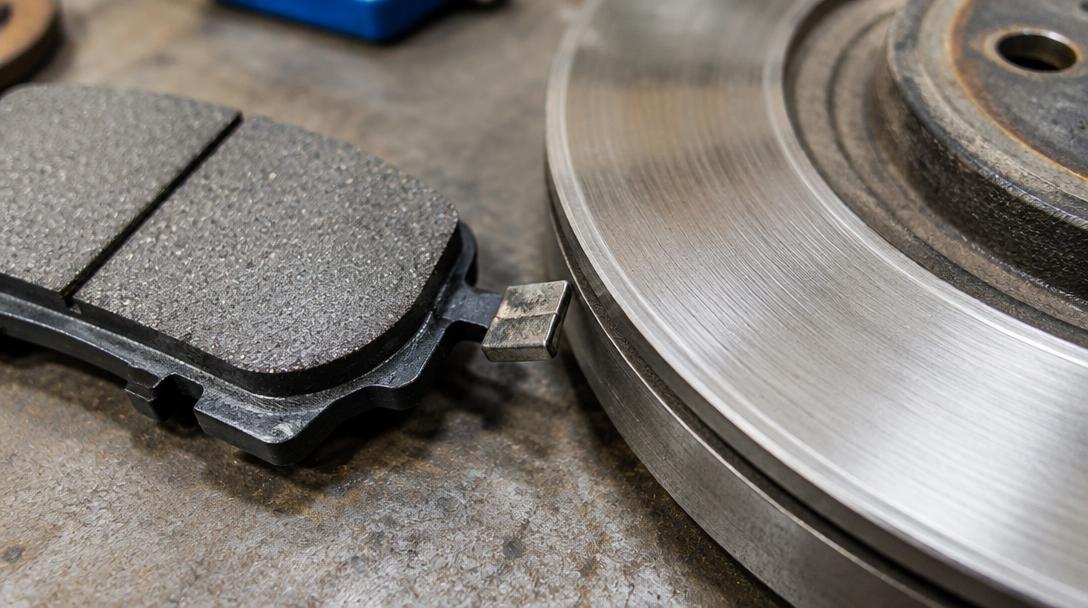
A mechanical wear indicator is a small metal tab positioned near the brake pad’s friction material. As that material wears down, the tab can contact the spinning rotor and produce a sharp chirp or squeal. The sound is meant to attract attention before continued wear becomes a more serious problem.
Chevrolet’s brake-system guide describes these tabs and the chirping, squealing, or whistling they can produce. Not every vehicle uses the same arrangement, however. Some have electronic wear sensing, some use mechanical indicators, and equipment can differ between axles or replacement pad designs.
The noise may change when you press or release the pedal. That pattern is useful information, but it is not a reliable driveway diagnosis. A tab touching a rotor and a vibrating pad assembly can both change their sound as clamping force changes. Loudness does not tell you how much friction material remains.
Do not wait for every wheel to make the same noise. Pads can wear unevenly, and the first audible warning may come from only one location. The practical meaning is “have this checked,” not “you have a guaranteed number of miles left.” A wear indicator is not a mileage countdown.
Why pads can squeal without being worn out
Disc brakes slow the vehicle by pressing friction material against a rotating metal disc. That contact can generate tiny vibrations. Under certain combinations of temperature, pressure, surface condition, and component fit, those vibrations become an audible high-frequency sound. Adequate pad thickness does not rule out a noise problem elsewhere in the assembly.
Shims, clips, and other specified hardware help control how the pads sit and move. Damaged, missing, corroded, or unsuitable pieces can allow noise. A sticking component can also change how the pad contacts the rotor. Replacing friction material without identifying the reason for the vibration may leave the original squeal unresolved.
Chevrolet’s brake-service guidance lists loose-fitting pads, missing or damaged noise insulators, worn pads, and rotor concerns among potential causes of noise or pulsation. Those are different findings requiring different responses. The sound alone does not justify replacing every component, and a thick pad alone does not prove the assembly is healthy.
Friction formulations also have different noise characteristics. Some brakes are more noticeable during light, low-speed stops or at particular temperatures. That possibility should be considered only after checking condition and operation. “Those pads are always noisy” is not a satisfactory explanation for a new sound that has never been evaluated.
The first damp stop in Hillside is a useful clue
After rain, a car wash, or overnight dampness, a thin film of surface corrosion can form on exposed iron rotors. The first normal stops may sound different as the pads sweep that surface. A brief noise that fully clears is a different pattern from squealing that returns throughout the drive.
Chicago winters complicate that distinction. Moisture and road salt expose brake components to conditions that can encourage corrosion. A vehicle parked for several days may behave differently from one driven daily. Still, a salty week does not prove that a new squeal is harmless surface rust or that the pads are worn out.
Stop-and-go traffic on I-290 brings repeated brake applications and changing temperatures. A noise might appear only after the brakes warm up, then disappear by the time you park at home. Tell the technician about that pattern. “It happens after twenty minutes of traffic” is much more useful than trying to imitate the pitch perfectly.
Potholes near a commute route can make owners wonder whether something was knocked loose. Mention a recent impact, especially if the noise began immediately afterward. Do not assume that an impact caused pad wear overnight. A nearby shield or another rotating component can create a sound that seems to come from the brakes.
Describe when it happens rather than chasing the sound
Before arranging service, write down whether the squeal occurs with the pedal pressed, after releasing it, or while coasting. Note whether the vehicle is moving forward or reversing and whether the brakes are cold or warm. A repeating pattern can help narrow an inspection without requiring you to identify the failed part.
Include whether the sound disappears completely after the first few ordinary stops or keeps returning. Mention recent brake work and how soon the sound began afterward. A new assembly may have specific bedding instructions, but that does not mean every post-repair noise should be dismissed as normal settling.
Your impression of which corner is noisy can help, but sound travels through the vehicle and reflects off nearby buildings. A squeal heard with the driver’s window open may originate elsewhere. Let the inspection establish the source instead of requesting parts for the wheel that seems closest to the noise.
If a passenger can safely record the sound during ordinary travel, the recording may help explain an intermittent complaint. The driver should not handle a phone or deliberately provoke repeated stops. Never circle a parking lot with hard braking just to make a louder sample, especially when brake condition is uncertain.
Safe owner checks do not require taking a wheel off
Park on stable, level ground, switch the vehicle off, and allow the brakes to cool. Look for a warning message and review its meaning in the owner’s manual. A missing dashboard warning does not clear the brakes: many vehicles do not monitor pad thickness at every wheel, and mechanical indicators make noise rather than illuminate a light.
You may be able to see part of a rotor and an outer pad through the wheel. That limited view is not a complete thickness measurement. The inner pad can be more worn, and a shiny visible rotor face does not reveal the opposite face or the condition of the mounting hardware.
Do not reach through the wheel to feel hot components, put fingers near an opening while someone moves the vehicle, or crawl underneath using an emergency jack as support. Avoid blowing brake dust away with compressed air. An owner-level check should gather observations without creating an exposure or crush hazard.
Never spray oil, household lubricant, or a general-purpose anti-squeak product onto a rotor or pad. Friction surfaces must remain suitable for braking. Lubricants used during proper brake service belong only at specified locations and must be compatible with the application. Quieting the sound by contaminating the brakes can reduce stopping performance.
When a squeal needs prompt attention instead of monitoring
A brief damp-weather noise that fully clears, with normal braking and no other symptoms, may allow you to discuss the pattern at a scheduled inspection. Recurring noise deserves earlier evaluation even if the vehicle still stops normally. Do not spend weeks waiting for an unmistakable grinding sound to confirm that something is wrong.
Ford’s inspection guidance calls for immediate inspection of continuous grinding or squealing and other concerning brake symptoms. Treat persistence as a reason to act, not as proof that one particular component needs replacement. The shop still needs to establish the cause.
If braking is weaker, the pedal changes significantly, the vehicle becomes difficult to control, or you notice smoke or a strong burning smell, stop in a safe place and arrange assistance. Do not drive to a repair shop merely because it is nearby. A quiet stretch of road does not make compromised braking safe.
Winter road conditions reduce the room available for mistakes. NHTSA’s winter-driving guidance emphasizes vehicle preparation and extra caution on slippery roads. A new recurring brake noise is worth resolving before a snowstorm or long expressway trip, rather than discovering that it accompanies a more serious defect when traction is limited.
What an inspection should establish before parts are chosen
A useful inspection connects your reported sound with physical findings. That can involve checking friction-material thickness at the relevant pads, comparing inner and outer wear, examining rotor surfaces, and assessing the hardware and caliper operation. The exact procedure depends on the brake design and the circumstances in which the noise occurs.
If a wear tab is contacting the rotor, the next question is whether wear is even and why service is needed now. If the friction material remains adequate, the inspection should look for other causes rather than ending with “the pads look fine.” A noise complaint and a safety evaluation are related but not identical tasks.
Ask which observation supports the proposed repair. A measurement, a visible contact mark, damaged hardware, or a sticking component provides a clearer explanation than a broad statement that brakes get noisy with age. Some findings need action now; others may be suitable for monitoring after the actual squeal is identified.
After recent brake work, report the complaint to the servicing shop promptly. Provide the date, driving pattern, and whether the noise is improving, unchanged, or worsening. Follow only the applicable bedding procedure, if one is supplied. Repeated aggressive stops are not a safe universal cure for an unknown squeal.
Talking through squealing brakes at Rios Auto Service
Rios Auto Service provides brake repair at 4218 Roosevelt Rd, Hillside, IL 60162. It is an independent, family-run shop owned by Juan Rios. When describing the concern, lead with when the sound occurs and whether braking behavior has changed, rather than requesting a specific part based on a video diagnosis.
Ask for an honest inspection and to see what was found. You can ask whether the noise comes from a wear indicator, whether pad wear is uneven, and which evidence supports each recommendation. Those questions keep the discussion focused on the actual defect and avoid treating every squeal as a reason for an unrelated service package.
Walk-ins are welcome Monday through Friday, 8 AM–6 PM, and Saturday, 8 AM–4 PM; Sunday is closed. Call (708) 632-4808 or use the contact page to explain the symptoms. If you have an unsafe braking condition, arrange safe assistance rather than attempting to drive there for the convenience of a walk-in visit.
Frequently asked questions about brake squeal
Can a wear indicator squeal when I am not braking?
Yes, depending on its position and the brake design, contact can sometimes be audible without deliberate pedal pressure. Other components can produce a similar noise while coasting. Whether pressing the pedal changes or stops it is useful information, but it does not identify the source by itself. Have recurring noise checked rather than assuming it is unrelated to braking.
Does squealing mean the pads are already metal-to-metal?
Not necessarily. A mechanical indicator is designed to make contact before the friction material is completely exhausted, and vibration can cause squeal even with usable material remaining. However, you cannot determine the remaining margin by listening. Grinding, visible damage, or changed stopping behavior raises urgency and should not be treated as just a louder version of an ordinary squeak.
Is it safe to ignore squeal that happens only in reverse?
No single direction makes a noise harmless. Pad movement and contact conditions can change in reverse, making an existing issue easier to hear. Record whether it happens only on the first reverse movement or every time, and arrange evaluation if it recurs. Avoid using normal forward braking as proof that the entire assembly is sound.
Will replacing the pads always stop the noise?
No. If the source is unsuitable hardware, a sticking component, a rotor condition, or another nearby part, pads alone may not resolve it. The repair should follow the inspection findings. Good noise diagnosis identifies what is vibrating or making unintended contact, then addresses that cause rather than selecting parts solely because squealing is commonly associated with pad wear.
Related question
If the concern includes vibration rather than sound alone, read Steering Wheel Shakes When Braking.