
Brake Repair
ABS Light On: Is It Safe to Drive?
An ABS light can mean lost anti-lock protection even when regular brakes work. Learn when Hillside drivers should stop and when to arrange prompt inspection.
By the team at Rios Auto Service, Hillside, IL · · 9 min read
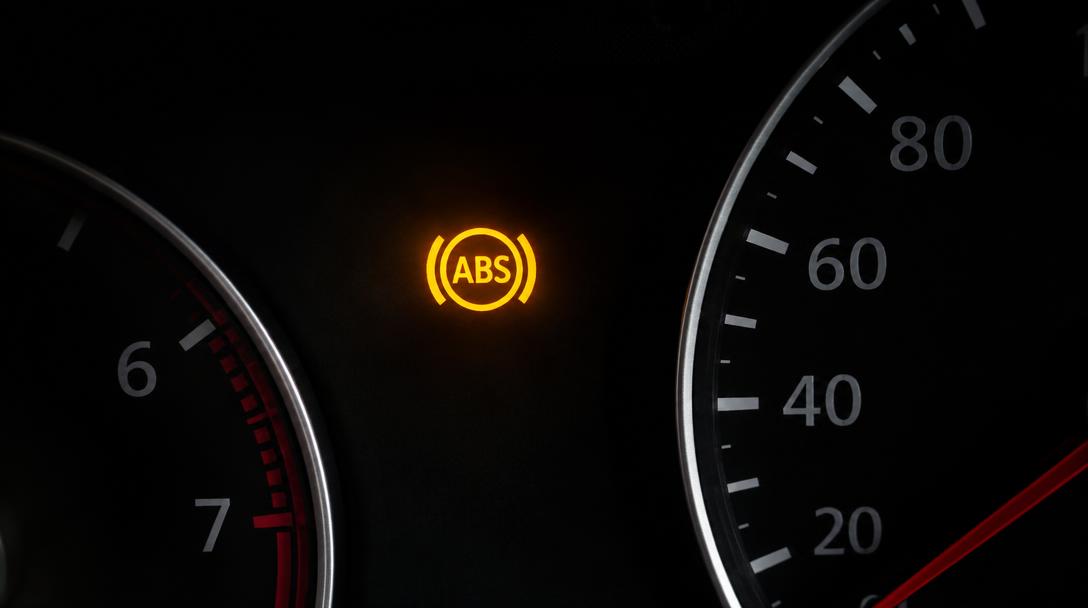
Quick answer: An ABS light that stays on usually means the anti-lock system has detected a fault, and anti-lock protection may be unavailable even if ordinary braking feels normal. An ABS warning alone is not permission to continue normal driving: check your owner's manual and arrange prompt diagnosis. If the red brake warning also stays on, braking changes, or you notice leakage, smoke, or loss of control, stop safely and arrange assistance instead of driving to a shop.
What the ABS light is telling you
ABS stands for anti-lock braking system. During hard braking, it monitors wheel behavior and can adjust brake pressure to help prevent wheels from locking. Keeping the wheels rotating helps preserve steering control while braking. The system works alongside the basic brakes; it does not replace the pads, rotors, hydraulic components, or tires.
On many vehicles, the ABS lamp illuminates briefly when the ignition is switched on as part of a self-check. A light that goes out as described in the owner's manual is different from one that remains illuminated or comes on during a trip. Record the exact message rather than assuming every brief appearance means a failure.
When the light stays on, the system has recognized a condition that requires attention. The warning does not tell you which part failed, how much a repair will cost, or whether every other brake component is sound. It also does not necessarily mean the anti-lock system is actively applying the brakes.
Ford's dashboard-warning guidance explains that an ABS fault can leave normal braking available without ABS, unless the brake-system warning lamp also illuminates. That distinction is useful, but it is not a universal clearance to drive. Your vehicle's manual, other warnings, and actual braking behavior determine the next step.
Why normal pedal feel does not mean normal protection
In routine stops on dry pavement, you may never notice the anti-lock system working. That is why an ABS fault can feel surprisingly uneventful. The pedal may remain firm, and the car may slow normally at the next traffic signal. The missing assistance becomes important when a wheel approaches lockup.
With functioning ABS, you may feel rapid pedal pulsation or hear operating noises during an emergency stop or on a slippery surface. Those sensations can be normal intervention. They are different from a warning lamp remaining on afterward, and they should not be confused with persistent mechanical vibration during ordinary braking.
ABS does not create tire grip or eliminate stopping distance. Ice, standing water, worn tires, and excessive speed can overwhelm the traction available even when the electronics work correctly. Steering capability during a hard stop is valuable, but it is not a guarantee that the vehicle can avoid an obstacle.
NHTSA's winter driving advice distinguishes braking technique for vehicles with and without anti-lock brakes and emphasizes knowing the vehicle. With operating ABS, maintain firm, continuous pressure rather than pumping the pedal. If a fault is present, do not guess how the remaining system will behave; follow the manufacturer's instructions and seek professional guidance before continuing.
The warnings that make this a stop-driving situation
An amber ABS light alone and an ABS light accompanied by a red brake warning are not equivalent. The red warning can indicate a condition involving the basic braking system. First confirm that the parking brake is fully released while safely parked, but do not dismiss a warning that remains illuminated afterward.
If the pedal sinks unusually, stopping effort changes, the vehicle fails to slow normally, or there is obvious leakage, stop driving. Smoke, a strong burning odor, or severe pulling also outweigh any reassurance from the color of the ABS lamp. A dashboard symbol cannot cancel out a physical sign that the brakes are unsafe.
If trouble starts while moving, concentrate on maintaining control and reaching a safe stopping place as conditions permit. Avoid sudden steering or unnecessary speed. Once stopped, do not make repeated test runs to see whether the problem clears. Arrange appropriate help, and contact emergency services if the vehicle's position creates an immediate danger.
Some vehicles display explicit instructions such as stopping safely or not driving. Treat those messages as instructions, not suggestions to compare against an internet checklist. Electronic braking arrangements vary, especially on newer hybrids and electric vehicles. A general explanation cannot override the warning procedure for your exact model.
Why the light may appear without a failed brake pad
ABS relies on wheel-speed information, wiring, electrical power, and a control system that can manage hydraulic pressure. A problem in any of those areas can trigger a warning. Possibilities include a damaged sensor circuit, a faulty signal from an encoder or tone ring, or an issue within the hydraulic or electronic assembly.
A wheel-speed signal can be affected by more than the sensor itself. Wiring near a wheel may be damaged, a connector may be compromised, or a bearing-related component may affect the signal. Replacing a sensor because a code mentions that wheel can miss the underlying fault. Codes identify a diagnostic path, not a shopping list.
Low system voltage or a power-supply fault can also complicate electronic diagnosis. Tell the technician about a recent dead battery, jump-start, or charging warning. That history does not prove the ABS warning is harmless, and a fresh battery is not automatically the solution. It helps establish the conditions under which the fault appeared.
Bosch describes ABS, traction-control, and stability-system diagnosis as involving sensors, control components, and hydraulic functions. The relevant point for an owner is the system's breadth. An illuminated lamp cannot distinguish a small wiring repair from a more involved component problem without testing.
Why Hillside winter traffic makes missing ABS matter
A driver leaving Bellwood may encounter dry pavement on one street and a slick patch on the next. Shaded areas, changing temperatures, and winter precipitation can produce different grip within a short distance. An ABS fault may not announce its consequences until a sudden stop puts one or more wheels near lockup.
On I-290, tightly spaced traffic leaves less room to absorb an unexpected slowdown. The sensible response to a warning is not to compensate by trusting your reflexes. Avoid an expressway trip while deciding what the vehicle needs, and never use busy traffic to test whether anti-lock braking still activates.
Road salt and moisture can contribute to deterioration around exposed wiring and components, while pothole impacts can be relevant to wheel-area damage. Neither proves the cause of a particular ABS fault. Tell the shop if the warning began after an impact, wheel-bearing work, or tire service so those areas can be examined appropriately.
Tires remain essential whether ABS works or not. NHTSA's tire safety information stresses correct pressure and tire condition. Poor tread or an underinflated tire can reduce your margin on wet or wintry roads. Fixing the warning does not make a damaged tire safe, and fitting better tires does not repair the ABS electronics.
Checks you can safely make while parked
Start by reading the owner's manual section for the exact warning symbol and any accompanying message. Note whether the light appears only during startup, remains on continuously, or first comes on after the car begins moving. Take a dashboard photograph while parked, not while driving along Roosevelt Road.
Record all the warning lights, not just ABS. Traction-control or stability-control warnings may appear because those systems share information with ABS. A red brake warning, battery warning, or explicit stop message changes the picture. Tell the technician what appeared together and whether any message disappeared after shutdown.
You can inspect accessible tires for obvious damage and confirm cold pressures against the vehicle placard. Mention a temporary spare or recent tire-size changes, since unusual rolling characteristics can matter to wheel-speed interpretation. Do not attempt to compensate by changing pressures away from the manufacturer's specifications or disabling another safety feature.
If the manual permits a normal restart, note whether the lamp returns. A warning disappearing is useful history, not proof of repair. Do not repeatedly cycle the ignition, disconnect the battery, remove fuses, or erase codes to make the dashboard look normal. Those actions can remove useful information without correcting the fault.
Keep owner checks observational. Do not crawl underneath to unplug sensors, probe connectors with improvised tools, or spin wheels with the car supported by a jack. Wheel-area electrical testing and hydraulic service require the right equipment and procedures. There is no benefit in turning a warning-light concern into an injury.
Can you make a short trip to a repair shop?
There is no reliable mileage limit that turns an ABS fault into a safe trip. The manual's instructions, presence of other warnings, braking behavior, and road conditions all matter more than the number on the navigation screen.
If only the amber ABS light is on, the manual allows continued operation, and ordinary braking is unchanged, a cautious direct trip for inspection may be possible. Call ahead for guidance, leave extra space, and avoid unnecessary travel. This is a conditional decision, not a recommendation to finish a week's errands first.
If anything is uncertain, arrange transport instead. Do not drive through snow, heavy rain, or fast traffic simply because the brake pedal felt normal in a driveway. An intermittent light still deserves diagnosis; it may reflect a fault that appears only at a particular speed, temperature, or steering position.
You can also check the vehicle identification number using NHTSA's recall lookup. A relevant open recall may provide important instructions, but a clear recall search does not establish that the vehicle is safe. Recall status and diagnosis answer different questions, and one cannot replace the other.
What diagnosis should establish before parts are ordered
A useful starting point is reading the ABS control system with suitable equipment. A basic engine-code reader may not access it. The shop needs the exact fault information and, where appropriate, wheel-speed data and electrical measurements. Clearing a code before investigating can make an intermittent problem harder to trace.
Testing should distinguish a failed component from a problem in its power, wiring, or signal path. A wheel-speed code, for example, may call for inspection of the associated harness and encoder rather than immediate sensor replacement. Hydraulic faults require their own procedures. The recommendation should follow the evidence, not the warning lamp alone.
Verification matters after the repair. The lamp should complete its normal self-check, relevant faults should be addressed, and system operation should be evaluated according to manufacturer procedures. Simply making the symbol disappear is not the same as establishing that the safety function is available again. Ask what confirmed the cause and what confirmed the repair.
Getting help at Rios Auto Service
Rios Auto Service provides brake repair at 4218 Roosevelt Rd, Hillside, IL 60162. The independent, family-run shop is owned by Juan Rios. Bring the warning photograph and the circumstances surrounding its appearance, including recent battery trouble, wheel work, impacts, or changes in braking feel.
Ask for an honest inspection and to see what was found. Request an explanation of the fault, the testing behind the recommendation, and whether any additional warning affects driving safety. That keeps the discussion focused on a supported repair rather than unnecessary parts or unrelated add-ons.
Walk-ins are welcome Monday through Friday, 8 AM–6 PM, and Saturday, 8 AM–4 PM; Sunday is closed. Call (708) 632-4808 or use the contact page before moving a vehicle if you are uncertain about its condition. Do not drive with a stop-driving warning merely to reach the waiting area.
Frequently asked questions about the ABS warning
Can worn brake pads turn on the ABS light?
The ABS lamp is not generally a pad-wear indicator. Some vehicles provide separate wear warnings, and multiple problems can exist together. Pads still need inspection when symptoms or maintenance history call for it, but replacing them without investigating the ABS fault may leave the warning and lost anti-lock protection unchanged.
Why are the ABS and traction-control lights on together?
These systems often share wheel-speed information and other components. One fault can therefore make more than one feature unavailable. Read the manual for the displayed combination and have the relevant systems scanned rather than assuming several unrelated components failed at once.
If the light goes off tomorrow, is the problem fixed?
Not necessarily. Intermittent wiring, signal, or voltage problems can disappear temporarily. Record when the warning appeared and arrange diagnosis even if the next startup looks normal. Stored information may help explain the event. Avoid clearing it yourself merely to see how long the dashboard stays dark.
Will pumping the pedal make up for missing ABS?
Do not treat pumping as a substitute for automatic anti-lock control. Follow your vehicle's braking instructions and address the fault before relying on emergency performance. With functioning ABS, firm continuous pressure is the usual guidance. A warning is a reason to reduce exposure and obtain help, not to practice improvised emergency stops.
Related question
For a practical look at the repair visit, read Same-Day Brake Repair: What to Expect.