
Brake Repair
Brake Grinding After a Salty Winter in Hillside
Brake grinding after a Hillside winter may signal rust, debris, or worn pads. Learn which patterns need inspection and when to stop driving safely.
By the team at Rios Auto Service, Hillside, IL · · 9 min read
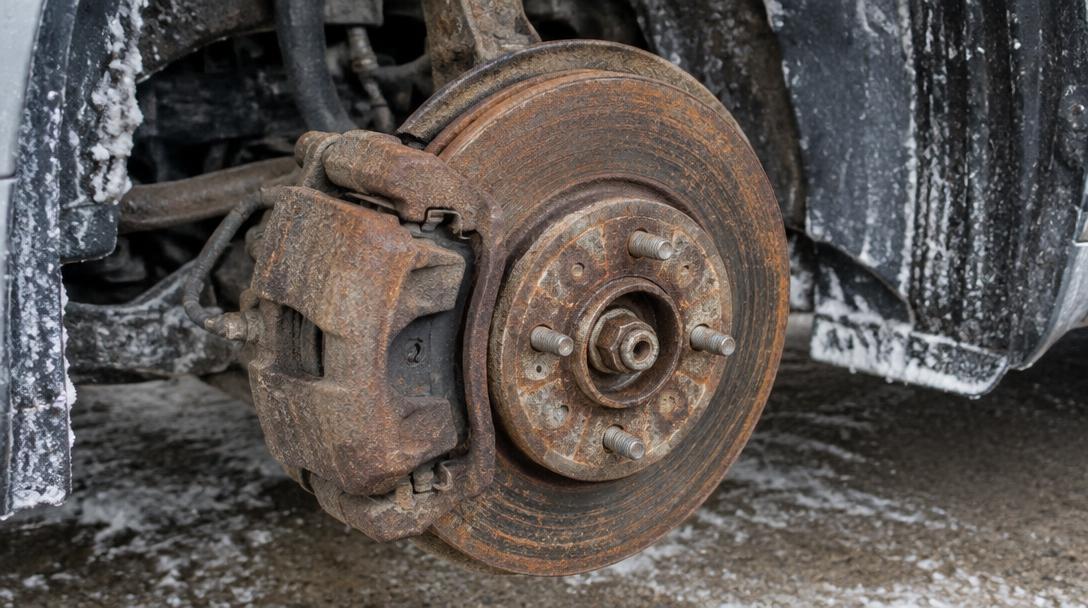
Quick answer: Brake grinding after a salty Hillside winter can come from surface rust, trapped debris, sticking hardware, or brake pads worn down to their metal backing. A brief scrape after damp parking may clear, but persistent grinding, weaker braking, smoke, or a changed pedal means stop driving and arrange an inspection; do not assume road salt makes the noise harmless.
What grinding means at the wheel
A disc brake slows a vehicle by squeezing friction material against a rotating metal disc. The friction material is supposed to make that contact. The pad's steel backing, loose hardware, and protective shield are not. Grinding tells you that something about the contact deserves attention, but sound alone cannot identify the part.
Think about the difference between a faint brush and a harsh metal rasp. A thin coating of rust can make the first few ordinary stops sound rough. A pad worn through its friction material can make a much more serious grinding sound. Both may start after winter, which is why the season is a clue rather than a diagnosis.
1 explains how brake pads gradually lose friction material and why their warning signs matter. A car may still stop while a pad is damaging the rotor. Having some braking ability does not establish that another commute is safe.
Nor does the apparent location settle it. A sound that seems to come from the passenger side can travel through the body. Tell a mechanic where you notice it, but leave room for inspection of both sides and both axles. Guessing which wheel needs parts is less useful than describing when the sound occurs.
Why a Hillside winter can leave noisy brake surfaces
Many brake rotors have iron friction surfaces that develop visible rust when exposed to moisture. After a car sits outside through wet weather, a light orange film is not unusual. Normal pad contact may remove a light film during ordinary braking, leaving a cleaner swept track.
Salt adds another complication. Moisture and winter road treatment can encourage corrosion on exposed components. Repeated wetting, freezing, thawing, and parking give corrosion opportunities to develop around pad supports and moving hardware. That does not mean every rusty-looking rotor needs replacement. Surface appearance and actual operating condition are different questions.
A narrow rusty band beyond the pad's contact area may look dramatic without being the source of the noise. Conversely, the visible outside face can look reasonably clean while the inside face has damage. Looking through a wheel gives only part of the story, especially after months of winter driving.
The distinction a technician needs to make is between temporary surface contamination and damage that continues under the pads. Pitting, heavy scaling, abnormal contact patterns, and a pad that cannot move correctly require closer assessment. Cleaning the car's exterior does not establish that those hidden brake surfaces are working properly.
When salt-related binding becomes a grinding problem
Brake hardware must let the pads apply and release as designed. If corrosion restricts movement, one pad can stay in contact or wear differently from its partner. A driver may hear roughness before noticing any obvious reduction in braking. Sometimes an unusual smell is the first additional clue.
This is why replacing a noisy pad without finding the reason it wore out can leave the original problem unresolved. A stuck component may wear the replacement prematurely. A useful brake inspection considers the friction surfaces, caliper movement, pad fit, and related hardware rather than treating the loudest part as the entire repair.
3 describes brake checks that include measurement of pads and discs against manufacturer specifications. That measurement matters after winter: a rough-looking surface and an actually unserviceable rotor are not interchangeable descriptions.
Another possibility is a small stone or road debris near the rotor and shield. A bent shield can also brush against the rotating disc. Those faults can sound alarming even when the pads have usable material. They still need diagnosis; do not reach behind the wheel or bend a shield while the car is parked on the street.
What Roosevelt Road drivers should notice
The most helpful detail is whether the grinding happens only at the first departure or continues after the car has been driven normally. If it follows several wet days of parking and disappears completely during the first few normal stops, surface rust becomes more plausible. That pattern is not proof, especially if the noise returns repeatedly.
Persistent grinding on approaches to lights along Roosevelt Road deserves a different response. So does a noise that grows louder with pedal pressure, starts suddenly during a trip, or remains audible while coasting. Those patterns suggest that waiting for a warmer afternoon is not a sensible plan.
A car parked near a Bellwood Metra station may spend hours with damp brake surfaces untouched. A vehicle making frequent short errands around Hillside may have a very different pattern of brake use. Neither scenario guarantees a fault. The value of the local driving history is explaining the exposure and timing, not assigning blame to a particular route.
Do not use an I-290 entrance ramp as a test of whether the grinding has cleared. There is no benefit in adding speed and traffic pressure to a brake concern. If the car already has persistent grinding, arrange professional advice before another drive rather than trying to diagnose it by taking a longer route.
Safe checks before touching any tools
Start with the car parked securely on level ground, away from traffic. Review what happened rather than recreating it. Was the car sitting for days? Did the noise begin after a pothole strike? Was it present before winter? Did braking feel different? Write those details down while they are fresh.
Once everything is cool, you can look through the wheel openings with a flashlight. You may see an orange film, a bright swept surface, deep scoring, or loose-looking material. Photograph what is visible without removing the wheel. Do not put fingers between brake components or touch a rotor to judge temperature.
Look for dashboard warnings and check the owner's manual for their meaning. A warning light is useful information, but the absence of one does not clear a grinding brake. Many cars do not monitor every pad or every type of mechanical damage. Your observations remain relevant even if the instrument panel looks normal.
Avoid sprays, oils, penetrating lubricants, and household cleaners near the friction surfaces. A product that quiets a squeaky hinge has no place on a rotor or pad face. Do not try repeated hard stops to scour away heavy rust. If the initial symptom is severe or persistent, the safe check is to leave the car parked.
A quieter second trip is not a complete diagnosis
A noise that disappears can be reassuring, but context still matters. If it was a light scrape after damp parking and everything else remains normal, keep track of whether it happens again. If it was harsh metal grinding, temporary silence is not a reliable reason to cancel an inspection.
A worn component can change sound as its contact pattern changes. Debris can shift. A sticking part can behave differently after warming up. None of those possibilities can be confirmed from the driver's seat. The practical question is not simply whether the car is quieter; it is whether the cause has been identified.
Likewise, washing away visible road salt is useful general care but not a repair for damaged friction surfaces. A clean wheel can hide the same inner pad wear as a dirty wheel. Do not let an improved appearance override a repeatable mechanical symptom.
If someone else drives the car, share the exact concern. “The right front grinds during every stop” is more actionable than “the brakes are a little noisy.” Clear communication helps prevent an unsuspecting family member from taking the vehicle onto I-294 before the issue has been assessed.
When grinding means park the car
Harsh or continuous grinding calls for prompt professional assessment, particularly when it occurs every time the pedal is pressed. If braking feels weaker, the pedal changes, the vehicle behaves unpredictably, or there is smoke or a strong hot smell, stop using the car and arrange transport rather than driving it to a shop.
If symptoms develop in traffic, focus first on reaching a safe stopping place. Avoid unnecessary acceleration and abrupt maneuvers. Use hazard lights when appropriate, and call emergency services if you cannot stop safely or are stranded in a dangerous position. Do not get out beside moving expressway traffic to inspect a wheel.
4 lists continuous grinding among the signs that call for immediate brake inspection. Although the precise service procedure depends on your vehicle, persistent metal noise is not a routine seasonal characteristic to ignore.
Calling ahead does not commit you to a particular repair. It lets you explain the symptoms and discuss a safe next step. Be explicit if you are considering having the vehicle transported. Rios Auto Service's business information does not establish a towing service, so arrange transportation separately if the car should not be driven.
What to ask during a winter brake inspection
Ask which surface or component is producing the noise and what evidence supports the conclusion. Useful answers may include measured remaining pad material, photographs of an inside rotor face, a damaged shield, or hardware that does not move freely. “It's winter rust” is incomplete unless the condition has actually been checked.
Also ask whether the wear is even across the axle and between inner and outer pads. You do not need to choose the repair method yourself. You do need to understand whether the proposed work addresses the reason for the grinding or only replaces a part that was affected by it.
2 identifies deep rotor gouges, metallic flaking, unusual noises, and burning odors as reasons to have brakes inspected. Those are observations to report, not instructions to crawl underneath the car and search for them yourself.
Before authorizing work, ask for the recommended repair, any related findings, and what remains uncertain. A clear explanation separates an urgent safety issue from a cosmetic rusty edge. It also avoids the opposite mistake: dismissing damaged working surfaces because rust is common in Illinois.
Bringing the concern to Rios Auto Service
Rios Auto Service is an independent, family-run shop owned by Juan Rios at 4218 Roosevelt Rd, Hillside, IL 60162. For a grinding concern, use the brake repair service page to identify the service, then describe the noise and any change in stopping behavior when you call.
A good conversation starts with “Please inspect the cause and show me what you find,” rather than a request for a guessed parts package. Ask for an honest explanation of the measurements and a distinction between necessary work and optional recommendations. That keeps the decision focused on evidence without assuming every winter noise needs the same repair.
The shop welcomes walk-ins and is open Monday through Friday, 8 AM–6 PM, and Saturday, 8 AM–4 PM; Sunday is closed. Call (708) 632-4808 or use the contact page to discuss the concern. Walk-in availability is not a promise that a specific repair can be completed immediately, and an unsafe car should not be driven merely to arrive during opening hours.
Questions Hillside drivers ask about winter grinding
Can overnight rotor rust really sound like grinding?
A light rust film can create a rough scraping sound during initial normal braking after damp parking. It should not be used to explain away persistent harsh grinding. If the sound is severe, returns frequently, or accompanies any change in stopping, have the brakes inspected rather than trying to clean them by driving.
Does a rusty outer edge mean the whole rotor is bad?
Not necessarily. Areas outside the pad's swept track can rust differently from the working surface. A technician needs to evaluate both faces, remaining dimensions, and the contact pattern. A photograph through the wheel may help explain the concern, but it cannot establish serviceability by itself.
Should I ask for new pads before the inspection?
Ask for a diagnosis first. Grinding can involve worn friction material, damaged surfaces, restricted hardware, or an unrelated contact point near the brake. Naming a replacement part before the cause is confirmed can narrow the conversation too early and leave the underlying problem unresolved.
What if grinding starts again after the car was quiet?
Record when it returned and whether the car had been parked in wet conditions. Repeated episodes deserve attention, particularly if each episode lasts longer or becomes louder. Do not keep extending the observation period because the noise occasionally disappears; changing sound is not evidence that wear has reversed.
Related question
For a different brake-maintenance concern, read How Long Do Brake Pads Last in Stop-and-Go Traffic?.