
Brake Repair
Car Pulls to One Side When Braking
A car that pulls when braking may have uneven brake force, tire trouble, or worn suspension. Learn safe next steps for drivers in Hillside and Bellwood.
By the team at Rios Auto Service, Hillside, IL · · 9 min read
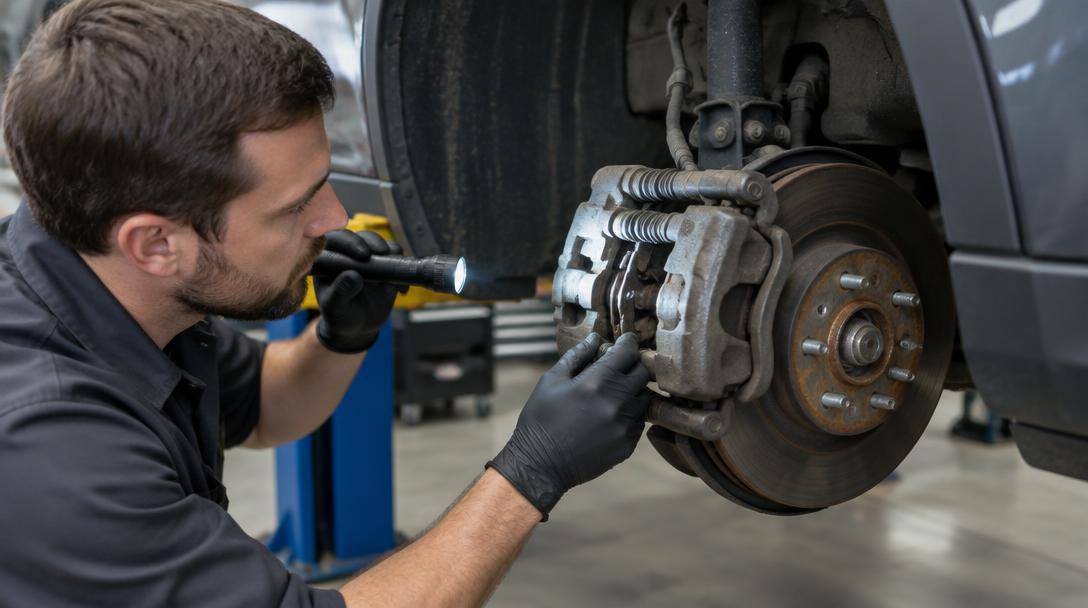
Quick answer: A car that pulls to one side when braking may have unequal braking force, a tire problem, or steering and suspension movement under load. A sudden or strong pull is a safety concern: stop somewhere safe and arrange assistance rather than driving farther to experiment. Even a mild, repeatable pull needs prompt inspection, not an automatic alignment or a guess at which caliper to replace.
Why pressing the brake can change your direction
Braking should slow the vehicle while allowing you to maintain its intended path. When the forces at the tires become uneven, the car can turn slightly even though you have not deliberately steered. You may feel the steering wheel tug, or the whole vehicle may seem to move sideways.
The timing matters. A car that wanders all the time presents a different diagnostic pattern from one that tracks normally until the brake pedal is pressed. A pull that appears only after several stops adds another clue. None of those patterns identifies a failed part by itself, but each helps narrow the investigation.
Brake force is only part of the picture. The tires must transmit that force to the road, and the suspension must hold the wheels in the correct positions. A fault in any of these areas can produce a similar sensation from the driver's seat. That is why looking only at pad thickness can miss the cause.
Do not rely on the direction of the pull to choose a replacement part. A weak brake on one side can make the vehicle turn toward the stronger side, while a dragging brake can create its own changing pattern. Rear brake imbalance can also influence the vehicle's path without an obvious front-wheel tug.
Uneven brake operation has several possible starting points
On a disc-brake system, hydraulic pressure moves a piston so the pads squeeze the rotor. Many designs also need the caliper to slide freely. If a piston, slide, or pad cannot move as intended, the force at that wheel may differ from the opposite wheel. Sometimes the brake applies poorly; sometimes it does not release properly.
A flexible brake hose can also be involved. Internal damage may interfere with fluid movement even when the outside does not look dramatic. A technician needs to distinguish a hydraulic restriction from a mechanical bind. Replacing a caliper without making that distinction can leave the original complaint unresolved.
Friction surfaces matter too. Contamination, uneven wear, or unsuitable installation can change how a pad grips. A brake that overheats may behave differently after several stops than it did while cold. Heat damage is a finding to investigate, not simply a reason to fit another set of pads and hope.
Bosch's overview of brake inspection and replacement describes checking components and measuring wear against manufacturer specifications. For a pulling complaint, those measurements need context: left-to-right comparisons, freedom of movement, evidence of leakage, and the condition of related hardware are all relevant.
Recent work is useful history, not proof of blame. Tell the shop if the pull began after brake service, tire replacement, or a wheel impact. Correct parts, installation, and operation should be verified before anyone assumes the vehicle simply needs time for its brakes to settle in.
Tires and suspension can imitate a brake fault
Unequal tire pressure can change the way a vehicle responds when weight transfers forward during braking. Tire damage, mismatched tires, and differences in available grip can also contribute. A car with a tire problem may feel almost acceptable at steady speed but become more unsettled when slowing down.
Use the pressure specification on the vehicle's tire-information placard or in its manual, not the maximum pressure molded into the tire sidewall. NHTSA's tire safety guidance explains cold-pressure checks and the importance of inspecting tires for wear and damage. A tire-pressure warning is not a substitute for checking the actual pressures.
Suspension bushings and steering joints keep the wheels located while loads change. If a worn part allows a wheel to shift when you brake, its alignment can change at the very moment you need stability. The result may resemble uneven brake force even when the brake hardware is operating normally.
An alignment can be appropriate after the underlying condition is assessed, but it is not a universal cure. Adjusting angles will not free a sticking caliper or repair a loose joint. A useful inspection asks why the vehicle changes direction, rather than selecting the most familiar service associated with pulling.
What western-suburb roads can reveal
A noticeable road crown can encourage a gentle drift toward the edge of a lane. Crosswinds, uneven pavement, and ruts can also influence the steering. Those conditions complicate a driver's observations, but they do not justify dismissing a repeatable tug that appears specifically when the brakes are applied.
On Roosevelt Road, a driver may first notice the problem while slowing for traffic rather than while cruising. I-290 stop-and-go can make a heat-related issue more apparent because the brakes work repeatedly. Neither route causes a particular failure by itself; the driving conditions simply help explain when the symptom becomes noticeable.
Chicago winters add moisture and road-salt exposure that can contribute to corrosion around brake hardware and other underbody components. A car that has sat through wet weather may also behave differently on its first stop. Persistent pulling should not be written off as ordinary winter rust without inspection.
Potholes deserve a place in the history as well. If the car began pulling after a hard impact near Mannheim Road, report that connection. A damaged tire or wheel and a shifted or worn suspension component require different repairs from a brake restriction. The impact is a clue, not a diagnosis.
Snow or ice can create unequal grip across the vehicle. NHTSA's winter driving recommendations emphasize slower speeds and increased following distance on slippery roads. A slide on an unevenly slick surface does not prove a mechanical defect, but a recurring pull on ordinary dry pavement deserves separate attention.
Safe checks you can make without lifting the car
Start with the vehicle parked on firm, level ground, away from moving traffic. Switch it off and follow the owner's manual for securing it. You do not need to remove a wheel, crawl underneath, or touch brake components to collect useful information for a technician.
Check accessible tire pressures when the tires are cold, using the placard specification. Look for a visibly low tire, a bulge, cuts, or an object embedded in the tread. Do not pull out an embedded object or drive on a damaged tire just to determine whether it explains the brake pull.
Look at the dashboard and record any warning messages. Photograph them while parked. If a brake-system warning remains on after the parking brake is fully released, consult the manual and seek advice before moving. Ford's warning-light guidance distinguishes an ABS fault from an additional brake-system warning; your own vehicle's instructions govern the response.
You can also note visible fluid beneath the vehicle, a burning odor, or smoke near a wheel from a safe distance. Never touch a wheel or rotor to compare temperatures. Brake parts can cause serious burns, and reaching through a wheel is not a reliable way to identify which component is responsible.
Avoid deliberate hard stops, hands-off steering tests, or repeated loops through a parking lot. You already have a symptom worth investigating. The safest useful notes describe what happened during normal driving: direction, approximate speed, whether the brakes were cold or warm, and whether the steering returned to normal afterward.
When a pull means stop driving
A hard sideways movement, difficulty holding your lane, reduced braking, or a sudden change in pedal behavior calls for stopping safely and arranging transport. Smoke, a strong burning smell, visible fluid leakage, or a damaged tire also makes further driving an unacceptable diagnostic experiment. Do not continue simply because the shop is nearby.
If the problem develops while moving, keep control of the steering, ease off the accelerator, and slow as safely as conditions allow. Avoid abrupt steering inputs. Reach a safe stopping location if possible; if you cannot leave a hazardous position, contact emergency assistance rather than standing beside traffic to inspect the car.
A mild pull with otherwise normal braking still deserves prompt evaluation. It can require extra steering correction at exactly the moment a pedestrian, stopped vehicle, or slippery patch demands your attention. Normal pedal feel does not prove equal braking at every wheel, and the absence of warning lights does not clear the mechanical system.
Do not schedule an expressway trip to see whether the symptom gets worse. If you are unsure whether the vehicle can be moved safely, describe the symptoms to a repair professional before leaving. The route, road conditions, and severity matter; no general article can certify your particular vehicle safe to drive.
What a focused inspection should establish
The inspection should begin with your complaint, including when it started and any recent work or impacts. A controlled road evaluation may help when the vehicle is safe enough, but obvious hazards should be addressed before any driving. Reproducing the complaint is useful only when doing so does not create unnecessary risk.
The next task is separating braking imbalance from tire, steering, and suspension issues. That can involve inspecting tires, comparing brake wear, checking caliper movement, and examining hoses and joints. Measurements and manufacturer procedures matter more than choosing whichever component looks oldest. Several worn items can coexist without all causing the pull.
If a brake is dragging, the technician needs to determine why it is not releasing. If one brake applies weakly, the question changes to what is limiting its force. This distinction guides the repair and helps prevent an expensive chain of parts replacements based on the direction of the tug alone.
After repair, verification should address the original complaint, not merely confirm that new parts were installed. Ask whether the vehicle stops straight under appropriate conditions and whether related damage was found. Any remaining tire or suspension concern should be explained separately so you understand what was fixed and what still needs attention.
Discussing the problem with Rios Auto Service in Hillside
Rios Auto Service offers brake repair at 4218 Roosevelt Rd, Hillside, IL 60162. The independent, family-run shop is owned by Juan Rios. When describing the concern, lead with “it pulls when I brake,” rather than requesting a particular part before the cause has been established.
Ask for an honest inspection, to see what was found, and an explanation connecting the proposed repair to the symptom. A worn part and a proven cause are not always the same thing. Keeping the discussion focused on findings helps avoid unnecessary add-ons while still allowing attention to genuine safety problems.
Walk-ins are welcome Monday through Friday, 8 AM–6 PM, and Saturday, 8 AM–4 PM; the shop is closed Sunday. Call (708) 632-4808 or use the contact page to discuss the concern. Walk-in availability is not a reason to drive an unsafe vehicle; arrange appropriate assistance when the symptoms warrant it.
Frequently asked questions about pulling while braking
Does pulling left mean the left caliper is bad?
No. The vehicle may turn toward a brake that is applying more strongly, while the actual fault is on the opposite side. Dragging brakes, tire grip, and suspension movement complicate that pattern. Direction is useful information for the inspection, but it cannot reliably identify the part that needs replacement.
Can low tire pressure cause a brake pull?
It can contribute to uneven handling when the vehicle slows. Check cold pressures against the vehicle placard and inspect for damage. Correcting pressure does not automatically resolve a brake fault, however. If the pull persists, or the tire will not hold pressure, have the underlying problem evaluated rather than repeatedly adding air.
Should I get an alignment first?
Not automatically. A pull specifically linked to braking needs assessment of the brakes as well as tires, steering, and suspension. If a joint moves under braking, that fault needs correction before alignment can hold its intended settings. An alignment alone cannot restore a brake that fails to apply or release properly.
Is a small pull normal after brake work?
Do not assume so. Give the shop the timing and explain whether the pull occurs on every stop or only after warming up. New friction parts do not excuse a vehicle changing direction unexpectedly. Avoid attempts to fix the issue with repeated aggressive stops; have installation and operation checked instead.
Related question
If a warning lamp accompanies the handling change, read ABS Light On: Is It Safe to Drive? for the distinction between an ABS warning and a broader braking emergency.