
Tune-Ups & Maintenance
Spring Maintenance After Pothole Season
Spring maintenance helps Hillside drivers spot tire, wheel, and suspension damage after pothole season, prioritize repairs, and prepare for warmer weather.
By the team at Rios Auto Service, Hillside, IL · · 9 min read
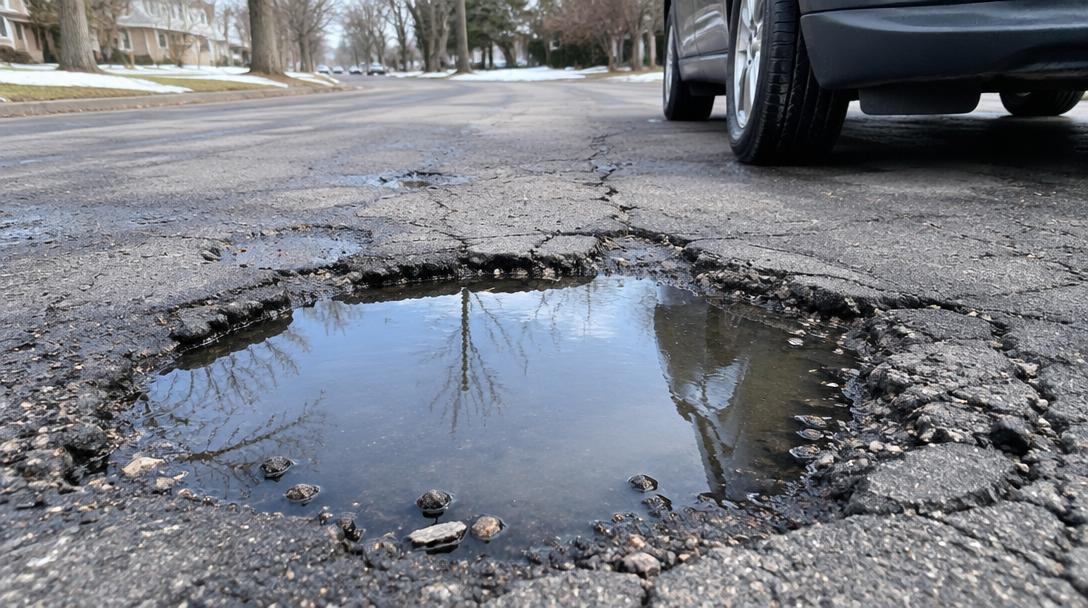
Quick answer: After pothole season, start with tires, wheels, steering, and suspension, then review winter fluid levels, visibility equipment, and scheduled maintenance. A new vibration, persistent pull, pressure loss, or clunk deserves diagnosis rather than an automatic alignment or a bundle of replacement parts.
What a pothole strike actually does
That hard thump on Roosevelt Road can leave you wondering whether the car is fine or quietly developing an expensive problem. Sometimes the tire and suspension absorb the impact without lasting damage. Other times, the force damages a tire internally, bends a wheel, or affects a steering or suspension component. The sound alone cannot tell you which happened.
A tire normally cushions smaller road irregularities by flexing. A sharp-edged hole can compress it severely against the wheel, especially when pressure is low. Damage may appear as a cut, a bulge, a slow leak, or a vibration. A tire can also have damage that is not obvious from the outside, which is why a hard impact followed by changed behavior deserves inspection.
The wheel and suspension carry the force beyond the tire. Steering links, joints, bushings, and mounting points all help keep the wheel positioned correctly. An impact may change alignment, but alignment is a measurement of wheel geometry, not a cure for every problem. Adjusting angles cannot straighten a bent wheel or make a loose joint sound again.
Avoid assuming that every spring noise came from the last pothole. Winter may reveal wear that was already developing. A careful inspection separates impact damage from ordinary deterioration and identifies what actually needs attention.
Why western-suburb driving makes a spring check worthwhile
Freeze-thaw weather, winter precipitation, and road wear make spring an appropriate time to reassess how the vehicle feels. Between neighborhood streets in Bellwood and faster travel on I-290, a driver may encounter the same developing problem under very different conditions. A wheel vibration can be easy to miss at neighborhood speed yet distracting on an expressway.
Road salt adds another reason to look underneath the vehicle. Corrosion develops over time, not overnight after one salty trip. Existing rust on exposed components or lines may become easier to identify during a seasonal inspection. A rinse removes residue but cannot restore metal already lost to corrosion.
Short winter errands also mean that the maintenance calendar keeps moving even when mileage grows slowly. Review the owner's manual for time-based requirements and any severe-service guidance applicable to your driving. Spring is a useful reminder, not a universal manufacturer-mandated replacement interval.
The goal is a baseline: how the tires look, whether pressures hold, whether the vehicle steers normally, and what service is actually due. You do not need to replace everything that survived winter simply because warmer weather has arrived.
Start with tires and wheels before buying an alignment
Check tire pressure when the tires are cold, using the driver's door placard or the owner's manual for the recommended setting. Do not use the maximum pressure molded into the tire sidewall as the vehicle's target. NHTSA's tire-safety guidance explains pressure checks, tread inspection, and the importance of looking for physical damage.
Warmer afternoons can change readings compared with a cold winter morning. Set pressure according to the manufacturer's instructions rather than bleeding air from tires immediately after driving. If one tire repeatedly loses pressure while the others remain stable, it needs a leak check; regular refilling does not resolve the cause.
Look at the visible sidewalls and tread while the car is parked safely. A new outward bulge, exposed cord, significant cut, or visibly damaged wheel is not something to monitor through another week of commuting. Do not press on a bulge or try to reshape a rim. Arrange professional assistance rather than continuing normal driving on a suspect tire.
Uneven tread also matters. Wear concentrated on one edge, irregular patches, or a difference between tires can point toward several causes, including pressure, alignment, or suspension condition. Wear patterns provide clues, not a complete diagnosis. Check the accessible surfaces without reaching under the car or positioning yourself in its path.
Read the symptoms without trying risky road tests
A steering wheel that now sits off-center, a consistent pull, or a new shake is useful information. Note whether it started immediately after an impact and whether it occurs during ordinary braking, turning, or steady travel. Share observations from necessary driving; do not deliberately accelerate to reproduce a vibration.
A pull does not automatically prove the alignment is wrong. Unequal tire pressure, tire damage, brake concerns, and road slope can affect direction. Likewise, a vibration may involve a tire, wheel, or another rotating component. The right sequence is to identify damage and looseness, address those findings, and then determine whether alignment measurements are needed.
Listen for a new clunk during normal low-speed turns or when entering a driveway. Do not repeatedly drive over bumps to test it. A loose suspension component can become more dangerous, and the sound's location from the driver's seat may not match the failed part's actual location.
For a shop visit, a short description is more helpful than a firm diagnosis: “The wheel began shaking after a pothole near Mannheim Road” gives a technician a useful starting point. “It needs balancing” can unintentionally narrow the conversation before anyone has inspected the vehicle.
Give winter residue and visibility equipment some attention
Once immediate tire and handling concerns are addressed, wash away winter grime, including accessible wheel wells and an appropriate underbody rinse. Follow the vehicle manufacturer's cleaning guidance. Do not crawl beneath a vehicle at a wash bay, direct a pressure washer at damaged wiring, or treat washing as a substitute for inspecting a suspected leak.
With the engine off and cool, inspect accessible fluid reservoirs according to the owner's manual. Check engine oil using the specified procedure and look for obvious changes beneath the usual parking spot. Never open a hot cooling-system cap. Low levels, recurring wet spots, or an unfamiliar smell require investigation rather than repeated topping off with an uncertain fluid.
Winter wipers may leave streaks or miss sections of glass. Check that the blades clear the windshield and that washers work with a suitable washer fluid. Clean the glass inside as well as outside; a film on the interior can make rainy evening driving harder even when the blades are new.
NHTSA's warmer-weather vehicle checklist also covers belts, hoses, lights, cooling-system checks, and air conditioning. Treat it as a planning aid. A damaged hose deserves attention, but a visually normal part should not be replaced solely because someone calls it a spring special.
Separate seasonal inspection from scheduled maintenance
A post-winter inspection answers, “Did winter leave a problem?” Scheduled maintenance answers, “What is due for this vehicle at this age and mileage?” They overlap, but they are not the same service. Bring the maintenance record so an inspection does not become an excuse to repeat work already completed.
The Department of Energy's maintenance guidance emphasizes proper tire inflation, the recommended motor oil, and correcting actual engine problems. That supports a practical approach: follow the vehicle's requirements and repair confirmed faults instead of buying unspecified additives or a generic seasonal tune-up.
For example, a pothole does not create a new spark-plug interval. A winter of short trips may affect which maintenance schedule applies, but it does not justify replacing ignition parts without considering mileage, history, and symptoms. Keep the spring visit focused on condition and documented requirements.
Also review any winter tire changeover plans against the tire manufacturer's guidance and actual weather. If wheels are being removed, that is an opportunity to inspect accessible components. It is not proof that the brakes or suspension need replacement. Ask for the observed condition and the reason behind each recommendation.
Safe driveway checks have clear limits
Choose level ground away from traffic, apply the parking brake, and switch the vehicle off before walking around it. Keep children and pets clear. Use a flashlight to inspect what is visible from outside; the purpose is to identify concerns, not to duplicate a lift inspection in a driveway.
Do not crawl underneath a car supported only by a jack. Avoid reaching behind wheels, tugging on suspension parts, or loosening fasteners to see whether they move. Even apparently simple work can require correct lifting points, torque procedures, and equipment. Owners can contribute valuable information without doing those tasks.
A practical record can be brief: date of the impact, warning lights, pressure readings, new sounds, and any visible damage. Photograph the tire or wheel while parked if that helps explain the change. Do not stand in the roadway to document a pothole or attempt repairs beside moving traffic.
Use the VIN to check NHTSA's recall lookup while reviewing spring paperwork. A recall is separate from pothole maintenance, but an unresolved safety campaign should not disappear into the seasonal checklist. Follow the recall notice for the appropriate remedy rather than assuming an ordinary maintenance visit completes it.
When to park the car instead of waiting
A tire bulge, rapid pressure loss, severe vibration, visibly distorted wheel, or suddenly unstable steering calls for stopping normal use. Move out of traffic only as safely as conditions permit and arrange appropriate assistance. Do not try to “make it to Saturday” with damage that affects the vehicle's contact with the road.
New pulling during braking, a soft brake pedal, or a brake warning also needs prompt attention. These are not normal spring adjustments. If braking or control is compromised, do not continue driving to compare symptoms on different streets. Tell the repair facility what happened and discuss a safe way to get the vehicle inspected.
Less dramatic changes still merit scheduling: mild persistent vibration, an off-center steering wheel, recurring pressure loss, or a new clunk. Early inspection can prevent unnecessary tire wear and clarify whether the vehicle is safe to use. The absence of a dashboard warning does not rule out mechanical damage.
Plan a focused visit at Rios Auto Service
Rios Auto Service is an independent, family-run shop owned by Juan Rios at 4218 Roosevelt Rd in Hillside. Its tune-ups and maintenance service is a starting point for discussing a seasonal inspection and overdue maintenance. Explain any impact and handling changes before asking for a particular procedure.
Ask for an honest, findings-based discussion: what was inspected, what damage or wear was found, and what can be shown or explained before you approve work. Separate immediate safety concerns from scheduled maintenance and optional items. A no-upsell plan means recommendations follow the evidence, not the season or a package name.
Walk-ins are welcome. Hours are Monday through Friday, 8 AM–6 PM, and Saturday, 8 AM–4 PM; Sunday is closed. Call (708) 632-4808 or contact the shop to discuss symptoms. Mention suspected tire or steering damage so the conversation starts with safety rather than routine scheduling.
Spring maintenance questions
Does every hard pothole hit require an alignment?
No. First check for tire, wheel, steering, or suspension damage. An alignment may be appropriate when measurements or symptoms support it, but it cannot repair damaged parts. A hard impact followed by changed handling deserves inspection even without a warning light.
Can I wait if the tire still holds air?
Holding air does not prove a tire is structurally sound. A bulge, exposed cord, significant cut, or changed driving feel needs professional evaluation. Internal damage is not always visible during a driveway walkaround.
Should I replace all my fluids each spring?
Not automatically. Follow the owner's manual, service history, and any findings that establish contamination, leakage, or another problem. Seasonal inspection is useful; replacing every fluid without checking requirements is not a sound maintenance rule.
What should I bring to the inspection?
Bring maintenance records, the current mileage, and a short description of any impact or new symptom. Pressure readings and safely taken photographs can help. Explain what changed without feeling responsible for naming the failed part.
Related question
For the broader maintenance picture, read What a Modern Tune-Up Actually Includes.