
Tune-Ups & Maintenance
Spark Plug Life: Copper vs. Iridium
Copper and iridium spark plugs wear at different rates, but the right replacement interval depends on your engine. Here is what Hillside drivers should check.
By the team at Rios Auto Service, Hillside, IL · · 9 min read
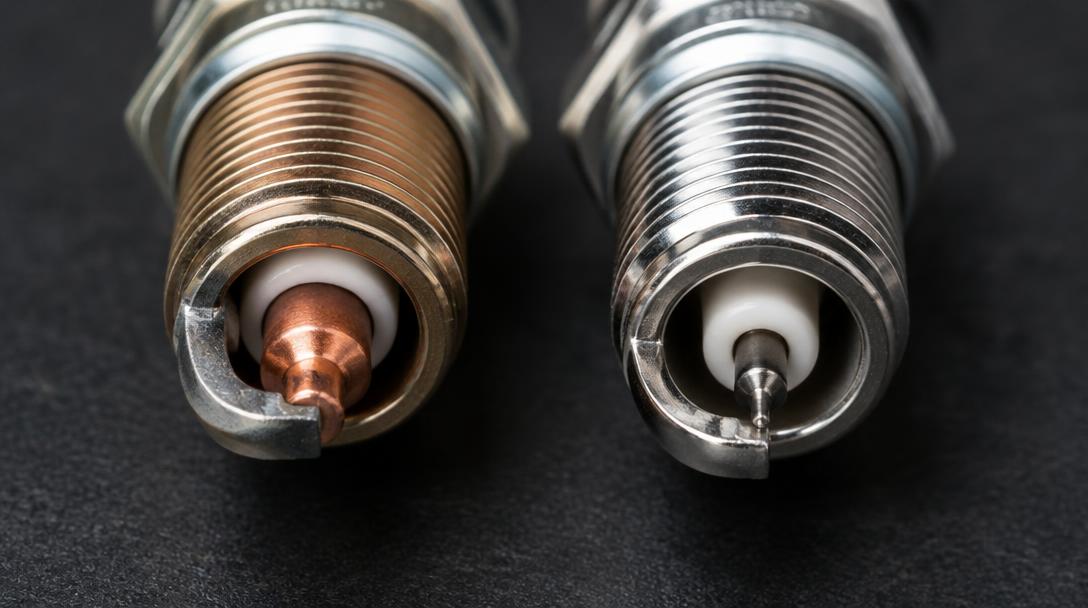
Quick answer: Conventional copper-core, nickel-electrode spark plugs generally wear faster than plugs with iridium firing surfaces, but neither material name supplies a universal replacement interval. Hillside drivers should use the plug specification and maintenance schedule for their exact engine, not substitute a cheaper design or assume an iridium label guarantees a particular mileage.
The copper-versus-iridium label leaves something out
Spark plugs provide the electrical spark that starts combustion in a gasoline engine. They also have to transfer heat appropriately and survive repeated exposure to pressure, vibration, and combustion gases. Their job sounds simple, but the dimensions and materials are carefully matched to an engine.
The familiar term “copper plug” usually describes a conventional plug with a copper core and a nickel-alloy firing electrode. Copper helps move heat; it is not normally the exposed material at the firing tip. Many precious-metal plugs also contain copper internally. So copper and iridium are not always mutually exclusive ingredients inside a plug.
The meaningful wear difference is usually at the surfaces where the spark jumps. Conventional nickel electrodes erode faster than appropriately designed iridium firing surfaces. As the electrodes wear, the spark gap can increase. The ignition system must then work harder to fire across that gap under demanding conditions.
That is why an iridium plug can support a longer service interval in an engine designed for it. It does not mean the entire plug is made of iridium, and it does not mean every iridium product fits every engine. The small details on a part-number listing matter more than the biggest word on the box.
Why longer-lasting electrodes do not mean unlimited life
Iridium's resistance to wear allows manufacturers to use a fine firing tip while maintaining durability. Some designs add a precious-metal surface to the ground electrode as well. Bosch's double-iridium product information is one example of why the complete electrode design matters, not simply the presence of one premium material.
A plug can still develop problems unrelated to normal electrode erosion. Oil contamination, incorrect installation, a damaged insulator, or an engine condition that causes deposits can shorten useful service. A long-life tip cannot correct an oil-control problem or survive every abnormal combustion condition indefinitely.
The rest of the ignition system also matters. A damaged coil boot or moisture in a plug well can create a misfire even when the plug's electrodes are relatively new. Replacing the plugs might temporarily change the symptom without addressing the real source. That is a reason to inspect the surrounding components rather than treating plug material as a complete diagnosis.
Conversely, a plug may reach its scheduled replacement point without obvious symptoms. Preventive replacement is intended to avoid waiting until wear causes trouble. Smooth operation does not erase a documented maintenance requirement any more than a symptom automatically proves a scheduled part is worn out.
Which mileage interval should Hillside drivers follow?
There is no safe single mileage number for all copper plugs or all iridium plugs. Engine design, plug construction, operating conditions, and the manufacturer's service schedule all influence the interval. A general range from a parts advertisement is not a substitute for the schedule attached to your vehicle.
Look up the model year, engine, and maintenance information in the owner's manual or official owner portal. Some vehicles offer multiple engines with different requirements in the same model year. Manufacturer resources such as Ford's owner-manual library illustrate the importance of selecting the exact vehicle information rather than relying on a search snippet.
Then compare the schedule with actual records. An odometer reading alone does not tell you how many miles are on the current plugs. If a previous owner replaced them, the part numbers and installation mileage are valuable. If there is no record, say the history is unknown instead of assuming the longest possible interval applies.
Also check whether the schedule includes a time requirement or special operating-condition instructions. Follow those instructions as written. Do not automatically cut an interval in half because the car lives in Illinois, and do not automatically extend it because most miles were on I-294. The manufacturer's guidance should remain the starting point.
Local trips change the conversation, not the specification
A Hillside vehicle may spend weekdays making short runs along Roosevelt Road and weekends traveling longer distances toward Elmhurst or Oak Brook. That mix matters when discussing deposits, warm-up patterns, and symptoms. It does not change the engine's required plug reach, heat range, or electrical characteristics.
Repeated short trips can leave an engine operating below full temperature for a larger share of its running time. If a vehicle has a deposit or oil-consumption issue, mention that driving pattern during inspection. Avoid concluding that a different plug material will cure the operating condition by itself.
Road salt on the body is not a direct reason to replace spark plugs early. Salt and winter exposure matter to vehicle care broadly, but plugs operate inside the cylinder head and combustion chamber. Moisture or contamination around ignition components requires an actual finding, not an assumption based on the season.
Stop-and-go driving on I-290 likewise does not prove the plugs are worn. The useful questions are whether maintenance is due, whether an ignition complaint exists, and whether inspection supports replacement. Keeping those questions separate protects your budget and avoids turning every local driving challenge into an automatic tune-up recommendation.
Compatibility includes much more than the thread size
A plug that screws into the cylinder head is not necessarily correct. Thread reach, seat design, heat range, resistor characteristics, electrode projection, and specified gap all matter. An incorrect part can perform poorly or, in some cases, cause damage. Matching the original engineering requirement is more important than choosing the highest-priced material.
Heat range is especially easy to misunderstand. It describes how the plug manages heat at its firing end, not how powerful its spark is. A “hotter” plug is not a general performance upgrade. Choosing a different heat range without application-specific guidance can create problems rather than solve them.
Likewise, do not downgrade an engine designed for long-life precious-metal plugs merely because conventional plugs cost less per piece. The alternative may not be approved and can create an inappropriate maintenance burden. An approved iridium replacement for a different original design is also something to verify through application information, not guess from appearance.
Bosch's consumer brochure describes product-specific construction and life comparisons. Such claims are tied to the product and comparison described. They are not permission to multiply your own vehicle's service interval or ignore its manufacturer requirements.
Safe checks before authorizing replacement
You can do useful homework without removing a single plug. Gather the owner's manual, past invoices, and any part numbers from prior service. Note the odometer reading and whether a warning light, rough running, or new starting difficulty prompted the question. This separates preventive maintenance from symptom diagnosis.
If the engine runs normally and the scheduled replacement point is approaching, ask for a maintenance estimate based on the correct application. If it runs poorly, explain the symptom first. A repair visit should not be limited to plugs merely because a familiar service interval happens to be near.
Do not pull ignition coils or unplug wiring with the engine running. Do not remove plugs from a hot engine as an exploratory task. Access can involve fragile connectors, concealed fasteners, and aluminum threads. A broken connector or damaged thread can turn a straightforward maintenance question into a much larger repair.
If you already have old plugs from a documented replacement, their appearance may help a technician, especially when each is identified by cylinder. But a photograph of one dark plug cannot establish the entire engine's condition. Deposits need context, and there is no need to remove otherwise serviceable plugs just to take pictures.
Installation quality can outweigh the material upgrade
Correct installation includes a clean work area, the right part, suitable gap verification, and the specified tightening procedure. Too little or too much tightening can interfere with heat transfer or damage components. Torque requirements depend on the engine and plug design; a generic number from another vehicle is not adequate.
Pre-gapped does not mean careless handling is harmless. Fine-wire electrodes can be damaged by inappropriate tools or adjustment methods. The installer should follow the plug and vehicle manufacturers' directions rather than lever against a delicate tip. Shipping and handling are reasons to verify condition, not reasons to improvise.
Thread treatments also deserve caution. Some plugs have coatings and installation instructions that do not call for added anti-seize. Adding a lubricant can change the relationship between tightening torque and clamping force. Follow the applicable instructions instead of treating a familiar workshop habit as universal.
Accessibility affects the scope of the job. On some engines, reaching every plug requires removing other components. That does not justify replacing unrelated parts automatically. Ask which seals or components must be disturbed, what can be inspected while access is available, and which recommendations are genuinely necessary for correct reassembly.
When replacement becomes a diagnostic decision
A flashing engine warning light, pronounced shaking, or severe power loss needs prompt attention rather than a casual material comparison. An active misfire may damage the catalytic converter. Reduce engine demand, stop safely if the vehicle is running severely rough, and arrange appropriate assistance instead of driving until a scheduled service date.
For a steady warning light or mild recurring symptom, arrange diagnosis soon and preserve stored information. Do not disconnect the battery to erase a light before the visit. Evidence can help distinguish a plug problem from a coil, injector, wiring, or mechanical issue.
A good explanation should connect the recommendation to maintenance records, inspection findings, or test results. The Department of Energy's maintenance advice supports correcting actual vehicle problems and using manufacturer guidance. It does not suggest that installing premium plugs makes every healthy engine more efficient.
Ask what result to expect. Replacing overdue, worn plugs may restore normal operation. Replacing correctly functioning plugs with a different material should not be sold as a guaranteed power increase. The goal is reliable combustion and the appropriate service life, not a dramatic transformation promised by packaging.
Discussing plug service at Rios Auto Service
Rios Auto Service offers tune-ups and maintenance, check-engine diagnostics, and engine repair and replacement. The independent, family-run shop is owned by Juan Rios and is located at 4218 Roosevelt Rd, Hillside, IL 60162. Bring your vehicle information and available maintenance records so the conversation begins with the actual application.
For an honest, no-upsell discussion, ask to see what supports replacement and which plug specification is being proposed. Separate scheduled maintenance from repairs needed to solve a symptom. If a different design is recommended, ask how its application is verified rather than relying on the material name alone.
Call (708) 632-4808 or use the contact page to discuss a visit. Walk-ins are welcome, with hours Monday through Friday, 8 AM–6 PM, and Saturday, 8 AM–4 PM; Sunday is closed. A free Wi-Fi waiting area is available, but access requirements and diagnosis can affect how long an individual vehicle needs.
Short answers about spark plug life
Does iridium always last longer than copper?
Its firing surface generally resists wear better than a conventional nickel electrode, but complete plug design and engine conditions still matter. Follow the approved application's interval. A fouled or damaged iridium plug can need replacement before a correctly operating conventional plug reaches its own scheduled limit.
Can I mix plug materials in one engine?
Use the specified parts for every position and follow any engine-specific arrangement. Do not install a mixed set merely to use leftover plugs. Some engines have unusual ignition layouts, so compatibility should come from manufacturer information rather than an assumption that every cylinder can accept any available plug.
Should I replace the ignition coils with the plugs?
Not automatically. Coils and boots should be evaluated according to condition, symptoms, access considerations, and manufacturer guidance. A failed coil may justify replacement, but normal plug maintenance alone does not prove every coil is worn out or needs to be purchased at the same visit.
Will new plugs improve mileage if mine are still good?
Do not expect a guaranteed gain. Correcting a real ignition problem can restore lost performance, but replacing healthy, correctly specified plugs early may provide no noticeable improvement. Keep maintenance decisions tied to records and evidence rather than a promised fuel-saving percentage.
Related question
For a different ignition-related concern, read Hard Starts on Cold Mornings.