
Tune-Ups & Maintenance
Hard Starts on Cold Mornings
Cold-morning hard starts can come from weak cranking, ignition wear, or fuel problems. Learn what Hillside drivers can check and when testing matters.
By the team at Rios Auto Service, Hillside, IL · · 9 min read
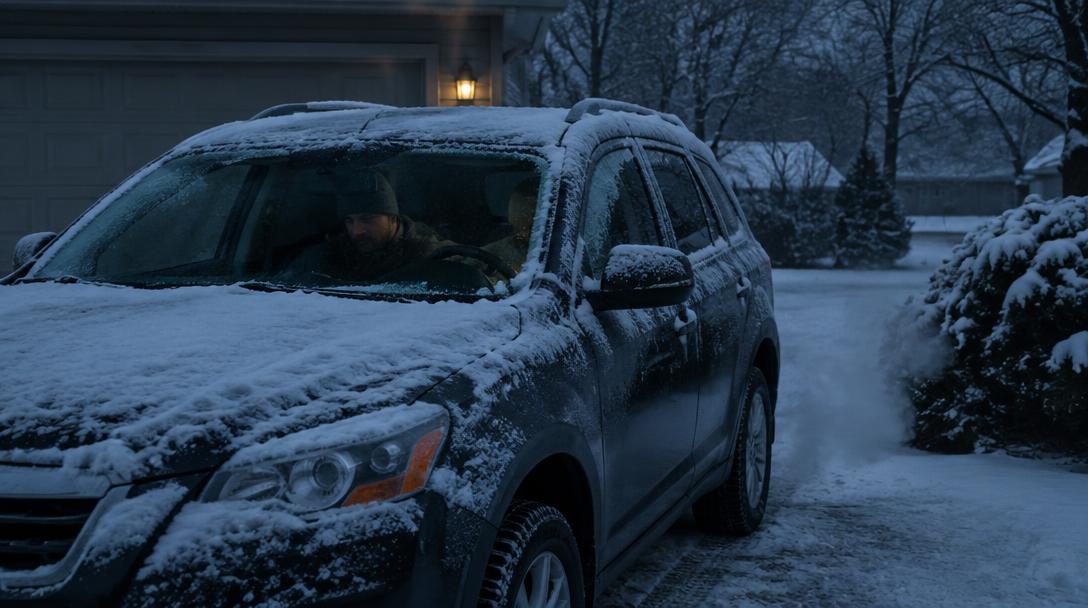
Quick answer: Cold-morning hard starts usually fall into two groups: the engine turns too slowly, or it turns normally but struggles to fire. Cold can expose a weak electrical supply, incorrect oil, ignition wear, or a fuel-control problem, so the sound and timing of the first start matter more than guessing which part needs replacement.
First, describe what happens before the engine starts
“Hard to start” is useful shorthand, but it covers very different problems. Listen during the first attempt after the vehicle has sat overnight. Does the engine turn with a labored, uneven rhythm? Does it spin at its usual speed for several seconds before catching? Or is there only a click, with no engine rotation at all?
That distinction sets the direction of the inspection. Slow turning points toward the cranking system and mechanical resistance. Normal-speed turning without prompt ignition shifts attention toward the conditions needed for combustion. An engine that starts promptly and then stalls presents another pattern. None of these descriptions identifies a failed part by itself.
Think about the second start, too. If the car struggles at 7 a.m. but restarts easily after a brief stop, tell the mechanic. Also note the outside temperature and how long the vehicle was parked. A problem that appears after an overnight cold soak can disappear by the time a warm engine reaches a shop.
Why a Chicago cold snap exposes a marginal starting system
Starting requires the electrical and mechanical sides of the vehicle to work together. The starter must turn the engine fast enough, while the engine controls supply the right fuel and ignition. Low temperatures make that coordination more demanding. A component that was barely adequate in mild weather may become noticeably unreliable overnight.
NHTSA explains that battery power drops as temperatures fall and that gasoline and diesel engines require more power to start in cold weather. Its winter guidance recommends checking the battery, charging system, and related connections before trouble leaves you stranded 1. Cold weather is therefore a stress test, not a diagnosis of a particular part.
Oil matters as well. Cold oil increases resistance to engine rotation; an oil grade that does not meet the vehicle’s requirements can make matters worse. Use the viscosity and specification listed for your engine and operating conditions. Do not substitute an unusually thin oil simply because someone recommends it as a winter starting trick.
An occasional slightly longer start in severe weather is not automatically a major failure. A clear change from the vehicle’s normal behavior, repeated unsuccessful attempts, or a worsening pattern deserves attention. Modern engines should not routinely require a special morning ritual to get moving.
When the engine turns normally but will not catch
A normal cranking sound tells you that the engine is rotating, not that every starting condition is correct. A gasoline engine still needs suitable fuel delivery, ignition, airflow, compression, and properly timed control signals. Interstate’s no-start discussion makes this basic distinction: a battery replacement cannot solve every engine that refuses to run 2.
Cold conditions can expose an ignition weakness that is less obvious once the engine warms. Worn plugs, damaged insulation, or moisture affecting an ignition component are possibilities, not reasons to replace an entire set of parts blindly. Inspection should connect the observed condition to the symptom and the vehicle’s maintenance history.
Fuel delivery can also require investigation. Pressure that does not build or hold as specified may produce an extended first crank. The appropriate test depends on the engine; direct-injection systems have hazardous high-pressure circuits. Loosening a fuel connection in the driveway is not a safe way to find out whether gasoline is reaching the engine.
Temperature information matters because the engine computer adjusts starting fuel based on operating conditions. A misleading coolant-temperature reading can influence the starting mixture without making the dashboard gauge obviously wrong. After an overnight soak, comparing relevant sensor readings with actual ambient conditions can help a technician identify an implausible signal.
These possibilities explain why “give it a tune-up” is not a complete diagnosis. Scheduled maintenance may be overdue, but the first task is to establish which starting requirement is missing. Replacing serviceable ignition parts will not repair a pressure leak or an inaccurate sensor reading.
Short winter trips around Hillside change the context
A quick drive from Hillside into Bellwood may involve another cold start before the vehicle has had much operating time. Add the rear defroster, blower, lights, and heated accessories, and the electrical demand is substantial. Repeated brief trips can leave limited opportunity to restore energy used during starting, especially when the battery begins partly discharged.
The Department of Energy notes that cold fluids increase friction, engines take longer to warm up, and winter electrical accessories consume additional power 3. Those factors make trip length useful diagnostic information. They do not prove that a longer drive will cure a starting problem or that extended idling is the answer.
An I-290 commute and a series of neighborhood errands are different operating patterns. Tell the shop which describes your week, particularly if the trouble began after a schedule change. Include how many days the vehicle sometimes sits unused. There is no universal number of highway minutes that guarantees a depleted battery has recovered.
Road spray and salt also give exposed wiring and grounds a harsh environment. Potholes can reveal loose mounting or damaged wiring, but a rough winter does not establish the cause of an underhood fault. The inspection still needs to locate and measure the problem rather than assign blame to the season.
Safe observations before the next cold start
Start with a short record rather than a toolbox. Write down the overnight temperature, the length of the first attempt, whether cranking sounded normal, and whether the engine stumbled after it caught. A brief recording made from a safe position can help communicate a sound that disappears later in the day.
With the vehicle parked, off, and secured, check the owner’s manual for the approved starting procedure and oil requirements. Review the last oil-service record if available. If your vehicle permits an owner oil-level check, follow its exact procedure; some engines use an electronic measurement rather than a dipstick. Do not add oil based on a guess.
Look for obvious damage without touching battery residue or reaching near belts. A visibly swollen or leaking battery, damaged cable insulation, or a loose-looking battery mount needs professional attention. Bosch describes battery assessment as a combination of physical inspection and performance testing, not an appearance-only decision 4.
Before starting, switch off nonessential accessories where practical, but do not disable lights or defrosting needed for safety. Make sure there is enough fuel for the trip. If the car is outdoors after snowfall, clear the tailpipe area before operating the engine. Never run it inside a garage, even with the door open.
Avoid pumping the accelerator on a modern fuel-injected vehicle unless its manufacturer specifically instructs you to use a particular procedure. Do not use starting fluid or pour additives into the intake as an experiment. Diesel engines, hybrids, and push-button systems have distinct starting instructions; a generic online trick may be inappropriate.
Repeated cranking is a reason to stop, not push harder
Follow the owner’s manual’s limit on starting attempts and the required pause between them. There is no safe universal instruction to crank for as long as it takes. Repeated attempts can deplete the battery, overheat the starter, and make it harder to distinguish the original fault from a newly weakened electrical supply.
Stop immediately for smoke, a strong fuel smell, a burning odor, or visible leakage. Do not try another start to see whether the smell clears. A leaking or frozen battery should not be charged or boosted. If you are unsure about the battery’s condition, leave it alone and arrange professional assistance.
If the engine starts but shakes severely or the check-engine light flashes, avoid driving it as a way to warm the problem away. A significant misfire can damage the catalytic converter. A steady warning light with normal operation still deserves diagnosis, but a flashing light and rough running raise the urgency considerably.
A vehicle that starts after several tries but then runs normally should be checked before the next dependable-start situation: an early shift, a medical appointment, or a cold evening return from a Metra station. Starting once does not demonstrate that the underlying problem has resolved.
What a useful cold-start inspection should establish
The best starting point is reproducing the complaint under similar conditions. Ask whether the vehicle should arrive the evening before so it can sit overnight. That is a scheduling question, not a promise of a particular appointment arrangement. Provide the earlier recording and describe any attempts made before bringing it in.
For slow rotation, testing should establish battery condition and the quality of the current path before condemning other components. For normal-speed extended cranking, scan information and engine-specific fuel and ignition checks may be more relevant. A stored code guides investigation; it does not automatically identify the part to replace.
An honest explanation should separate findings from possibilities. Ask what was measured, what specification was used, and how the proposed work addresses the morning symptom. If a worn maintenance item is discovered but has not been linked to the complaint, that distinction should be clear. Preventive service and a confirmed starting repair are different recommendations.
Rios Auto Service is an independent, family-run shop owned by Juan Rios at 4218 Roosevelt Rd in Hillside. Its services include tune-ups and maintenance, battery and electrical work, engine repair, and check-engine diagnostics. Explain the cold-only pattern when you call so the conversation begins with the symptom rather than a request for a guessed-at part.
The goal is an honest inspection, a clear explanation of what is found, and no unrelated upsell. Ask to see the relevant findings before approving work. Walk-ins are welcome; hours are Monday–Friday, 8 AM–6 PM, and Saturday, 8 AM–4 PM, with Sunday closed. Call (708) 632-4808 or use the contact page to discuss the starting trouble and timing.
Cold-morning starting questions
Should I warm the car for twenty minutes to prevent this?
Long idling after the engine has already started does not diagnose why it struggled to start. Follow the manufacturer’s guidance for warm-up and drive gently when conditions allow. Visibility comes first: clear ice and snow before leaving. Never idle in an enclosed space, and do not leave a running vehicle unattended as a troubleshooting method.
Can a hard start happen without a check-engine light?
Yes. Not every cranking, connection, or early fuel-delivery problem turns on that light. The absence of a warning does not establish that everything is healthy. Conversely, a stored code may provide useful context even when the lamp is off. Describe the symptom itself rather than waiting for the dashboard to confirm it.
Does easier starting in a garage prove the battery is bad?
No. Warmer conditions can help battery performance, reduce oil resistance, and change how the engine needs to be fueled. That comparison confirms a temperature relationship, not a specific defective part. Mention whether the garage is heated and how long the vehicle sat there so the comparison is meaningful.
Should I replace spark plugs before arranging testing?
Check the manufacturer’s maintenance schedule, but do not treat plugs as a guaranteed cure. Overdue service deserves discussion, while cold-start diagnosis still needs to match the cranking pattern and test results. If the engine barely turns, new plugs will not restore missing cranking power. If it turns normally, ignition is only one of several systems to evaluate.
Related question
For preparation before the next temperature drop, read Fall Maintenance Checklist for Hillside Drivers.
Sources
- NHTSA — Winter Weather Driving Tips (opens in new tab)
- U.S. Department of Energy — Fuel Economy in Cold Weather (opens in new tab)
- Bosch Car Service — Car Battery Replacement and Battery Check (opens in new tab)
- Interstate Batteries — Why My Car Won’t Start If the Battery’s Still Good (opens in new tab)