
Brake Repair
Soft Brake Pedal: Causes and Urgency
A soft brake pedal can signal air, a fluid leak, or hydraulic failure. Learn when Hillside drivers should stop driving and arrange a brake inspection.
By the team at Rios Auto Service, Hillside, IL · · 8 min read
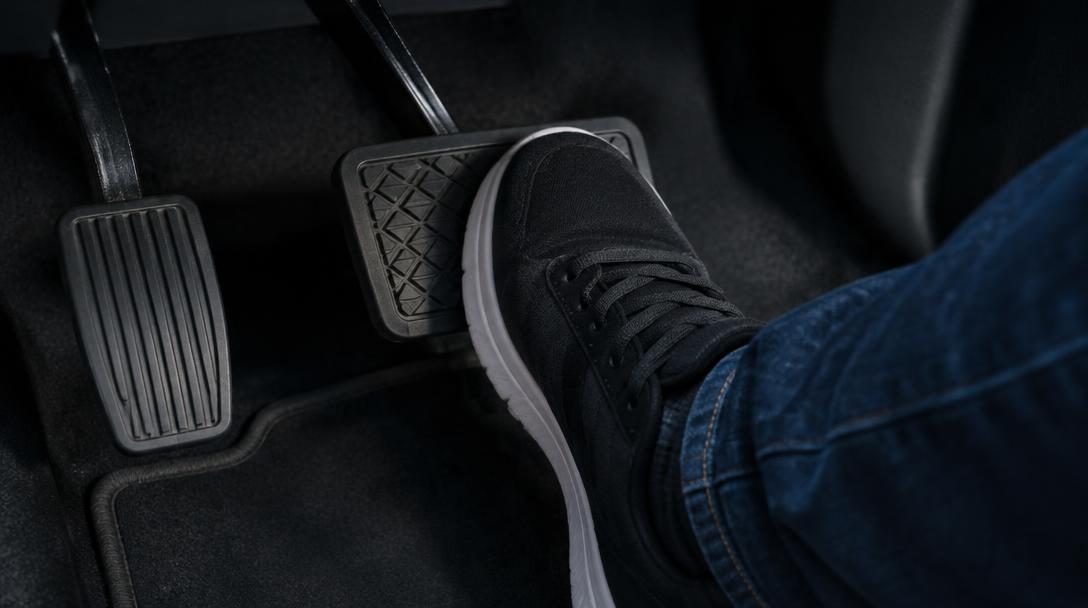
Quick answer: A newly soft, spongy, or sinking brake pedal needs prompt attention because the hydraulic system may not be building or holding pressure correctly. If the pedal approaches the floor, braking is weaker, fluid is leaking, or a red brake warning stays on with the parking brake released, stop driving and arrange professional help rather than testing it in traffic.
What a soft pedal means inside the braking system
Your foot does not directly squeeze the brake pads. In a conventional hydraulic system, pedal movement operates a master cylinder, which sends pressurized fluid through lines and hoses to the wheel brakes. That pressure produces the clamping force needed to slow the car. The system depends on intact components and fluid that transmits pressure predictably.
A soft pedal feels unusually yielding before useful braking begins. A spongy pedal may feel springy, while a sinking pedal continues moving downward under steady pressure. Drivers use these descriptions differently, so the exact word matters less than a clear change from the vehicle’s normal behavior. Tell the mechanic what your foot actually experiences.
Some cars, particularly hybrids and vehicles with electronically controlled brake assistance, have operating characteristics that differ from a traditional system. Consult the vehicle’s manual rather than comparing pedal travel with another car. A familiar transition during normal operation is different from a sudden change accompanied by reduced stopping ability.
Air, lost fluid, and internal leakage cause different problems
Brake fluid transmits force with very little compression. Air compresses much more readily, so trapped air can make pedal movement feel elastic instead of immediately productive. Air may enter after a repair, through a leak, or when the reservoir becomes too low. Bleeding can remove air, but the reason it entered must also be addressed.
An external leak allows fluid to escape. The source could be a hose, metal tube, fitting, caliper, wheel cylinder, or another hydraulic component. A leak may leave a wet patch, but it can also remain hidden above shields or inside a rear drum. The absence of a puddle is not proof that the system is sealed.
Internal leakage is less visible. Worn seals inside a master cylinder can allow pressure to bypass without leaving fluid on the driveway. A pedal that sinks while steady pressure is maintained can suggest this problem, but it does not identify the failed part by itself. Diagnosis needs controlled checks rather than an automatic master-cylinder replacement.
Corrosion-related leakage is a documented concern, not simply an old-car rumor. A Kia service-campaign explanation describes low fluid and increasing pedal softness on certain affected vehicles. That document applies to specific models; it illustrates a failure mechanism, not a diagnosis for every Hillside car.
Heat can change pedal feel without leaving a puddle
Repeated heavy braking creates heat. If brake fluid boils, vapor bubbles can compress and increase pedal travel. Moisture contamination can reduce the fluid’s resistance to boiling, which is one reason vehicle-specific fluid maintenance matters. A heat-related symptom still requires inspection even if the pedal seems normal again after cooling.
Do not confuse every loss of braking with the same failure. Friction materials can lose effectiveness when overheated while the pedal remains relatively firm. Loss of brake assistance commonly makes the pedal harder, not softer. These differences help direct diagnosis, but none makes a vehicle with substantially reduced braking safe to keep driving.
Chicago-area traffic can expose an existing weakness. Repeated slowing on I-290, followed by another stop at the end of an exit ramp, demands dependable pressure each time. That pattern does not prove the fluid overheated. It explains why a new pedal change should be assessed before the next commute, not after an emergency stop.
What Hillside drivers should notice before the next trip
Think about when the change began. Did it appear immediately after brake service, only after a long drive, or suddenly at an ordinary stop? Does the first application travel farther than later applications? Has the fluid level changed? These observations help a technician distinguish a service-related air problem from leakage or excessive component movement.
A pedal that firms up after several applications is not repaired. Repeated applications may temporarily compensate for air or extra clearance, while the underlying fault remains. Do not treat pumping as a way to finish errands along Roosevelt Road. A symptom that disappears briefly can still return at the worst possible moment.
Winter introduces slippery surfaces as well as mechanical concerns. ABS operation can create rapid pedal pulsation during a low-traction stop; that is different from a pedal that stays mushy on dry pavement. NHTSA’s winter-driving guidance explains maintaining steady pressure with ABS. Do not deliberately trigger it to compare sensations.
If the symptom occurred on a trip from Bellwood to Hillside, describe the conditions rather than recreating them. Whether the pavement was dry, the car had just started, or the brakes were already warm is useful information. A passenger’s note taken after parking is safer than a driver recording video while moving.
Safe checks are observations, not a driveway pressure test
Park on level ground away from moving traffic, secure the vehicle, and follow its shutdown instructions. Check that a floor mat or loose object is not interfering with pedal movement. Remove an obstruction only while parked. Even if that explains an unusual sensation, continuing softness or reduced braking still needs professional attention.
If the brake-fluid reservoir is easily visible, read its external level marks as the manual directs. Avoid opening the cap just to investigate. Dirt and moisture do not belong in the reservoir, and some vehicles require special precautions. Never add an unidentified fluid or assume all brake fluids are interchangeable.
A low level can reflect normal friction-material wear, a leak, or another issue. The amount and context matter. Topping it up without finding the cause may hide a warning sign and can create an overfilled reservoir when components are serviced later. Report the level instead of treating a refill as proof of repair.
From beside the parked car, look for fresh wetness near a wheel or underneath. Do not crawl beneath a vehicle supported by its emergency jack, touch unknown liquid, or loosen a bleeder screw. Brake fluid damages finishes and requires proper handling. Leave underbody and hydraulic checks to an appropriately equipped work area.
When the car should stay parked
A pedal near the floor, substantial loss of braking, visible fluid leakage, or a persistent red brake-system warning warrants stopping use. If already moving, concentrate on bringing the car to a controlled stop in a safe place, using the emergency guidance in your owner’s manual. Once stopped, do not resume driving to see whether it improves.
A short distance is not a meaningful safety margin. The drive across a parking lot can require a sudden stop for a pedestrian, and a surface street can demand as much braking as an expressway ramp. Arrange transportation for the vehicle through an appropriate provider rather than assuming proximity to a shop makes driving acceptable.
Dashboard warnings deserve careful reading. Ford’s warning-light guidance distinguishes the brake-system lamp from the ABS lamp and warns about reduced performance. Use your own manual for the exact instruction. A normal-looking dashboard does not overrule a pedal that no longer stops the car properly.
Even a mild but persistent change deserves prompt assessment before routine driving continues. Avoid scheduling a week of observation to collect better evidence. The useful question is whether the car can reliably deliver its normal braking now, not whether it managed yesterday’s trip without incident.
What a thorough soft-pedal diagnosis should establish
A useful inspection starts by documenting the complaint and checking hydraulic integrity. The technician may inspect fluid level, visible connections, flexible hoses, wheel components, and pedal operation, following the manufacturer’s procedure. Some electronic systems require specific diagnostic equipment and controlled activation to remove trapped air correctly.
The job should establish why travel increased. Excess clearance at certain brake components, damaged hardware, or unwanted component movement can affect the first pedal application. Replacing fluid alone will not correct every source of excessive travel. Likewise, replacing pads without identifying a hydraulic fault can leave the dangerous symptom unchanged.
Bosch’s brake-service overview describes checking fluid, calipers, and other components alongside friction materials. That system-wide approach is relevant here: a soft pedal is a complaint to investigate, not the name of a part to order. Ask which finding explains your particular symptom.
After repair, appropriate verification should confirm a consistent pedal, correct fluid level, and no leakage. The applicable manufacturer procedure determines bleeding and any electronic setup. A brief improvement before all checks are complete is not the same as a verified repair, especially when the original problem appeared only after warming up.
Talking through the repair at Rios Auto Service
Rios Auto Service is an independent, family-run shop owned by Juan Rios at 4218 Roosevelt Rd, Hillside, IL 60162. Its brake repair service is the relevant starting point for this concern. Explain the pedal change when you first call, particularly if you cannot safely drive the vehicle.
An honest inspection conversation should connect the recommendation to a finding you can understand. Ask to see accessible evidence or photographs and have the technician explain any test results. The aim is a repair that addresses the loss of pressure or extra travel, not an unrelated package of parts added simply because the car is older.
Useful questions include whether a leak was found, whether the system had air, and how the proposed work corrects the symptom. Separate required safety work from future maintenance. If fluid service is recommended, ask whether it is part of correcting this fault, routine maintenance under the vehicle’s schedule, or both.
Walk-ins are welcome, but that does not make an unsafe vehicle suitable to drive in. Call (708) 632-4808 or use the contact page to discuss the concern first. Hours are Monday through Friday, 8 AM–6 PM, and Saturday, 8 AM–4 PM; Sunday is closed.
Frequently asked questions about a soft brake pedal
Can worn pads alone explain a suddenly soft pedal?
Not usually by themselves in a properly operating self-adjusting disc-brake system. Pad wear can affect reservoir level over time, but a sudden soft pedal needs investigation for hydraulic trouble, air, abnormal movement, or another fault. Do not accept “the pads are old” as a complete explanation without supporting inspection findings.
Is it safe if the pedal gets firm after pumping?
No. Temporary improvement does not establish that the brakes will respond consistently on the next application. Tell the mechanic about it, but do not repeat pumping tests while driving. If dependable braking requires repeated applications, leave the vehicle parked and arrange professional assistance.
Will adding brake fluid make the pedal normal again?
Adding fluid cannot seal a leak or remove air already in the system. An unexpectedly low reservoir needs an explanation before the vehicle returns to use. Use only the exact fluid and handling procedure specified for the vehicle, and do not refill simply to suppress a warning light.
Can cold weather make a soft pedal normal?
Cold conditions can change how a vehicle feels, but they do not make new loss of braking pressure acceptable. Slippery pavement and ABS pulsation are separate issues. A pedal that sinks, feels newly spongy, or requires substantially more travel should be evaluated on its own merits, regardless of the forecast.
Related question
Learn what winter exposure can do to hydraulic tubing in Brake Line Rust on Older Cars in Cook County.
Sources
- Kia via NHTSA — Brake Line Corrosion Voluntary Service Campaign Q and A (opens in new tab)
- NHTSA — Winter Weather Driving Tips (opens in new tab)
- Ford — What do the warning and indicator lights in my Ford mean? (opens in new tab)
- Bosch Car Service — Brake Pad Replacement and Brake Repair (opens in new tab)