
Tune-Ups & Maintenance
Hesitation When Merging onto I-290
Hesitation on an I-290 merge can come from ignition, fuel, air, or transmission trouble. Learn safe checks and when Hillside drivers should stop driving.
By the team at Rios Auto Service, Hillside, IL · · 9 min read
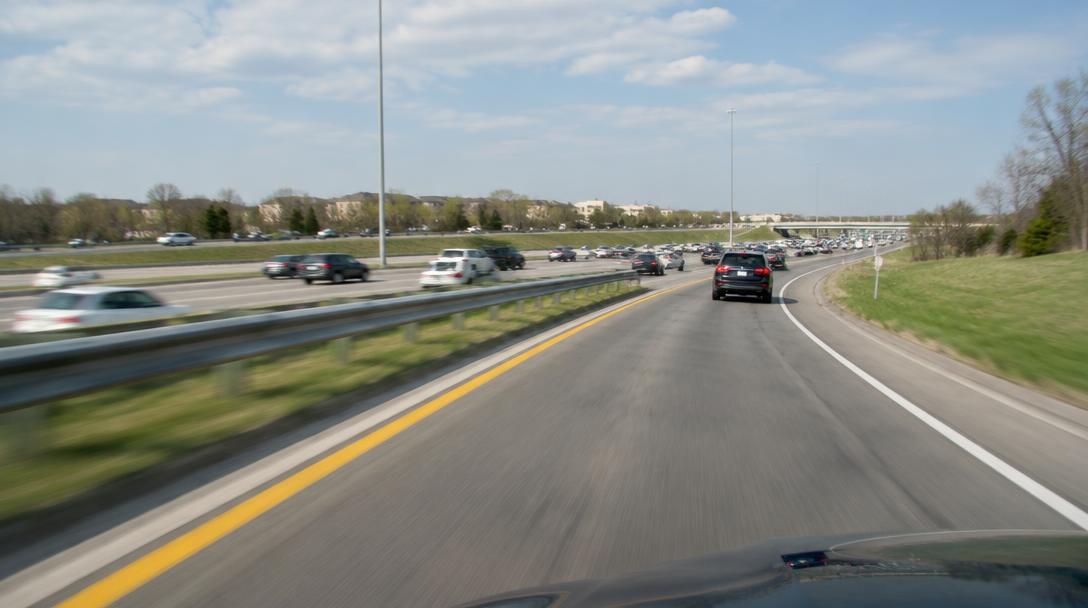
Quick answer: Hesitation when merging onto I-290 can come from an ignition misfire, insufficient fuel delivery, incorrect airflow information, or a transmission response problem. Because dependable acceleration matters when joining traffic, avoid another expressway test and have recurring hesitation diagnosed rather than buying a generic tune-up package.
Why an expressway merge exposes a hidden problem
A car can idle smoothly outside your Hillside home and still stumble when you ask it to accelerate. At idle, the engine needs relatively little fuel and produces little power. An entrance ramp changes that demand quickly: the throttle opens, airflow rises, and the ignition system has to fire reliably under greater cylinder pressure.
A worn ignition component may work at a stoplight but fail under that heavier load. A fuel delivery problem may likewise stay hidden until the engine needs substantially more fuel. The important distinction is not simply that the car feels sluggish. It is whether acceleration is smooth but modest, delayed and then sudden, interrupted by jerking, or accompanied by rising engine speed without matching road speed.
Those descriptions point toward different tests. They do not identify a failed part by themselves. An ignition coil, intake leak, fuel supply issue, electronic throttle concern, and transmission fault can all feel like a pause from the driver's seat. Replacing parts based only on that shared sensation risks spending money without restoring predictable acceleration.
Separate an engine stumble from a shifting delay
An engine stumble often feels like a repeated interruption: the car pulls, pauses, and pulls again. You might hear an uneven exhaust note or feel the body shake. Under load, insufficient spark energy or an incorrect air-fuel mixture can interrupt combustion. That interruption can be brief enough that the car feels normal again once you ease off the accelerator.
A transmission-related delay can feel different. Engine speed may climb noticeably while road speed barely changes, or there may be a long pause before a downshift. Some vehicles intentionally delay certain responses, and continuously variable transmissions do not sound like conventional stepped automatics. Compare the behavior with how this particular car previously drove, not how a different rental car responds.
Turbocharged engines can also have a short, normal response delay before boost builds. However, a new or worsening pause deserves attention, especially if it now includes surging, shaking, unusual sounds, or a warning light. Calling every delay “turbo lag” can hide an actual fault.
When describing the symptom, include what the tachometer did if you already noticed it safely. Do not look down repeatedly during a merge to collect data. A passenger's observation or an existing dashboard recording is more useful than a dangerous attempt to reproduce the problem.
Fuel and airflow need evidence, not an additive
A gasoline engine needs the right amount of fuel for the air entering it. A sensor reading that does not match reality, unmetered air entering through a damaged hose, or inadequate fuel pressure can disturb that balance. Some faults show up most clearly during acceleration because demand changes faster than it does at a steady cruise.
That does not make a bottle of fuel treatment a diagnostic test. An additive cannot repair a split intake duct, failing electrical connection, or transmission fault. Avoid repeatedly treating the tank while the hesitation continues. Keep a note of whether the problem began after refueling, but do not assume a particular station caused it without evidence.
Fuel grade matters only in the context of the manufacturer's instructions. If premium is required, use the specified grade. If regular is permitted, paying for higher octane is not a universal repair. The Department of Energy's maintenance guidance emphasizes correcting actual maintenance problems and following the vehicle's requirements rather than relying on a single cure-all.
Likewise, a dirty-looking air filter does not automatically explain severe hesitation. The intake system deserves inspection as a whole, including connections and sensor information. A useful diagnosis connects a finding to the symptom instead of treating every overdue item as its cause.
What western-suburb driving can reveal
A commute along Roosevelt Road may involve gentle starts, traffic signals, and long periods at low speed. The next acceleration onto I-290 demands much more power. That contrast can reveal a weakness that was already present; the ramp itself did not necessarily create the problem.
Weather adds another variable. A complaint that appears only after an overnight freeze may involve different operating conditions from one that appears after extended hot traffic. The Department of Energy explains that cold temperatures increase drivetrain friction and prolong engine warm-up. Those normal effects can reduce responsiveness somewhat, but repeated bucking or a dangerous loss of acceleration is not something to dismiss as winter behavior.
Wet pavement introduces another possibility: traction control may reduce engine power when the tires slip. A flashing traction indicator during wheelspin provides useful context. Slow down and reduce throttle rather than switching safety systems off to force acceleration. According to NHTSA's winter driving guidance, slick conditions require slower speeds and more space; mechanical troubleshooting should never override that basic safety margin.
Hillside drivers also move between crowded local roads and expressways with little time to adapt. If the car cannot accelerate predictably, choosing a different departure time does not solve the underlying problem. Arrange an inspection before the next trip that depends on a confident merge.
Safe observations you can make in your driveway
Start with a written description, not a tool purchase. Record whether the engine was cold or fully warm, whether the fuel tank was nearly empty, and whether air conditioning was operating. Include whether the symptom happened once or on several trips. A short timeline often helps more than a long list of guessed parts.
With the engine off and cool, look for an obviously disconnected intake hose or a loose air-filter housing after recent service. Do not reach around a running engine, unplug sensors, or remove components just to see whether performance changes. Electric fans may start unexpectedly, and hot surfaces remain hazardous after shutdown.
Check that the floor mat is secured and does not interfere with pedal travel. If a mat is out of position, correct that before driving. Note any warning messages, but do not clear codes or disconnect the battery to turn a light off. Stored information may help a technician understand an intermittent event.
Review recent maintenance records and receipts. Knowing that a symptom began immediately after a repair, refueling, or battery disconnection can narrow the investigation. It does not prove the last person who worked on the car made a mistake. Share the sequence neutrally and let testing determine the connection.
When hesitation means stop, not “try again”
A flashing check-engine light with shaking can indicate an active misfire capable of damaging the catalytic converter. Reduce demand immediately and move to a safe place. If the engine runs severely rough, power drops substantially, or the light continues flashing, stop driving and arrange appropriate assistance rather than attempting another merge.
Smoke, a strong raw-fuel smell, overheating, or a red oil-pressure warning also call for stopping safely and shutting the engine off. Do not keep the engine running just to obtain a better recording. A brief clip is never worth increasing fire risk or mechanical damage.
If hesitation occurs while you are already entering I-290, prioritize traffic around you. Avoid abrupt steering or braking unless necessary to prevent a collision. Use an available safe route out of traffic rather than accelerating repeatedly to check whether the problem has disappeared. Once safely stopped, decide how to get the vehicle evaluated without repeating the hazardous condition.
A mild but recurring pause still deserves prompt attention, even without a warning light. Some faults do not immediately meet the threshold for a dashboard alert. “No light” means there may be less stored information, not that the vehicle is automatically safe for expressway driving.
What a useful inspection should establish
The first goal is to reproduce or document the complaint safely under appropriate conditions. That might require a technician to review recorded data, inspect intake connections, examine ignition operation, or evaluate fuel delivery. Any road evaluation should respect traffic, speed limits, and the condition of the vehicle.
Diagnostic trouble codes are starting points. A code associated with one cylinder does not automatically prove its coil is defective, and a mixture code does not automatically condemn an oxygen sensor. The relationship between engine load, commanded operation, and actual response matters more than the name of a single code.
Ask what evidence distinguishes an engine problem from a transmission problem. Ask whether an overdue maintenance item is the demonstrated cause, a reasonable preventive recommendation, or unrelated work that can be scheduled later. Those are different categories and should remain separate in the discussion.
After a repair, verification matters. The goal is reliable acceleration under comparable, safe operating conditions, not merely an extinguished warning lamp. The Department of Energy's driving advice favors smooth, sensible acceleration; a sound vehicle should support that approach without requiring aggressive pedal inputs to overcome unexplained pauses.
Getting help at Rios Auto Service in Hillside
Rios Auto Service is an independent, family-run shop owned by Juan Rios at 4218 Roosevelt Rd, Hillside, IL 60162. Available services include check-engine diagnostics, engine repair and replacement, battery and electrical work, and tune-ups and maintenance. That gives you an appropriate starting point for discussing a new acceleration complaint without deciding on a repair before inspection.
For an honest inspection conversation, ask to be shown what was found and how it relates to the hesitation. Request a clear explanation before authorizing work, and distinguish required repairs from optional maintenance. A symptom should not become a reason to approve an unrelated bundle of services.
Call (708) 632-4808 or use the contact page to explain the problem and discuss a visit. Walk-ins are welcome. Hours are Monday through Friday, 8 AM–6 PM, and Saturday, 8 AM–4 PM; the shop is closed Sunday. Those hours are not a promise that a particular diagnosis or repair can be completed immediately.
Bring your notes, maintenance history, and any warning-message photos taken while parked. If the vehicle is unsafe to drive, say so when calling rather than trying to deliver it under its own power. The most useful opening sentence is concrete: “It hesitates during moderate acceleration after warming up,” not “I think it needs everything tuned.”
Questions Hillside drivers ask about merge hesitation
Can I keep driving if it only happens occasionally?
Intermittent does not mean harmless. If acceleration is unpredictable, avoid expressway driving and arrange diagnosis promptly. Stop driving if the symptom becomes severe, the engine shakes heavily, or a warning indicates a potentially damaging condition. Describe the frequency honestly instead of trying repeated high-load tests to make it happen again.
Will replacing the spark plugs fix it?
Possibly, if testing and maintenance history support worn or damaged plugs as the cause. But plugs will not repair every airflow, fuel, electrical, or transmission problem. Ask how the recommendation connects to the observed fault, especially when the suggested parts were recently replaced.
Could traction control feel like hesitation?
Yes. When tires lose grip, the system may reduce power and apply braking to manage wheelspin. A traction indicator and slippery pavement are important clues. Do not disable the system as an experiment; improve traction and driving conditions, and investigate if power reduction occurs on dry pavement without an obvious reason.
What if the problem disappears before my appointment?
Keep the appointment discussion and share the timeline. Intermittent faults may leave stored data or physical clues even when the engine currently behaves normally. Avoid clearing warning information. A diagnosis may need more than one observation, and acknowledging that uncertainty is better than installing parts solely because the symptom is frustrating.
Related question
For the next maintenance question, read Spark Plug Life: Copper vs. Iridium.