
Walk-In Oil Change
Walk-In Oil Change in Hillside: How Long It Really Takes
A walk-in oil change in Hillside depends on the shop queue, vehicle access, and final checks. Learn how to plan your visit without a promised finish time.
By the team at Rios Auto Service, Hillside, IL · · 9 min read
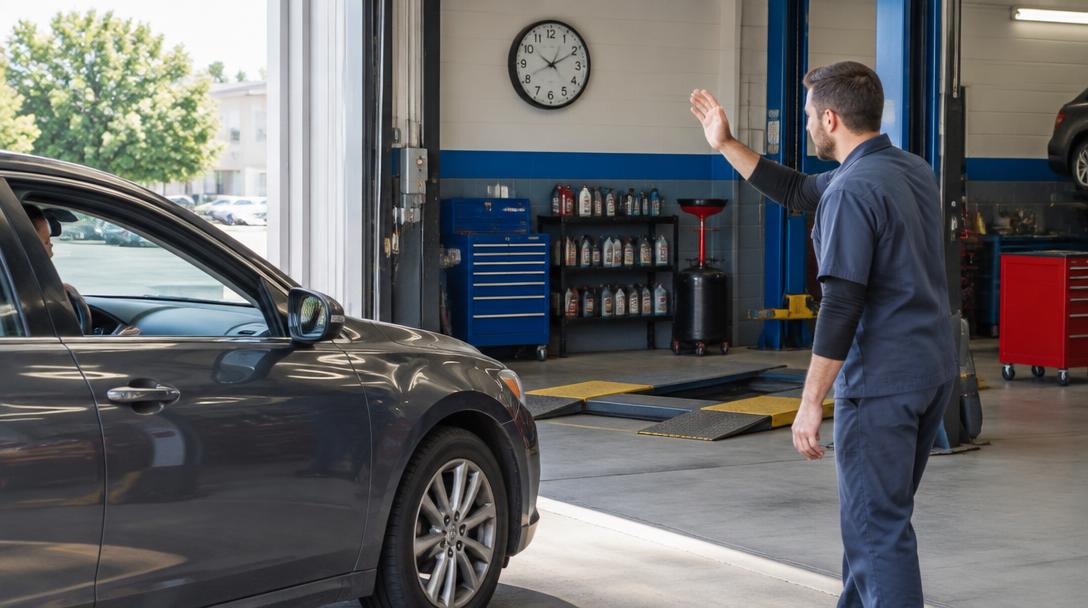
Quick answer: A walk-in oil change has two clocks: the time waiting for an available bay and the time needed to service your particular vehicle. Rios Auto Service welcomes walk-ins, but there is no published fixed turnaround here; call with your vehicle details and deadline before assuming the visit will fit a lunch break.
Why the oil-change clock starts before the drain plug comes out
When someone asks how long an oil change takes, they usually mean, “When can I drive away?” That is different from asking how long a technician spends working on the engine. Check-in, the current queue, parts confirmation, actual service, and checkout all belong in your door-to-door plan.
A vehicle can be straightforward to service and still wait because the available bays are occupied. Another vehicle might enter a bay promptly but need more time because its filter sits behind a cover. Neither situation tells you much about the other. Ask about the total expected visit, not just the hands-on portion.
A useful estimate separates those pieces. You want to know when work is likely to begin, what the basic service involves, and whether anything about your vehicle could extend it. An estimate is still an estimate. A newly discovered problem can change the finish time after the vehicle is raised.
For a Hillside driver trying to get back to work, that distinction is practical rather than technical. “The oil change itself is quick” does not answer whether you can make a scheduled meeting. Tell the shop your actual departure deadline before handing over the keys, while there is still time to choose another day.
What has to happen during the service
An oil change replaces used engine oil and the filter that captures contaminants. The engine needs the specified lubricant in the correct amount, with secure sealing at the drain point and filter. Speed does not make up for using an incorrect filter or leaving the oil level wrong.
Kelley Blue Book’s oil-change explanation describes draining the old oil, replacing the filter, reinstalling the drain plug, and refilling the engine. Those are the core operations, not the entire customer visit. Accessing the components and checking the result also take time.
The technician first needs to establish which engine is in the vehicle. Two cars with the same model name can have different engines, capacities, or filter arrangements. Giving the year, model, and engine information at check-in helps prevent a parts mismatch from becoming a delay halfway through the job.
Oil selection is also vehicle-specific. Ford directs owners to their manual and vehicle-specific resources for the recommended oil, filter, and refill amount. The broader lesson applies regardless of brand: confirming the specification is part of competent service, not unnecessary paperwork before the “real” work.
Once filled, the engine needs the appropriate operating and level-check procedure, along with a check for leakage. A maintenance reminder may need resetting after service. These finishing steps help establish that the job is complete; they should not disappear simply because the driver has another appointment.
Why one vehicle takes longer than the next
Some engines offer direct access to the filter and drain plug. Others use underbody shields, recessed fasteners, or filter housings that require additional disassembly. A shield must go back securely. Treating every vehicle as though its underside were identical creates unrealistic expectations before work even starts.
Prior damage can complicate an otherwise routine visit. A rounded drain plug, damaged threads, a broken shield fastener, or an overtightened filter may need careful attention. These are possible discoveries, not reasons to assume that your car has a problem. Their significance becomes clear only when someone inspects the actual components.
Parts availability matters too. A common-looking vehicle does not guarantee that its exact filter is immediately available. Providing accurate information ahead of time lets you ask whether the necessary oil and filter can be confirmed. Do not interpret that question as a request for the shop to substitute whatever happens to fit.
Additional work changes the scope. If you request diagnosis of a noise along with the oil change, you are no longer asking for only routine lubrication service. Keep those requests clear at check-in so the time estimate reflects both tasks rather than treating the second concern as a quick favor.
Planning around Roosevelt Road and a real departure deadline
A stop along Roosevelt Road may look easy to fit between errands in Hillside and Bellwood. The difficulty is that your travel time and the shop’s queue are separate variables. Congestion on I-290 or the approaches to I-294 can consume your buffer before you reach the counter.
If you need to collect someone from a Metra station or reach an appointment at Hines VA Hospital, say so. Give a concrete time rather than “I’m in a bit of a hurry.” The shop can discuss whether the current situation is compatible with that deadline, without anyone pretending traffic and service are perfectly predictable.
Do not rely on a universal “best hour” for walk-ins. An independent repair shop’s workload can change with appointments, ongoing repairs, and vehicles that arrive with urgent problems. Calling shortly before you travel gives you more useful information than assuming every Tuesday morning or Saturday afternoon will be quiet.
Closing time is another boundary, not a promised latest arrival time for service. Rios is open until 6 PM on weekdays and 4 PM on Saturdays, but arriving just before closing does not establish that an oil change can be finished that day. Ask before building your schedule around it.
Chicago winter can complicate the visit without changing the goal
Snow and cold make a rushed visit less appealing. You may arrive with slippery footwear, poor visibility, and less spare travel time than expected. NHTSA’s winter-driving guidance emphasizes preparation and allowing extra time in winter conditions. Apply that same margin to reaching a service visit safely.
Road salt exposure can contribute to corrosion on exposed hardware over time. That does not mean every salty vehicle needs extra labor, or that winter automatically doubles an oil change. It means a technician should be allowed to deal carefully with fasteners that resist removal rather than forcing them to satisfy a stopwatch.
Tell the shop about any recent hard pothole impact followed by a leak or a new noise. That information may change the visit from routine maintenance to an inspection of possible damage. An oil change alone cannot establish that an impact did no harm, even if fresh oil is part of the eventual work.
Short winter errands and I-290 stop-and-go are useful maintenance context, but they do not provide a finish-time formula. For this visit, the key question is whether you are requesting routine service on an otherwise normally operating vehicle or asking someone to investigate a symptom as well.
Safe preparation that can prevent avoidable delays
Before leaving home, gather the vehicle year, make, model, and any available service record. Note the odometer reading and whether a maintenance message is displayed. If your vehicle has an unusual engine option, identifying it accurately is more useful than guessing the oil capacity from a previous car.
Check the owner’s manual for the oil specification if you have access to it. You do not need to become a lubrication specialist. Simply having the correct information available helps resolve uncertainty. If the manual is missing, say that rather than repeating a grade you remember from a sticker without context.
An owner-level oil check can also identify a concern worth mentioning. Follow your vehicle’s instructions for parking position, engine temperature, and waiting time. Some vehicles use an electronic level display rather than a dipstick. Keep hands away from hot surfaces, belts, and fans, and do not crawl under the vehicle.
Take a photograph of an unfamiliar dashboard message while parked. Describe a leak by where you noticed it and when, not by a diagnosis you cannot verify. “A spot appeared after parking overnight” gives the technician a clearer starting point than “It definitely just needs a new drain plug.”
Remove loose valuables and make the driver’s area easy to access. Keep your phone available if you leave the premises. If the shop needs authorization to address an unexpected issue, an unanswered call can leave the vehicle waiting even when the original oil-change work was straightforward.
When waiting for routine service is the wrong plan
A scheduled maintenance reminder and an active oil-pressure warning are not interchangeable. Car and Driver distinguishes an oil-life reminder from the red oil-pressure warning. If an oil-pressure warning remains on while the engine runs, stop safely and shut the engine off rather than driving around looking for the shortest queue.
The same caution applies to a substantial active leak, smoke, or sudden mechanical knocking. Do not assume fresh oil will make continued driving safe. Arrange appropriate assistance and describe the symptoms. A vehicle that needs diagnosis may require a very different amount of time from a routine walk-in oil change.
If the engine is simply due for maintenance and operating normally, ask about availability and make a realistic plan. If the oil level is below the specified range, follow the manual’s instructions before driving; do not overfill it. An oil change is not a substitute for addressing an unsafe level or unresolved leak.
Avoid asking a technician to skip checks to save a few minutes. The better solution to a tight schedule is changing the visit plan, not removing the steps that verify the correct fill and secure assembly. A missed appointment is inconvenient; a preventable lubrication problem can be much more serious.
Arranging a walk-in oil change at Rios Auto Service
Rios Auto Service is an independent, family-run shop owned by Juan Rios at 4218 Roosevelt Rd, Hillside, IL 60162. Its walk-in oil-change service is an option for local drivers, but walk-in availability should not be confused with a fixed completion guarantee.
Call (708) 632-4808 with your vehicle details, the work you want, and your departure deadline. Ask for the current estimated wait and whether anything needs confirming before you travel. If you also have a leak or warning message, mention it during that conversation rather than after the vehicle is already queued.
Ask for an honest inspection and to see any findings that could change the job. Keep the discussion specific: what was found, whether it affects safe completion, and what additional time or authorization is needed. That approach separates necessary work from optional recommendations without turning every observation into an automatic extra purchase.
The shop welcomes walk-ins Monday through Friday, 8 AM–6 PM, and Saturday, 8 AM–4 PM; it is closed Sunday. There is a free Wi-Fi waiting area. Use the contact page to reach the shop, and confirm your plan directly rather than treating this article as a live queue update.
Frequently asked questions about walk-in timing
Can I count on finishing during my lunch break?
Not without checking the current wait and allowing time for travel and checkout. Explain exactly when you must leave. Even a simple vehicle can sit in a queue, and an estimate can change if damaged hardware or another concern appears during service. Have a backup plan for a firm deadline.
Does arriving early guarantee that I go first?
No. Opening time does not tell you what work is already scheduled or occupying available bays. An early arrival may fit your day well, but only the shop can explain the current workload. Ask about expected start time rather than assuming that being present at opening guarantees immediate service.
Should I warm up the engine before coming in?
Drive normally if the vehicle is safe to operate, and tell the technician about any warning or unusual behavior. You do not need to idle for a long time solely to prepare for an oil change. Follow the vehicle’s instructions and let the technician manage the service procedure and hot-component precautions.
What if something unexpected needs repair?
Ask how the finding affects the oil change, safe driving, cost, and completion estimate before authorizing additional work. Some issues prevent proper reassembly; others can be discussed separately. A clear explanation helps you decide whether to wait, rearrange transportation, or return for work that is not immediately necessary.
Related question
For help choosing the appropriate lubricant for cold weather, read Synthetic vs. Conventional Oil for Chicago Winters.