
Check Engine Light Diagnostics
P0420 Code: Is It Really the Catalytic Converter?
P0420 can mean a worn catalytic converter, but leaks and engine problems need checking first. Learn what Hillside drivers should verify before replacement.
By the team at Rios Auto Service, Hillside, IL · · 9 min read
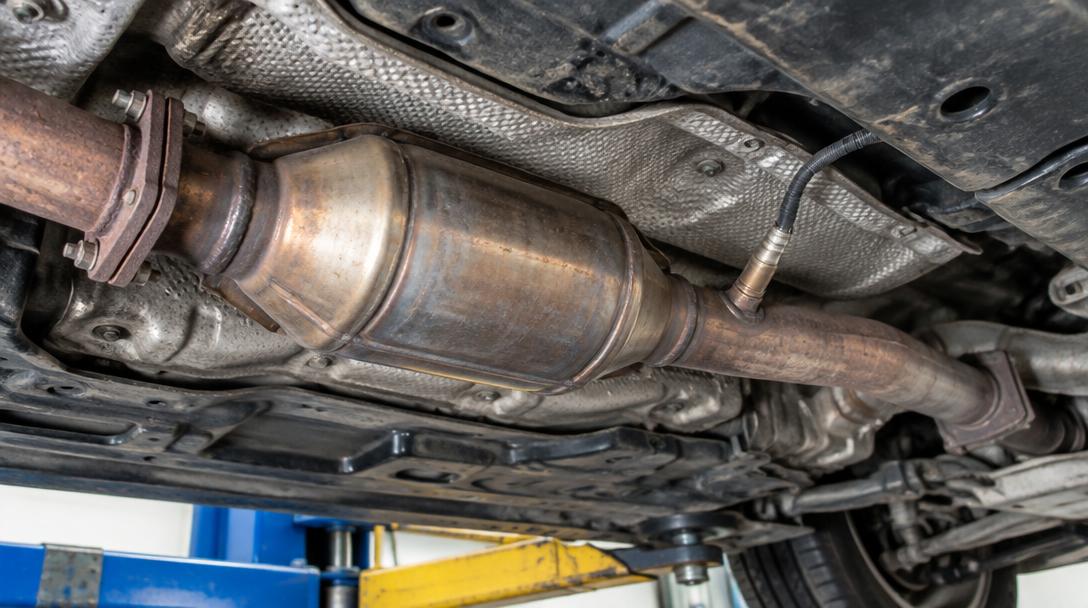
Quick answer: P0420 means the engine computer detected catalyst-system efficiency below its programmed threshold on bank 1; it does not, by itself, prove the catalytic converter needs replacing. A worn converter is a real possibility, but exhaust leaks, sensor problems, and engine-running faults need evaluation before anyone orders an expensive part.
What P0420 actually measures
A catalytic converter uses a coated internal structure to help turn harmful exhaust gases into less harmful substances. On a typical gasoline vehicle, its operation depends on adequate temperature and an engine that controls the air-fuel mixture properly. The converter cannot compensate indefinitely for an engine sending the wrong mixture or unburned fuel into the exhaust.
The computer usually evaluates catalyst performance using information from sensors upstream and downstream of the converter. It assesses that information under particular operating conditions. P0420 is the result of that evaluation, not a photograph of the converter’s interior or a direct measurement of how much damage exists.
Bank 1 means the side of the engine containing cylinder number one. On an inline engine, there is usually only one bank. On engines with two banks, identifying the correct side matters before inspecting sensors or discussing converter replacement. Its location is vehicle-specific, not automatically the driver’s side.
The EPA explains that on-board diagnostics monitors emission-related systems and can identify deterioration before obvious symptoms appear. That explains a common frustration: your vehicle can feel completely normal while its catalyst monitor repeatedly reports a problem. Normal acceleration does not establish that exhaust treatment is working correctly.
Why the converter can be guilty without being the first failure
Catalysts can lose effectiveness with age and use. Internal material can also become damaged or contaminated. Once the active surfaces no longer support the required reactions adequately, the monitor may detect reduced performance even if exhaust flow remains unrestricted and the vehicle drives normally.
An efficiency failure and a clogged converter are different conditions. P0420 alone does not establish a blockage. Severe restriction can cause major power loss, but replacing a converter to cure an assumed restriction requires evidence beyond an efficiency code. A technician may need additional testing when the complaint includes poor performance.
Unburned fuel from an engine-running problem can overheat a converter. Oil consumption or coolant entering combustion can also damage catalyst performance. If one of those conditions remains, a replacement converter may suffer the same fate. Identifying why the original part failed protects the repair rather than merely expanding the estimate.
Tell the shop about oil added between changes, unexplained coolant loss, recent overheating, or rough running that happened before the warning light. Those observations do not prove catalyst damage, but they can change the order of testing. A converter diagnosis should account for the engine feeding it.
What can make the catalyst monitor misleading
An exhaust leak near the monitored section can affect sensor readings. Outside oxygen entering through a leak may distort the picture the computer uses to assess the catalyst. A leak also needs attention for its own reasons, particularly if exhaust odor reaches the passenger compartment.
A sensor or its wiring can supply incorrect information. However, “it might be the oxygen sensor” is not a reason to replace one on speculation. A sensor can be reporting a genuine converter problem accurately. Diagnosis needs to distinguish a bad signal from an unwelcome but truthful signal.
Fuel-control problems can complicate the monitor’s interpretation as well. Companion codes, fuel-trim data, and the conditions recorded when the fault occurred help establish whether catalyst evaluation should wait until another fault is corrected. The order matters: repair the cause that invalidates a test before trusting its result.
Manufacturer service information can identify model-specific test procedures or relevant software updates. An update is not a universal cure, and the existence of a bulletin does not mean it applies to every vehicle with that code. The vehicle identification number, engine configuration, symptoms, and documented conditions must fit.
Hillside winter trips add context, not a verdict
A commute from Bellwood to Hillside can involve cold starts, short distances, and long waits at intersections. The catalyst monitor does not necessarily run on every trip. Its required conditions vary, so a light appearing after a longer I-290 drive does not prove the highway caused the failure.
The longer drive may simply have allowed the monitor to finish. Likewise, a light that stays off during several short winter errands does not prove a repair worked. The computer may not yet have had a valid opportunity to reevaluate the system. That distinction matters when judging an intermittent complaint.
Road salt and moisture give technicians a reason to inspect exposed exhaust joints, mounting hardware, wiring, and connectors. They are not enough to diagnose the converter from the driver’s seat. A deteriorated joint on a vehicle used around Roosevelt Road needs an actual leak check, not an assumption based on the season.
Pothole impacts can also be useful history if an exhaust rattle or scraping noise began immediately afterward. Tell the technician what changed and when. Do not turn a remembered impact into a conclusion that the catalyst broke internally; shields, hangers, and other exhaust components can make noise too.
Safe checks before your appointment
Save the exact code and any other codes from the initial read. A screenshot is better than remembering “something about emissions.” Include whether the reader labeled the code pending, confirmed, or permanent. These labels describe different diagnostic states, not three separate parts that need replacement.
Write down the mileage, whether the engine was warm, and whether you noticed rough running, reduced power, or unusual odors. Gather receipts for recent engine or exhaust work. An oxygen sensor replaced last month or a converter installed by a previous owner is relevant history, even if the paperwork seems incomplete.
With the vehicle parked and fully cooled, look only at readily visible areas. You may notice a hanging exhaust section or damaged wiring without reaching underneath. Never crawl under a vehicle supported only by a jack, touch hot exhaust parts, or run the engine inside a garage to listen for leaks.
Do not disconnect the battery or clear the code simply to see whether it returns. That can erase useful diagnostic information and reset readiness monitors. Avoid pouring in a catalyst-cleaning product as a substitute for testing. No bottle can repair a cracked substrate, broken wiring, or an engine that is contaminating the catalyst.
What meaningful confirmation should include
Start with the entire diagnostic picture, not just P0420. A technician should identify related faults and review stored operating information when available. Freeze-frame data can preserve a snapshot of conditions around the fault, although what is captured and retained depends on the vehicle and the faults present.
Inspection should consider exhaust integrity and sensor wiring before interpreting catalyst data. Live readings then need to be evaluated with the correct operating conditions and manufacturer guidance. The familiar idea that the rear sensor should simply look flat is too crude to apply to every vehicle and sensor design.
A graph can be helpful, but its value depends on what was measured, when it was measured, and how the vehicle’s monitor works. Sensor response checks or other directed tests may be needed. Bosch warns about mistakes in check-engine-light diagnosis, reinforcing the need to investigate rather than equate a code description with a failed component.
If replacement is recommended, ask what evidence ruled out leaks and sensor faults, and whether the engine has a problem that could damage the new converter. You do not need to become an emissions specialist. You need a clear explanation connecting the test results to the repair recommendation.
How urgently should you act?
A steady light with normal operation generally allows you to arrange prompt evaluation rather than authorize an immediate converter replacement from a parking lot. It is not permission to ignore the warning for months. Watch for changes, follow the owner’s manual, and avoid demanding trips until the situation is understood.
A flashing light, pronounced shaking, severe power loss, smoke, or overheating changes the decision. Stop safely and seek help rather than continuing to load the engine. An active misfire can damage the catalyst, and the urgency comes from the vehicle’s behavior, not merely the stored P0420 label.
Exhaust fumes inside the cabin also require immediate attention. Pull over safely, turn the engine off, get into fresh air, and arrange assistance. Do not treat an open window as a repair. Carbon monoxide cannot reliably be detected by smell, so absence of odor is not proof that a leaking exhaust is safe.
Before paying for a converter, check applicable manufacturer emissions coverage. The EPA’s emissions-warranty explanation describes federal coverage for specified major components, generally eight years or 80,000 miles, whichever comes first. Eligibility, the cause of failure, vehicle category, and any additional coverage need confirmation; this is not a Rios warranty promise.
After a repair, the monitor still has work to do
A completed repair and a cleared warning light are not the same as a completed catalyst self-test. Verification may require appropriate operating conditions and a follow-up scan. There is no universal mileage that guarantees completion, and repeatedly taking extra highway laps cannot substitute for checking monitor status.
For western-suburb drivers with a testing deadline, consult Illinois EPA vehicle-emissions information rather than assuming a dark dashboard guarantees test readiness. Tell the repair shop about the deadline early. That gives the discussion a practical timeline without encouraging code clearing as a shortcut.
Ask what should happen if P0420 returns. A sensible follow-up considers whether the same monitor failed under comparable conditions and whether new evidence has appeared. Repeatedly installing parts without reviewing the previous results is not progress. Keep the repair documentation so the next evaluation starts with facts.
Discussing P0420 at Rios Auto Service
Rios Auto Service offers check-engine diagnostics at 4218 Roosevelt Rd, Hillside, IL 60162. The independent, family-run shop is owned by Juan Rios. Bring the code report and your symptom notes, and explain whether the vehicle still runs normally or has developed a drivability problem.
Ask for an honest inspection and to see what was found. Keep the conversation focused on necessary work: what confirms a converter problem, what should be corrected first, and how the repair will be checked. A code-based guess is not the explanation you should settle for when a major component is involved.
Walk-ins are welcome Monday through Friday, 8 AM–6 PM, and Saturday, 8 AM–4 PM; Sunday is closed. Call (708) 632-4808 or use the contact page. If the vehicle is flashing its warning light or showing dangerous symptoms, arrange safe assistance instead of driving it to meet business hours.
Frequently asked questions about P0420
Does P0420 mean both converters need replacement?
No. It identifies the bank 1 catalyst system’s efficiency concern. Some vehicles have multiple converters or integrated assemblies, so the exact layout matters. The code does not authorize replacement of every converter, and bank identification should be confirmed using information for that particular engine.
Can an oxygen sensor fix P0420?
Only if testing establishes that a faulty sensor or its circuit is responsible. A working sensor can report an ineffective catalyst accurately. Replacing it simply because it costs less than a converter may waste money and postpone the repair the vehicle actually needs.
Can I keep driving if the car feels fine?
Normal operation with a steady light usually allows time to arrange evaluation, subject to the owner’s manual and any other warnings. It does not prove the converter is healthy. New shaking, flashing, severe power loss, overheating, or fumes should change your plan immediately.
Will a new converter solve the problem permanently?
It should address a confirmed catalyst failure when the replacement is correct and contributing faults are resolved. It cannot guarantee against future problems. An unresolved fuel-control issue, oil consumption problem, or damaging misfire can shorten the life of the replacement and bring the warning back.
Related question
For a closer look at what a scan can establish, read Free Code Reads vs. Professional Diagnostics.
Sources
- EPA — On-Board Diagnostic Regulations and Requirements Questions and Answers (opens in new tab)
- Bosch Car Service — Common mistakes of Check Engine Light Diagnosis (opens in new tab)
- EPA — Frequent Questions related to Transportation, Air Pollution, and Climate Change (opens in new tab)
- Illinois EPA — Vehicle Emissions Testing (opens in new tab)