
Check Engine Light Diagnostics
Diagnosing Strange Noises
Strange car noises need a repeatable description, not a guessed repair. Learn safe ways Hillside drivers can document sounds and recognize urgent symptoms.
By the team at Rios Auto Service, Hillside, IL · · 9 min read
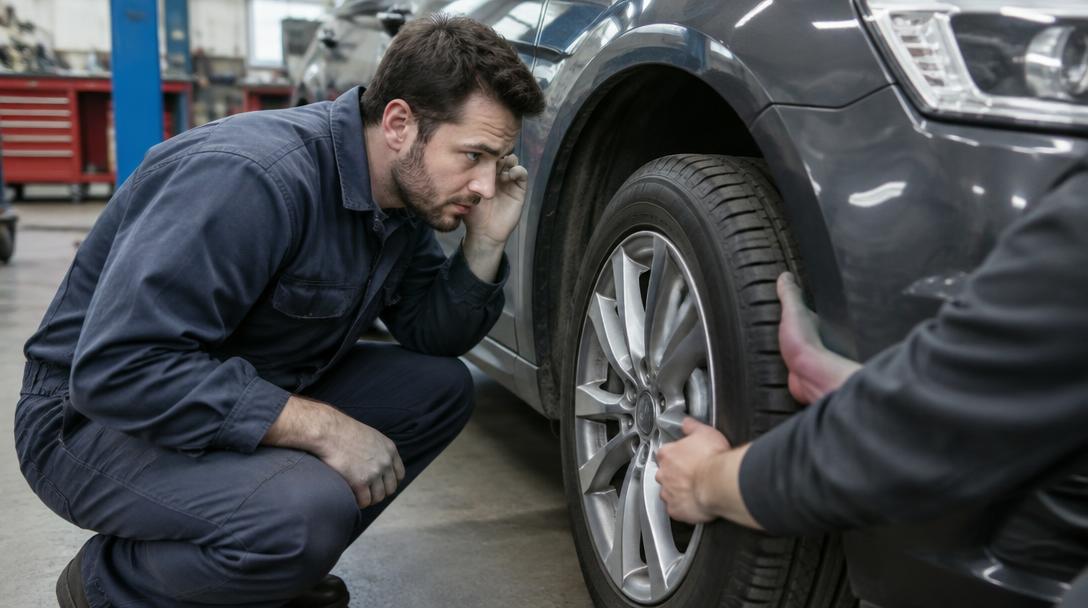
Quick answer: The best way to diagnose a strange car noise is to identify when it happens, what changes it, and whether it comes with a safety problem. A sound alone rarely identifies a failed part. Stop safely for noises accompanied by lost braking, difficult steering, severe vibration, smoke, or major loss of power.
A useful description beats a perfect imitation
You do not need to reproduce a noise convincingly at a service counter. “A light rattle over uneven pavement, with the windows closed and the engine warm” gives a technician more direction than “something sounds terrible.” The goal is to describe a repeatable event without deciding in advance which component caused it.
Begin with three observations: whether the car was moving, whether you were accelerating or slowing, and whether the sound repeated. Add its approximate location, but treat that location as an impression. A sound that seems to come from the dashboard may travel there through the body from somewhere else.
The Car and Driver overview of unfamiliar vehicle noises illustrates how different systems can announce trouble through sound. Its examples are useful possibilities, not an audio dictionary that can diagnose every vehicle. Similar words can describe very different mechanical events.
Avoid translating the sound directly into a shopping list. Calling something a wheel-bearing noise may unintentionally narrow the conversation before anyone checks tires, shields, mounts, or other possibilities. Describe what you hear first; mention your suspicion second, clearly labeled as a suspicion.
Separate engine speed from road speed
One of the most useful distinctions is whether the sound follows engine speed or vehicle speed. An engine-related sound may change with revolutions even when road speed remains similar. A rotating road-speed-related sound may get faster as the car moves faster, regardless of which gear is selected.
These are clues, not owner testing instructions. Do not shift into neutral at speed, switch off the engine while moving, or perform abrupt maneuvers to separate the two. A technician can choose a controlled test that preserves steering, braking, and normal vehicle control.
If the sound occurs while parked, note whether the engine is running and whether climate control is on. A fan, blower, or other accessory can create noise that is unrelated to internal engine operation. Turn ordinary cabin controls off and on only while safely parked, and observe rather than reaching into machinery.
Some noises occur after shutdown. Cooling components can make occasional ticking sounds, and electrical systems may remain active temporarily. Whether a sound is normal depends on the vehicle and its pattern. A new persistent noise, strong odor, or visible smoke deserves attention even after the engine stops.
Describe the event before describing the pitch
Was the sound a single clunk when changing direction, a repeating scrape, or a continuous hum? Did it begin immediately or after twenty minutes? Did it happen only on the first trip of the day? These details often narrow the inspection more effectively than deciding whether the pitch was high or medium.
A rattle over broken pavement suggests a different set of conditions from a whistle during steady acceleration. Neither establishes a diagnosis. The technician still needs to determine whether the sound comes from a loose object, a moving joint, airflow, or another source entirely.
Frequency is especially useful. A repetitive tick that becomes faster with movement differs from an occasional click over a bump. Tell the shop whether the sound happens once per trip, continuously, or only during a particular action. If you cannot tell, say so rather than filling the gap with a guess.
Volume also has limits as a guide. A harmless loose interior item can be startlingly loud, while a developing safety problem may begin quietly. The sound's relationship to vehicle control and any accompanying symptoms matters more than whether you can hear it over the radio.
What Hillside roads can reveal without proving a cause
Potholes and patched pavement around the western suburbs can make a previously unnoticed rattle easier to hear. That does not mean the last pothole caused every problem. Record a specific impact if one occurred, but avoid assuming that everything afterward must be a damaged suspension component.
I-290 traffic introduces repeated acceleration and deceleration, while a quieter residential street may reveal a low-speed sound masked on the expressway. Tell the technician where the sound was easiest to hear because of speed and surface conditions, not because a particular road name diagnoses the car.
Winter adds snow, ice, moisture, and road debris to the environment. Material caught near a rotating component can sometimes create a temporary noise. However, do not crawl under a snow-covered vehicle or reach behind a wheel to remove something you cannot identify safely.
NHTSA's winter-driving guidance emphasizes preparation and safe operation in cold conditions. For noise diagnosis, the practical lesson is to avoid recreating symptoms on slippery roads. A controlled inspection is preferable to repeated braking or steering experiments on an icy side street in Bellwood.
Eliminate loose belongings before suspecting machinery
With the vehicle parked and switched off, check the cabin and cargo area. A bottle in a door pocket, loose spare-tire equipment, or an unsecured item in the trunk can imitate a mechanical rattle. Secure belongings using their intended storage locations rather than stuffing material near pedals or seat mechanisms.
Check whether the sound disappears when an ordinary removable item is taken out. This is a useful comparison because it changes one safe variable. Do not remove trim panels, loosen seats, or disturb airbags to chase a noise. Interior disassembly can create new rattles and safety problems.
A seat belt buckle tapping against hard trim may sound different with a passenger aboard. A rear-seat object may slide only when turning. Tell the technician if passenger or cargo changes affect the noise; that observation can prevent an unnecessary search under the vehicle.
Do not overlook recently installed accessories. A roof carrier, loose license-plate bracket, or item mounted inside the cabin can make noise only under certain conditions. Inspect only what is safely accessible and follow the accessory instructions. An attachment that appears insecure should be corrected before further driving.
Safe visual checks around a parked car
Walk around the car on stable ground and look for an obviously low tire, hanging trim, or debris visible without reaching underneath. If a panel is close to a tire or dragging, do not simply push it back and assume it will remain secure at speed. Arrange an appropriate inspection.
Tires deserve attention when noise arrives with vibration, visible damage, or a change after an impact. NHTSA's tire-safety resource explains the importance of pressure and condition checks. A visual glance cannot rule out internal damage, and a normal pressure reading does not explain every road-speed hum.
Never put any part of your body beneath a vehicle supported only by its emergency jack. Do not touch exhaust components to see whether they are loose; they can remain hot well after shutdown. Leave checks involving lifting, rotating wheels, or working near moving machinery to properly equipped personnel.
If you open the hood, keep your inspection visual and follow shutdown instructions. Fans can start unexpectedly on some vehicles. A moving belt is not a place for fingers, clothing, a phone, or a makeshift listening tool. The desire to locate a squeak does not outweigh those risks.
Make a recording without creating a distraction
A brief recording can help when the sound is intermittent, particularly if it happens only during a cold start. Record from a safe stationary position without placing the device inside the engine compartment or near hot or moving components. Keep people clear of the vehicle's path.
For a moving-vehicle sound, a passenger may record if doing so is lawful and does not interfere with restraint use or driver attention. The driver should not handle a phone. Do not repeat a dangerous maneuver, speed up, or move onto an unsafe shoulder to produce clearer audio.
Give the recording context. State whether the engine was cold, the car was moving, and which normal action preceded the sound. Wind and phone processing can distort pitch and volume, so audio is a supplement to the complaint rather than a substitute for examining the vehicle.
Keep the original recording if possible. A heavily edited clip may remove the moment that shows how the noise began. There is no need to gather hours of footage. One representative example and a clear description are often more useful than dozens of nearly identical files.
When the noise means the trip should end
Stop safely if the noise accompanies reduced braking, steering difficulty, severe vibration, or a wheel that appears unstable. Do not drive a loop around the block to see whether it gets worse. The immediate question is whether the vehicle remains controllable, not whether the cause is expensive.
Smoke, a burning smell, exhaust fumes entering the cabin, or a dragging component also requires prompt action. Move away from immediate hazards and arrange appropriate assistance. Carbon monoxide cannot be ruled out because an odor seems mild; do not idle in a garage while investigating an exhaust-related sound.
A sharp new noise with major power loss or a flashing engine warning should not be dismissed because it disappears when you lift off the accelerator. Avoid further load and follow the vehicle's warning instructions. This article focuses on describing sounds, not diagnosing internal engine or transmission damage by ear.
A mild stable rattle without other symptoms may allow a planned inspection, but there is no universal “safe for a week” rule. If you are uncertain, describe the sound and accompanying symptoms before driving to the shop. A change in steering, braking, temperature, or warning status changes the urgency.
Why a technician may need your exact conditions
A road test can be necessary, but only when safe and appropriate. The technician may compare smooth and uneven surfaces, observe normal acceleration, or reproduce a parked condition. Your description helps select the test instead of driving aimlessly and hoping the sound appears.
Inspection may reveal contact marks, loose hardware, deterioration, or another physical clue. Listening equipment can sometimes help isolate transmitted sound. Even then, the result needs confirmation: the loudest location is not always the failed part, especially when vibration travels through connected metal structures.
Normal operating sounds also vary by model. The manufacturer's owner resources can explain certain expected system behaviors. A technician should still consider whether a familiar type of sound has become substantially louder or appeared alongside a new symptom rather than declaring every click normal.
If the noise cannot be reproduced, ask what was inspected and what remains uncertain. “Not heard today” is different from “nothing can be wrong.” Agree on what change would justify returning, and avoid authorizing speculative replacement solely to make an intermittent complaint disappear from the schedule.
Discussing an unfamiliar sound at Rios Auto Service
Rios Auto Service is an independent, family-run shop owned by Juan Rios, located at 4218 Roosevelt Rd, Hillside, IL 60162. Its listed services include check-engine diagnostics, brake repair, engine repair, and battery and electrical work. Describe the sound when discussing diagnostic service so the concern can be considered appropriately.
Ask for an explanation of what was found and how it connects to the noise. A useful recommendation separates a confirmed defect from a possibility and shows the finding where practical. The aim is an honest inspection and informed approval, not replacing several unrelated parts because each could theoretically make a rattle.
Walk-ins are welcome. Call (708) 632-4808 or use the contact page to discuss symptoms and visit details. Hours are Monday through Friday, 8 AM–6 PM, and Saturday, 8 AM–4 PM; Sunday is closed. Mention safety-related symptoms before planning to drive.
Short FAQ about mysterious sounds
What if I cannot describe the noise accurately?
Describe the event instead: speed, temperature, surface, and what you were doing. Plain words are sufficient. A safe recording can help, but you do not need a technical vocabulary or a confident guess about the component.
Can a sound travel from somewhere else?
Yes. Body panels, mounts, and other connected structures can transmit vibration. Report where it seems loudest without treating that location as certain. Physical inspection and controlled comparisons help identify the source.
Should I wait until it becomes louder?
No. A worsening noise may become easier to hear but more costly or dangerous to address. Arrange inspection of a persistent new sound, especially after an impact or when vehicle behavior changes.
Related question
To interpret the symbols that may accompany a new symptom, read Dashboard Warning Lights Decoded.